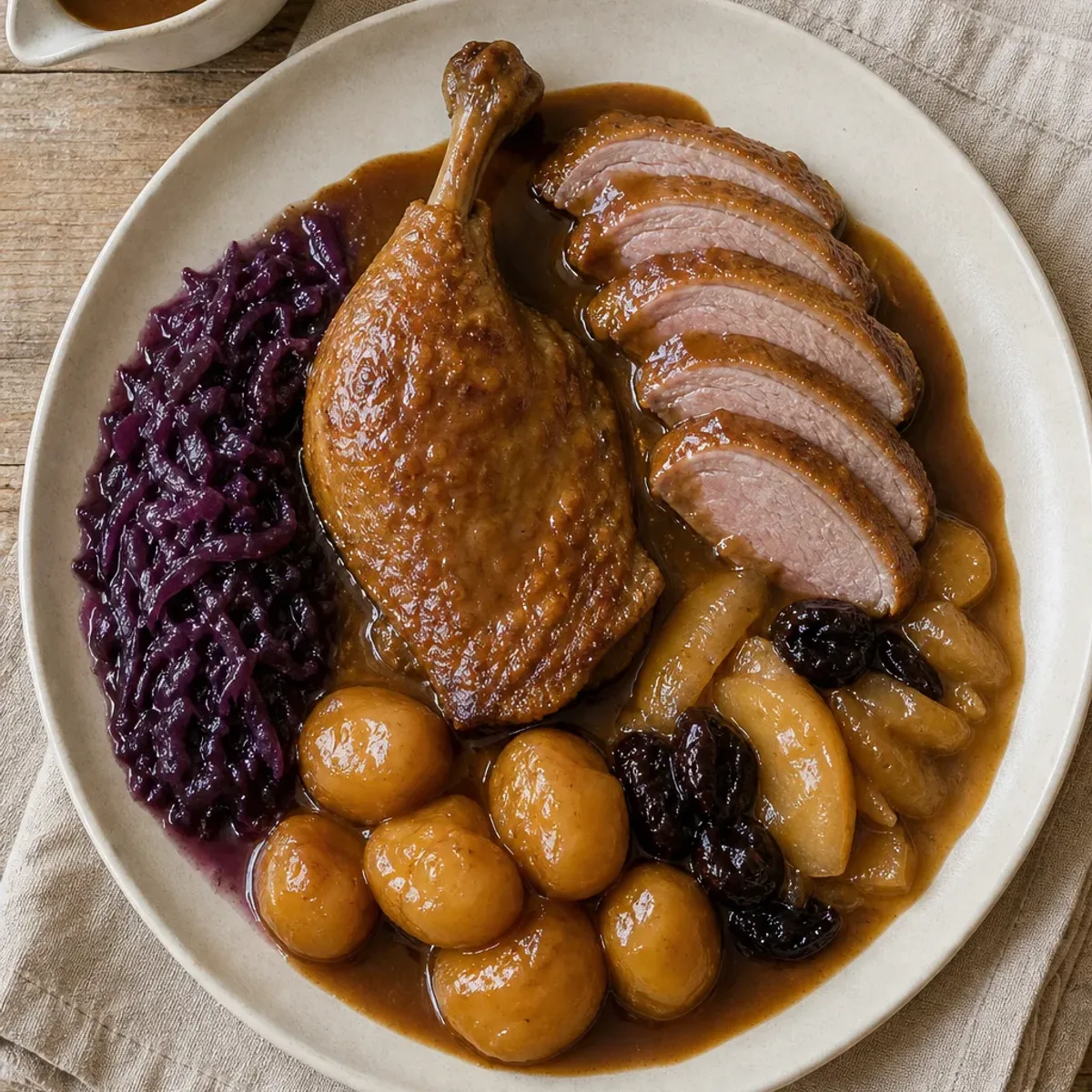
Roast Duck with Apples and Prunes
A Danish Christmas classic: the duck is stuffed with apple wedges and prunes, and the skin is patted completely dry so it turns crisp in the oven.
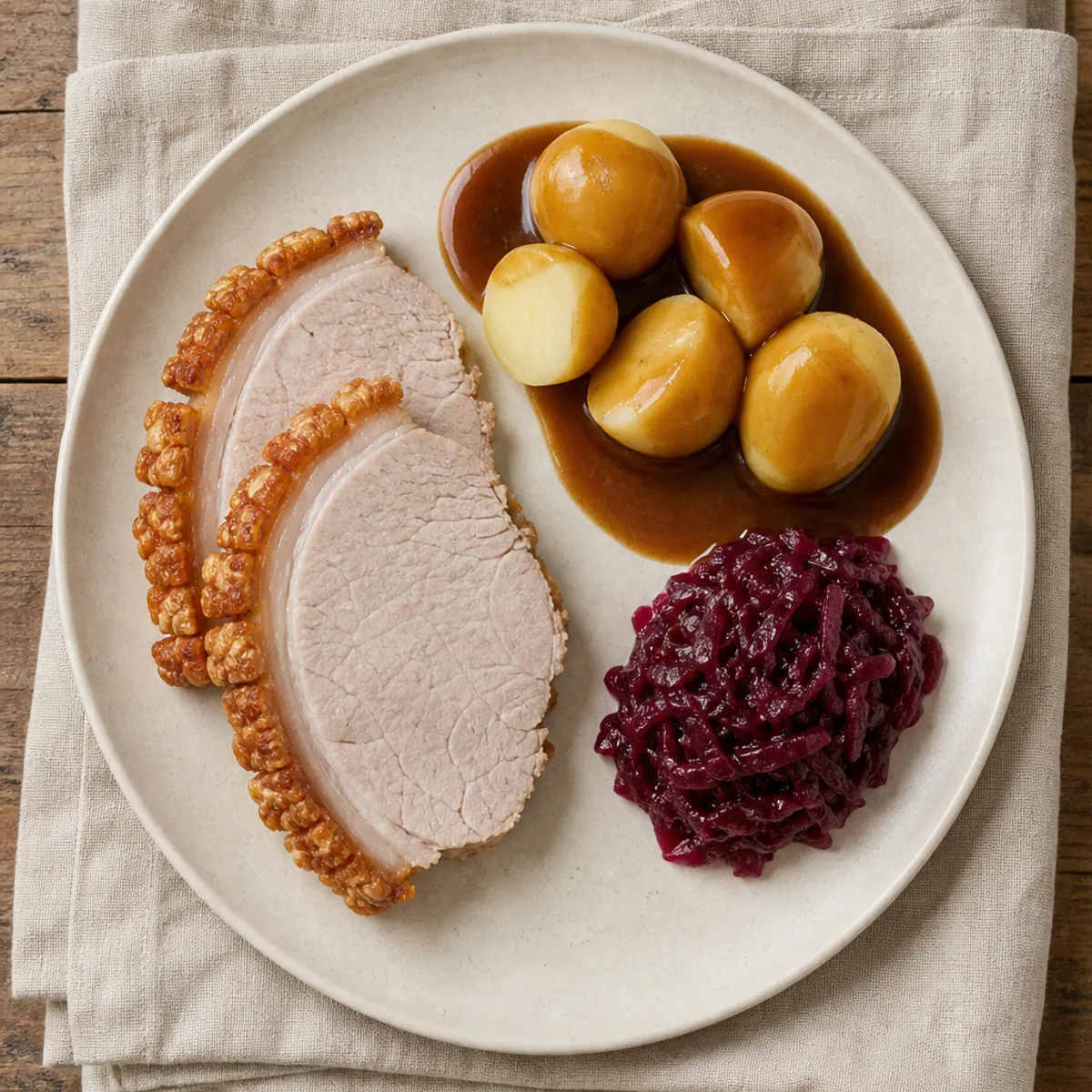
The duck is first browned, then roasted slowly with apples and prunes, and finished off at high heat, while the red cabbage, potatoes, and gravy can be made ready along the way. Let the duck rest while the pan juices become gravy and the potatoes are tossed in caramel. The crucial factor is that the duck is cooked through before the skin gets its final blast of crisping heat.
Ingredients
The Duck and Stuffing
- 1 pcs duck, about 3 kg
- 4 tart apples, e.g. Belle de Boskoop
- 150 g prunes, pitted
- 3 dl water, for the roasting pan
- salt
- black pepper, freshly ground
The Red Cabbage
- 1 pcs red cabbage, about 1 kg
- 25 g butter
- 1 dl apple cider vinegar
- 75 g sugar
- 2 tbsp red currant jelly
- 1 tsp salt
Caramelized Potatoes
- 1 kg small potatoes, similar in size
- 1 tsp salt, for the cooking water
- 100 g sugar
- 50 g butter
The Gravy
- 3 dl chicken stock
- 1 dl heavy cream, cold
- 3 tbsp all-purpose flour
- 1 tbsp red currant jelly
- gravy browning, as needed
- salt
- black pepper, freshly ground
How to make it
The Duck and Stuffing
- Set the oven to 200°C. Pat the duck completely dry inside and out with paper towels, since dry skin crisps up better than damp skin. Rub salt and freshly ground pepper well into the cavity so the stuffing seasons the meat from the inside. ⏱ 10 minChef's tip Moisture on the skin has to evaporate before browning can begin, so any dampness costs you crisping time. If you have a few hours, leave the salted duck uncovered in the fridge — the surface goes dry and slightly tacky to the touch.
- Cut the apples into wedges and remove the cores. Stuff the duck with the apple wedges and prunes until the cavity is full but not packed tight, so the heat can still reach inside. Close the opening with poultry pins or kitchen string and tie the legs together. Rub salt and pepper over the entire skin and place the duck breast-side up on a rack set over the roasting pan. ⏱ 10 min
- Roast the duck in the middle of the oven at 200°C for 30 minutes. The skin should be light golden, and the first drops of fat should be dripping down into the roasting pan. ⏱ 30 min · passive
- Lower the oven to 150°C and pour the water into the roasting pan so the pan juices don't scorch. Continue roasting the duck for 2 hours and 15 minutes, basting it a couple of times along the way with the juices from the bottom of the pan. The meat is done enough when the leg feels loose in the joint. ⏱ 2 h 15 min · passiveChef's tip Duck legs are full of connective tissue that needs long, gentle heat to break down into gelatin, which is why 150°C for over two hours beats a hotter, faster roast. The joint going loose is that collagen giving way.
The Red Cabbage
- Remove the outer leaves of the red cabbage and cut the head into quarters. Cut the tough core from each quarter and shred the cabbage into fine strips. ⏱ 15 min
- Melt the butter for the red cabbage in a large pot over medium heat and toss in the cabbage strips until they're glossy with fat. Add the apple cider vinegar and sugar and bring to a boil. The cabbage is ready to simmer once the sugar has dissolved and the strips have started to wilt.
- Cover the pot and let the red cabbage simmer gently over low heat for 75 minutes. It's done when the strips are completely tender and the color has turned deep purple. ⏱ 1 h 15 min · passive
- Stir the red currant jelly into the hot red cabbage and season to taste with salt. The tartness should come through clearly, since the red cabbage is the counterbalance to the rich duck.
Caramelized Potatoes
- Boil the small potatoes in plenty of salted water for 15-18 minutes, until a fork slides easily into the largest one. ⏱ 15 min–20 min · passive
- Drain the water from the potatoes and let them steam dry in the pot. Peel off the skins with your fingers while the potatoes are still warm, since the skin comes off easily then. ⏱ 10 min
The Duck and Stuffing
- Turn the oven up to 225°C and roast the duck for 10-15 minutes, until the skin is deep golden and crackling crisp. Insert a meat thermometer into the thickest part of the leg without touching the bone; it should read at least 75°C before the duck is cooked through. ⏱ 10 min–15 min · passiveChef's tip Stay by the oven — at 225°C the skin goes from deep golden to scorched in a couple of minutes, especially over the breast. If the thermometer is short of 75°C when the colour is right, cover the browned parts with foil rather than pushing the heat further.
- Lift the duck onto a cutting board and cover it loosely with aluminum foil. Let it rest for 25 minutes so the juices redistribute through the meat instead of running out onto the board. ⏱ 25 min · passive
The Gravy
- Pour the pan juices from the roasting pan through a sieve into a saucepan. Skim the clear fat off the surface with a spoon, or the gravy will taste greasy. Top up the strained juices with the chicken stock to about 6 dl and bring to a boil.
- Whisk the flour into the cold heavy cream until the mixture is completely smooth with no lumps. Whisk the mixture into the boiling juices a little at a time and let the gravy boil for 5 minutes. The gravy is thick enough when it clings as a thin film on the back of a spoon. Season to taste with red currant jelly, salt and pepper, and darken the color with a few drops of gravy browning.Chef's tip Whisk the flour into cold cream, never warm — in hot liquid the grains of flour glue together into lumps on contact. And let the gravy boil the full 5 minutes, or it will taste of raw flour.
Caramelized Potatoes
- Melt the sugar for the potatoes in a large skillet over medium heat without stirring, until it's light brown and liquid. Stir in the butter and toss the peeled potatoes in the caramel for 10 minutes, until they're coated in a glossy, golden-brown layer. ⏱ 10 minChef's tip Leave the sugar alone as it melts — stirring dry sugar encourages it to recrystallize into grains. Pull it off the heat the moment it turns the colour of light honey; caramel keeps darkening in the hot pan and tips bitter fast.
The Duck and Stuffing
- Loosen the duck's legs at the joints and carve the breast fillets free along the breastbone. Slice the breast meat on the diagonal against the grain, so it's tender to chew. Scrape the apples and prunes out of the cavity and into a bowl; they've soaked up fat and juices and are served alongside the meat. ⏱ 10 min
- Arrange the legs and breast slices on a warm platter and pour a little of the hot gravy over the meat. Put the rest of the gravy in a gravy boat on the table along with the red cabbage, the caramelized potatoes, and the bowl of apples and prunes. The dish is served family-style: everyone helps themselves to meat and sides on their own plate and ladles gravy over at the end.