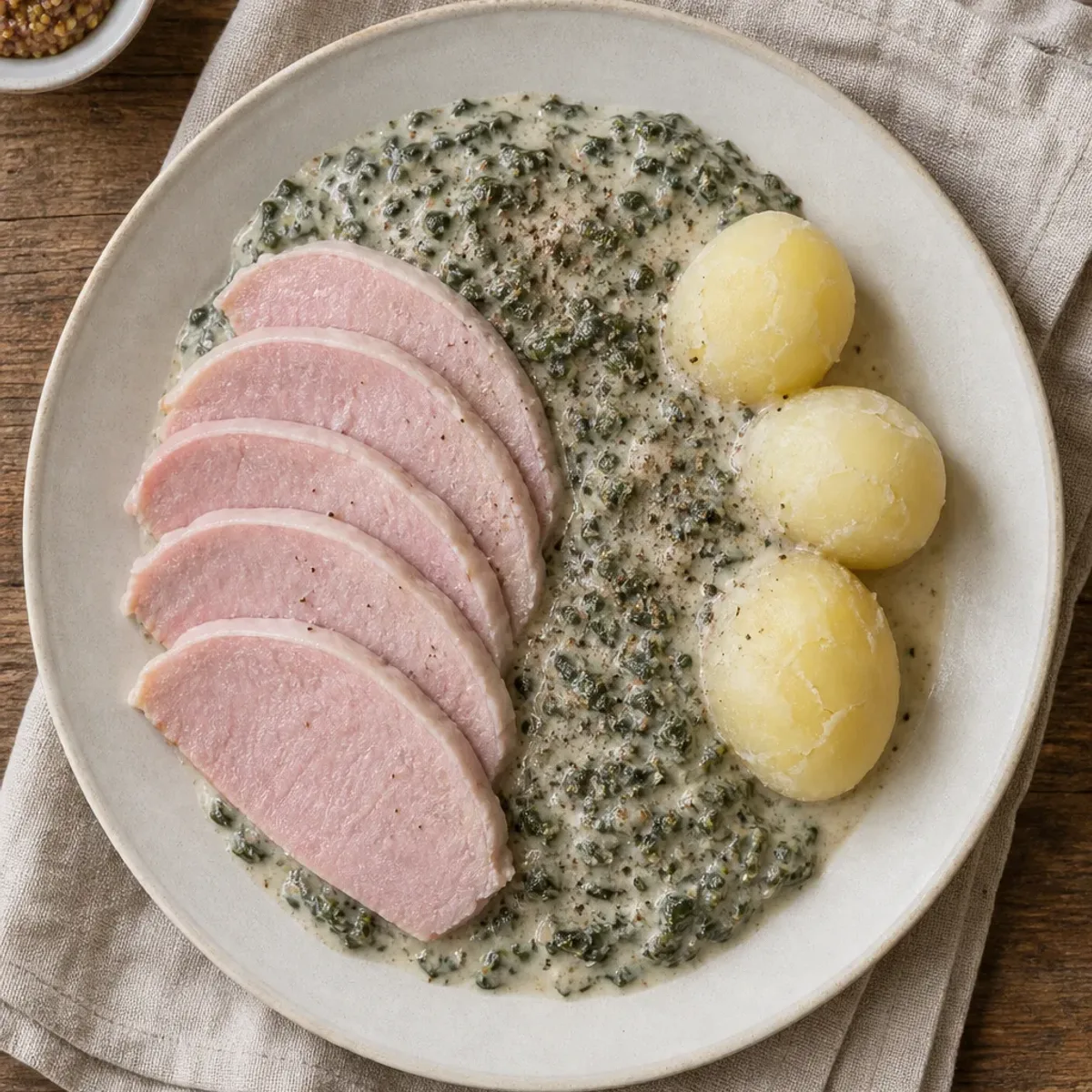
Creamed Kale with Smoked Pork
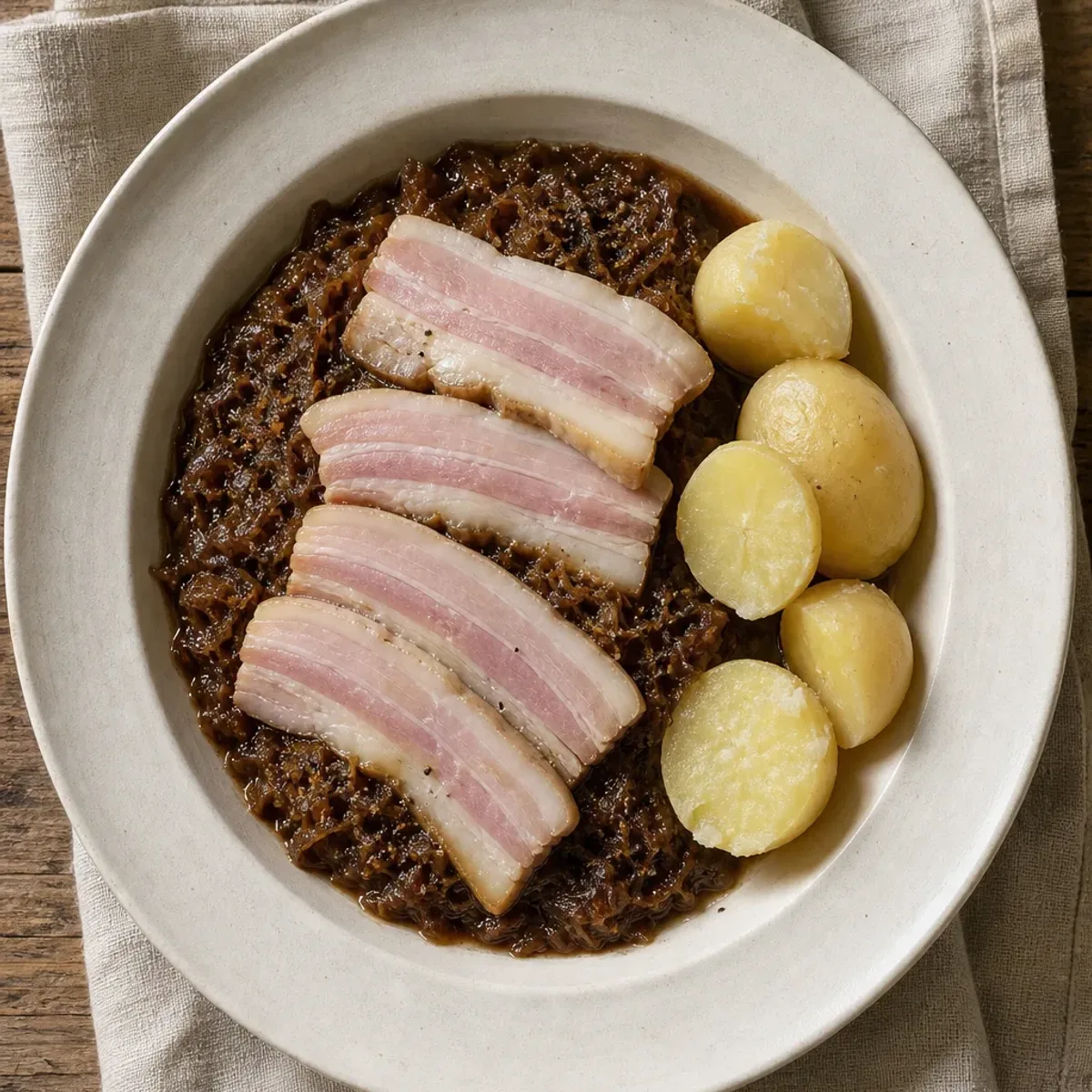
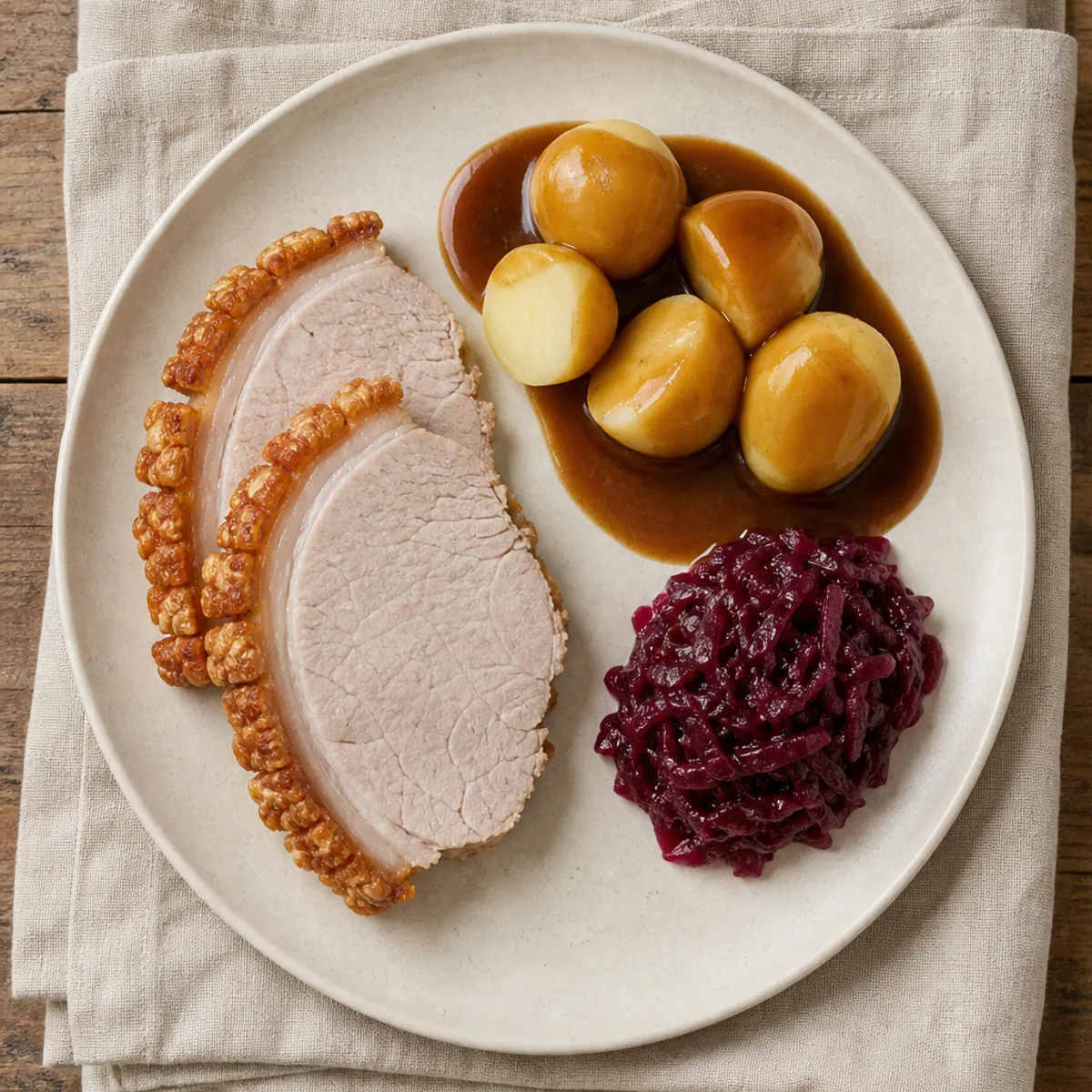
A Danish New Year's classic: finely chopped kale stewed in a cream sauce made from the kasseler's cooking liquid, served with slices of kasseler and coarse mustard.
The kasseler first simmers gently in spiced water while the kale is cleaned, blanched, and pressed dry; use the cooking liquid later as the flavor base for the stew. The potatoes cook alongside, and finally the creamy grønlangkål comes together while the meat is sliced and served hot. The crucial detail is pressing all the excess water out of the kale so the stew turns out rich and thick.
Ingredients
The Kasseler
- 800 g kasseler, in one piece
- 2 bay leaves
- 1 tsp whole black peppercorns
The Grønlangkål
- 800 g fresh kale
- 50 g butter
- 50 g all-purpose flour
- 3 dl cooking liquid from the kasseler, strained
- 3 dl whole milk
- 1 tsp sugar
- nutmeg, freshly grated, to taste
- salt
- black pepper, freshly ground
The Potatoes
- 1 kg potatoes, waxy
To Serve
- coarse mustard
How to make it
The Kasseler
- Place the kasseler in a large pot and cover it with cold water. Add the bay leaves and whole peppercorns, and bring the water slowly to a boil. Skim off the gray foam with a spoon until the surface is clear. ⏱ 10 min
- Turn the heat down until the water just barely simmers, and cover with a lid. Let the kasseler steep for 45 minutes — it should never come to a hard boil, or the meat will turn stringy and dry. It's done when a meat skewer slides easily into the center. ⏱ 45 min · passiveChef's tip Hold the pot at a bare shiver — occasional bubbles at the edge, around 80°C. Cured pork squeezes out its moisture and turns fibrous well below a rolling boil, and it cannot be reversed.
The Grønlangkål
- Meanwhile, rinse the kale thoroughly in cold water, and strip the leaves from the tough stems with your fingers. The stems never become tender, so discard them. You should end up with a large pile of clean leaves. ⏱ 10 min
- Bring a large pot of water to a boil and add a generous teaspoon of salt. Add the leaves a little at a time, and blanch them until they've completely wilted and taken on a deep, dark green color. ⏱ 10 min
- Pour the kale into a colander and rinse it immediately under cold water so the color holds. Then press all the water out of the leaves with your hands — wet kale makes the stew thin. Keep going until no more water runs from the clump.Chef's tip Press in fist-sized clumps rather than the whole pile — the outer leaves shed water while the middle stays sodden. Every spoonful of water left behind thins the béchamel you just built.
- Place the pressed kale on a cutting board and chop it finely with a large knife. The leaves should be chopped small enough that they disappear into the sauce instead of sitting as whole pieces.
The Potatoes
- Peel the potatoes and place them in cold water so they don't turn gray while you keep working.
- Boil the potatoes in lightly salted water, covered, for 20 minutes, until a knife slides easily into the largest one. Drain the water, and let them steam dry in the hot pot. ⏱ 20 min · passive
The Grønlangkål
- Lift the kasseler out of the pot, place it on a platter, and cover it with foil to keep it warm. Strain 3 dl of the cooking liquid through a fine-mesh sieve — it's the dish's flavor and needs to go into the stew.
- Melt the butter in a thick-bottomed pot over medium heat, and whisk in the flour. Let the roux bubble for 2 minutes, stirring. It should smell lightly toasted but must not take on color.Chef's tip The flour needs time in the bubbling butter, so the starch grains get sealed in fat and won't clump when the liquid goes in. The smell shifts from raw flour to lightly toasted — that's your signal.
- Add the strained cooking liquid a little at a time while whisking constantly, whisking each portion completely smooth before adding more. Finally, whisk in the whole milk so the sauce is even and lump-free.Chef's tip The first splash of liquid turns the roux thick and stiff — that's exactly right. Whisk until the mass is completely glossy and smooth before you add more; lumps from rushing rarely whisk out again.
- Let the sauce cook through over low heat, stirring occasionally, so the raw flour taste disappears. It's ready when it's glossy and flows slowly off the spoon in a thick ribbon.
- Fold the finely chopped kale into the sauce. Let the grønlangkål simmer over low heat, stirring occasionally, until the kale is completely tender and the stew holds its shape on a spoon. Season to taste with the sugar, freshly grated nutmeg, pepper, and salt. The cooking liquid is already salted, so season with salt carefully and only at the very end. ⏱ 10 minChef's tip Kasseler brine, the salted blanching water and the broth all carry salt into the pot, and it concentrates as the stew reduces. Taste after the nutmeg and sugar are in — sweetness masks salt, so judging earlier misleads.
The Kasseler
- Cut the rested kasseler into ½ cm thick slices across the grain, so the meat is tender to chew. The slices should be intact and juicy at the cut surface.Chef's tip Look for the direction the fibers run on the end of the joint and set your knife across them; slices cut with the grain give you long strands that stay chewy.
To Serve
- Arrange a mound of hot grønlangkål on each flat plate, and lay the kasseler slices against the kale. Distribute the steam-dried potatoes alongside. Set the coarse mustard on the table in a small bowl so everyone can help themselves to a dollop for the meat.