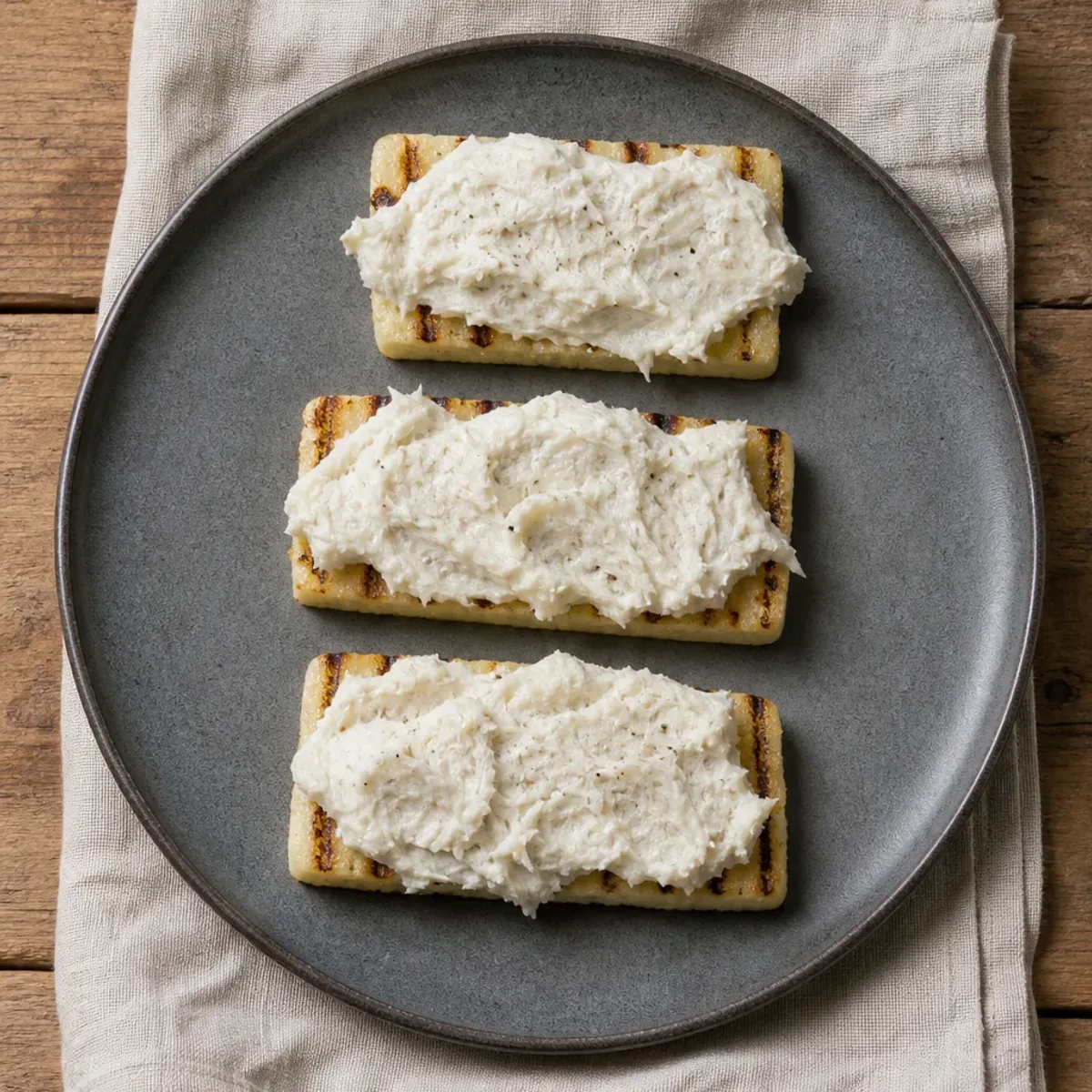
Baccalà Mantecato
A Venetian classic in which soaked stockfish is whipped with olive oil into an airy cream, eaten on slices of grilled white polenta.
While the polenta firms up into slices, the stockfish can be gently warmed, picked apart, and worked into an airy cream; finally the polenta is grilled and served immediately, while hot. The crucial part is binding the olive oil completely into the fish mash.
Ingredients
The Baccalà
- 800 g stockfish, soaked (about 350 g dried)
- 3 dl extra virgin olive oil, room temperature
- salt, to taste
- white pepper, freshly ground
The Polenta
- 1 l water
- 2 tsp salt
- 250 g polenta bianca
How to make it
The Polenta
- Bring the water to a boil in a heavy-bottomed pot and stir in the 2 tsp salt. Sprinkle the polenta bianca into the pot in a thin stream while whisking constantly, so the flour doesn't clump. Keep whisking until the mixture is completely smooth and the first thick bubbles start to burst through the surface. ⏱ 10 minChef's tip Keep the water at a full rolling boil as you sprinkle the flour in. If the boil drops, the grains sink to the bottom and clump around a core of dry flour that no amount of whisking will break up again.
- Reduce the heat to low and cook the polenta for 40 minutes. Scrape the bottom with a wooden spoon every five minutes, as white polenta scorches easily and gives the whole pot a burnt taste. It's done when it pulls away from the sides of the pot in one solid mass and the spoon can stand almost upright in it. ⏱ 40 minChef's tip The bare minimum simmer is the point — you want the occasional lazy blip, not steady bubbling. White polenta settles and catches on the base, and once scorched the bitterness spreads through the whole pot.
- Pour the polenta out onto a sheet of parchment paper and quickly smooth it into a slab about 1.5 cm thick while it's still warm and pliable. Let it cool and firm up for 60 minutes, until the surface is firm, dry, and no longer sticks to your finger. ⏱ 1 h · passive
The Baccalà
- Place the soaked stockfish in a pot and cover it with cold water. Warm it slowly over 15 minutes, until small bubbles just begin to ripple along the edge of the pot. The water must never come to a full boil, as hard bubbles will shred the flesh and make the flakes dry. ⏱ 15 minChef's tip Watch for the surface to shiver with the odd bubble at the rim, around 80°C, and hold it there. A rolling boil agitates the flakes apart and squeezes moisture out, leaving fibres that mash to a dry paste rather than a cream.
- Keep the heat very low and poach the fish uncovered for 20 minutes. The flesh is ready when it releases from the spine with light pressure and separates into large, white flakes. ⏱ 20 min · passive
- Take the pot off the heat and let the stockfish sit in the hot water for 10 minutes, so it becomes tender all the way to the bone. ⏱ 10 min · passive
- Lift the fish out with a slotted spoon and reserve 2 dl of the cooking water. Peel off the skin while the fish is still warm, and pull the flesh from the spine and ribs in large flakes. Run your fingertips through each flake — the thin pin bones are hidden inside the flesh and all of them need to come out. ⏱ 15 min
- Put the picked flakes in a tall, heavy bowl and mash them with a wooden spoon for 5 minutes, until they go from whole flakes to coarse, pale strands.
- Whisk in the olive oil one tablespoon at a time, stirring vigorously in the same direction. Each spoonful must be fully absorbed before the next goes in, or the emulsion will break and the oil will run out. Continue for 15 minutes, until the mixture is white and airy and falls heavily off the spoon like a thick mousse. ⏱ 15 minChef's tip The fish fibres and a little of the gelatinous cooking liquid are what hold the oil suspended, so mashing well in the previous step is what makes this one work. Stirring one direction keeps the mass climbing the bowl instead of sloshing.
- Thin with a little of the reserved cooking water if the cream is too stiff to spread, and stir until glossy again. Season with salt and freshly ground white pepper — stockfish is dried, not salted, so the cream needs more salt than you'd expect.Chef's tip Add the water a teaspoon at a time — it loosens the cream quickly and there's no taking it back. Season at the end, once the oil is in: fat coats the tongue and mutes salt, so what tastes right mid-whisk will read flat on the plate.
The Polenta
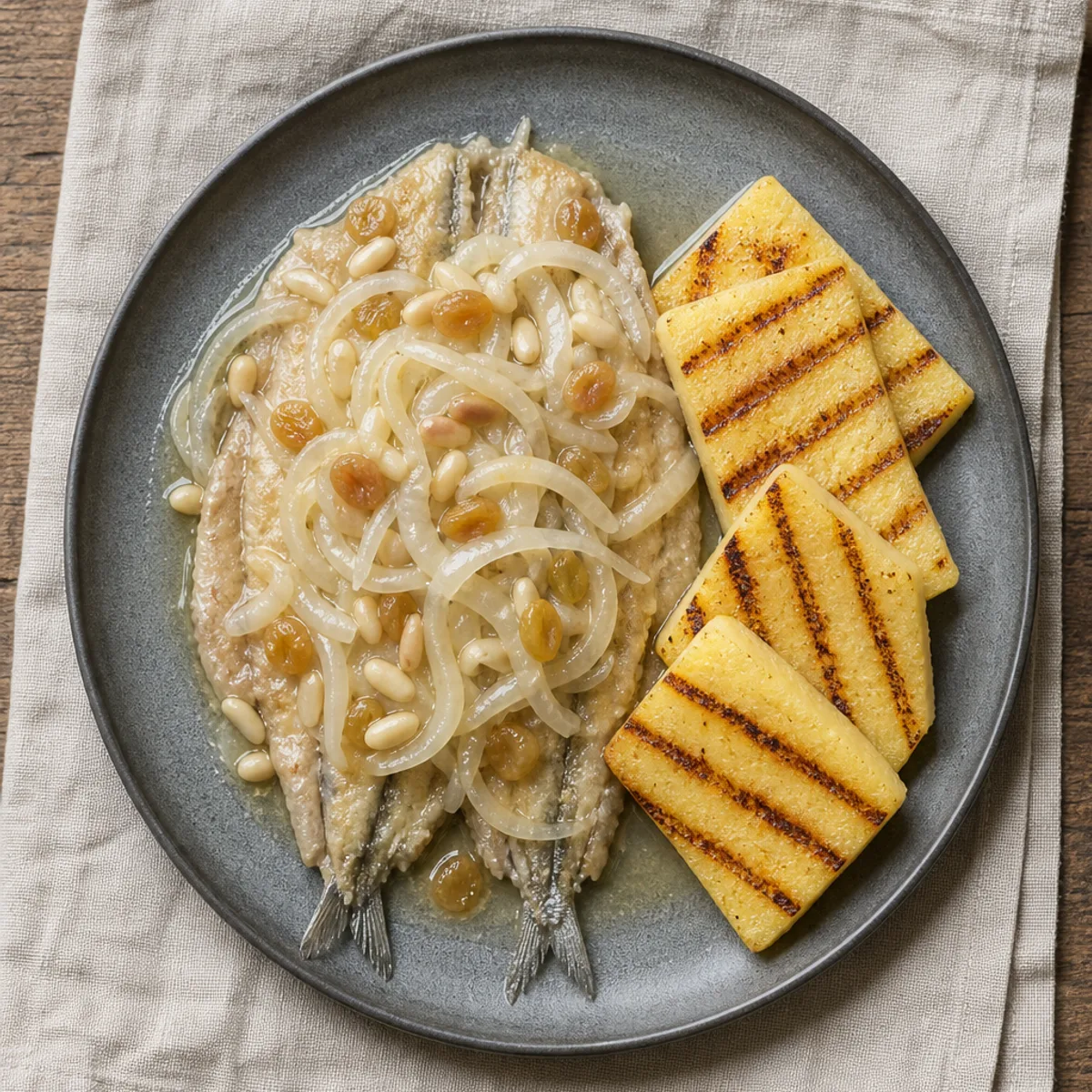
- Cut the firmed polenta into 12 rectangles. Grill them on a scorching-hot grill pan in two batches for 6 minutes. Turn them once the underside has dark char lines and a dry, crisp crust.Chef's tip The pan needs to be hot all the way through, and the slices must lie completely undisturbed. Move them before the crust has released on its own and it tears off and stays behind on the ridges.
- Place a platter of the hot polenta slices and the bowl of baccalà in the middle of the table. Each person spreads a thick layer of cream on their slice and eats it right away while the polenta is still warm — the cream should meet warm polenta, not cold.