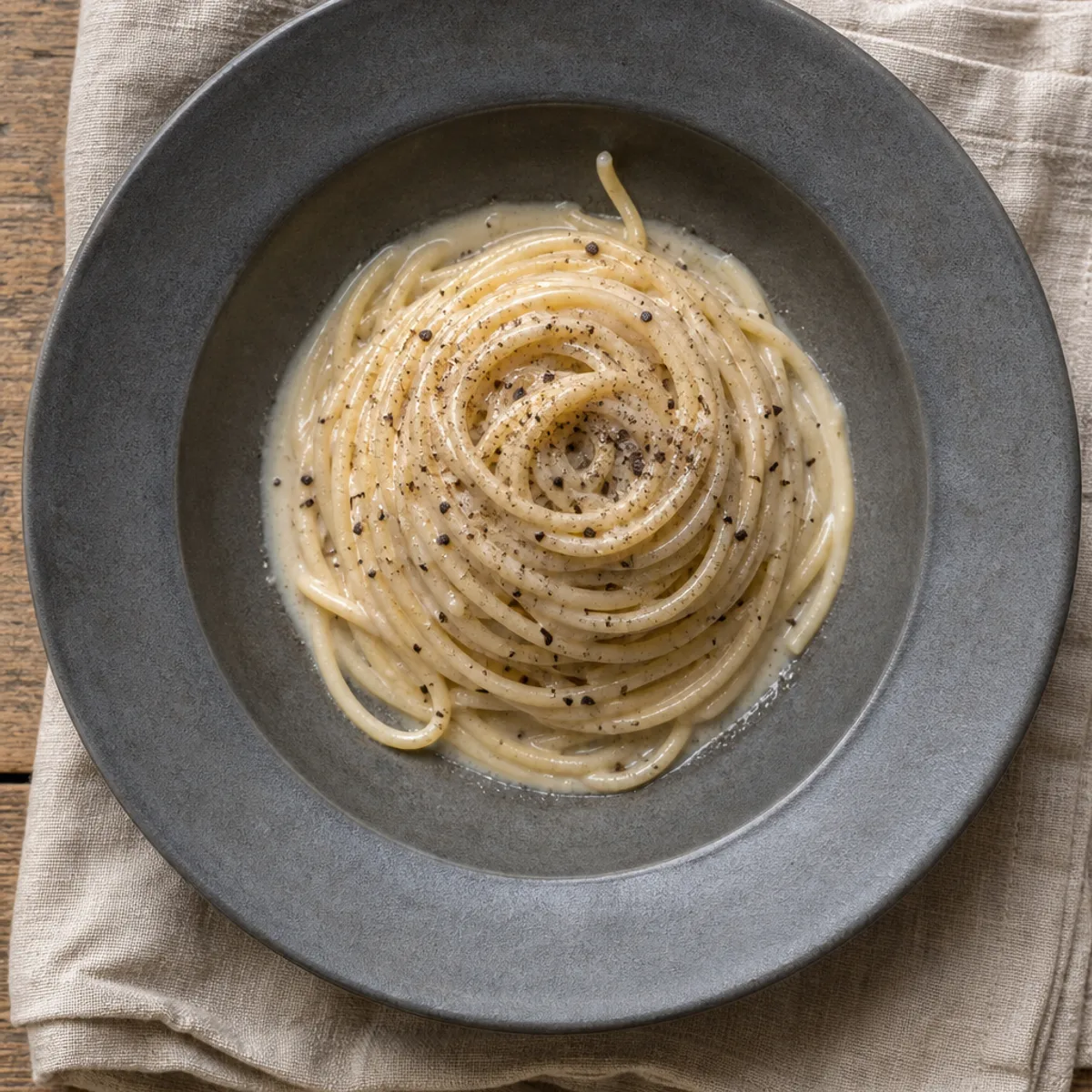
Cacio e Pepe
A Roman pasta classic made from nothing but pecorino, black pepper and starchy pasta water, whisked into a smooth cream with no heavy cream or additives.
Toast and crush the pepper while the water comes to a boil, then build a pecorino cream from the starchy, slightly cooled pasta water. The pasta is finished off the heat and must go straight to the table. The critical factor is that the cheese never meets boiling heat.
Ingredients
- 500 g spaghetti
- 250 g Pecorino Romano, in one whole piece
- 1-2 tbsp black peppercorns, whole
- salt, for the pasta water
How to make it
- Toast the peppercorns in a dry skillet over medium heat for 1-2 minutes. They're ready when they smell warm and sharp and start to jump lightly in the pan.
- Crush the toasted peppercorns in a mortar for about 2 minutes. The pepper should end up as both a fine dust and small cracked pieces, since it's the coarse pieces that give the dish its bite.
- Grate the Pecorino Romano finely on the finest side of a box grater. The cheese needs to be light and fluffy, or it won't melt evenly into the cream.Chef's tip Fine, fluffy shreds melt before they can clump; a coarse grate or a food processor's warm blade gives waxy nuggets that seize. Grate cold cheese, and let it sit out to lose its fridge chill before mixing.
- Bring 2 liters of water to a boil in a tall pot and salt it only very lightly. The small amount of water makes the cooking water extra starchy, and the salt is held back because the pecorino salts the dish heavily. The water is ready when it's at a rolling boil. ⏱ 8 min · passiveChef's tip Stir the spaghetti for the first couple of minutes — the starch it releases is what later binds the fat and water. The water should turn faintly cloudy and feel slick between your fingers. About half a teaspoon of salt per liter is plenty.
- Cook the spaghetti in the lightly salted water for 7 minutes, that is, 2 minutes less than the package instructions. It should still have a distinct bite in the middle, since it finishes cooking in the cheese. ⏱ 7 min · passive
- Ladle 3 dl of the starchy cooking water into a bowl while the pasta finishes cooking, and let it stand and cool for 2 minutes. The water should be hot but no longer boiling, because boiling water makes the pecorino turn stringy instead of melting. ⏱ 2 min · passiveChef's tip Above roughly 70-80 °C the casein in pecorino tightens and squeezes out fat, giving strings and greasy pools. Let the ladled water drop to steaming-not-bubbling — comfortably hot to a fingertip held near the surface.
- Stir the grated pecorino together with two-thirds of the crushed pepper in a bowl. Whisk in the reserved cooking water a little at a time, until you have a thick, smooth cream that slowly runs off the spoon. Taste the cream — it should be distinctly salty from the cheese alone.Chef's tip Adding water in small splashes lets the cheese hydrate gradually into a paste before it thins — dump it all at once and the cheese clumps in a watery pool. Aim for the consistency of thick double cream.
- Drain the spaghetti, reserving the rest of the cooking water, and toss the pasta into a wide skillet off the heat along with 1 dl of the cooled cooking water from the bowl. Stir for about 1 minute, until the strands are glossy and have released the worst of the cooking heat.
- Pour the pecorino cream over the hot spaghetti and toss vigorously with tongs for 1-2 minutes. The sauce is ready when it's glossy and even and clings to every single strand. Keep the pan off the heat the whole time, or the cheese will split and turn stringy. If the sauce is too tight, loosen it with a spoonful of the cooking water from the pot.Chef's tip Vigorous tossing is mechanical work: it disperses fat droplets through the starchy water so the sauce turns glossy and opaque rather than beaded. If it looks grainy, a splash of hot water and more tossing usually brings it back.
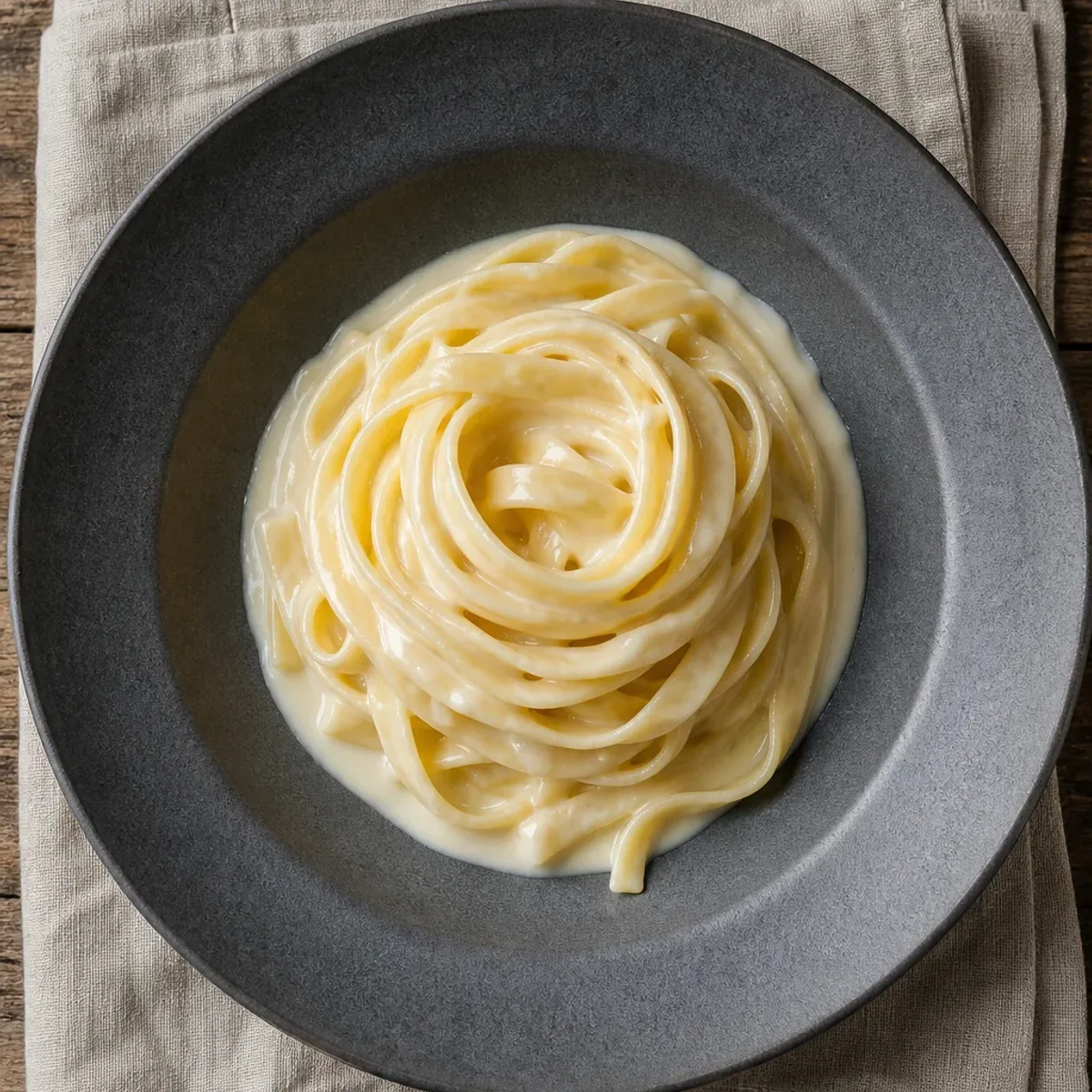
- Divide the pasta among four deep plates and twirl it into a tall nest with a fork. Sprinkle the rest of the crushed pepper over the top, and set the plates on the table immediately. Cacio e pepe tightens as it cools, so it's eaten right away.Chef's tip Rinse the plates under hot water and dry them before you serve. Cold plates chill the sauce in seconds, and it stiffens into a gluey clump around the fork.