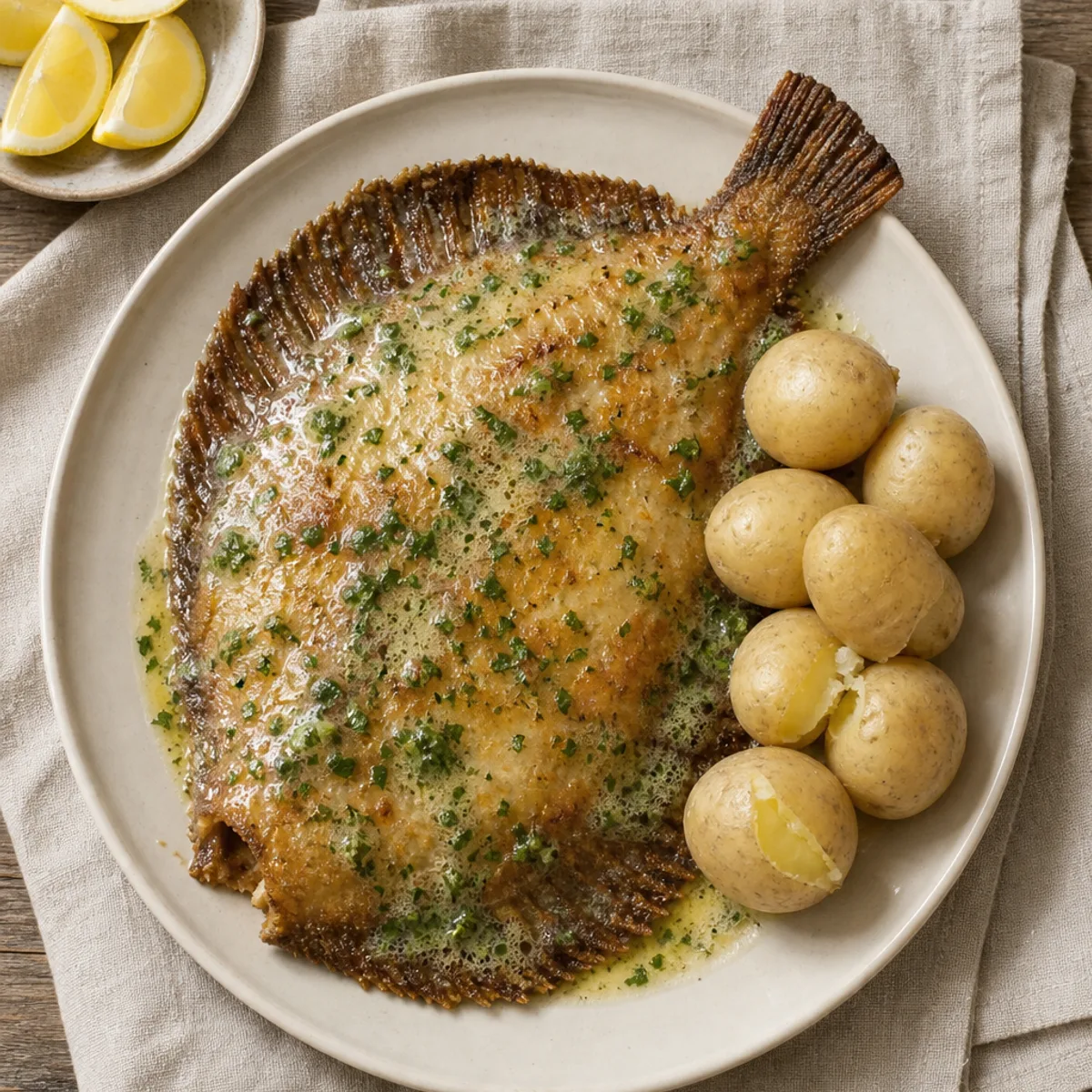
Pan-fried Plaice with Parsley Butter
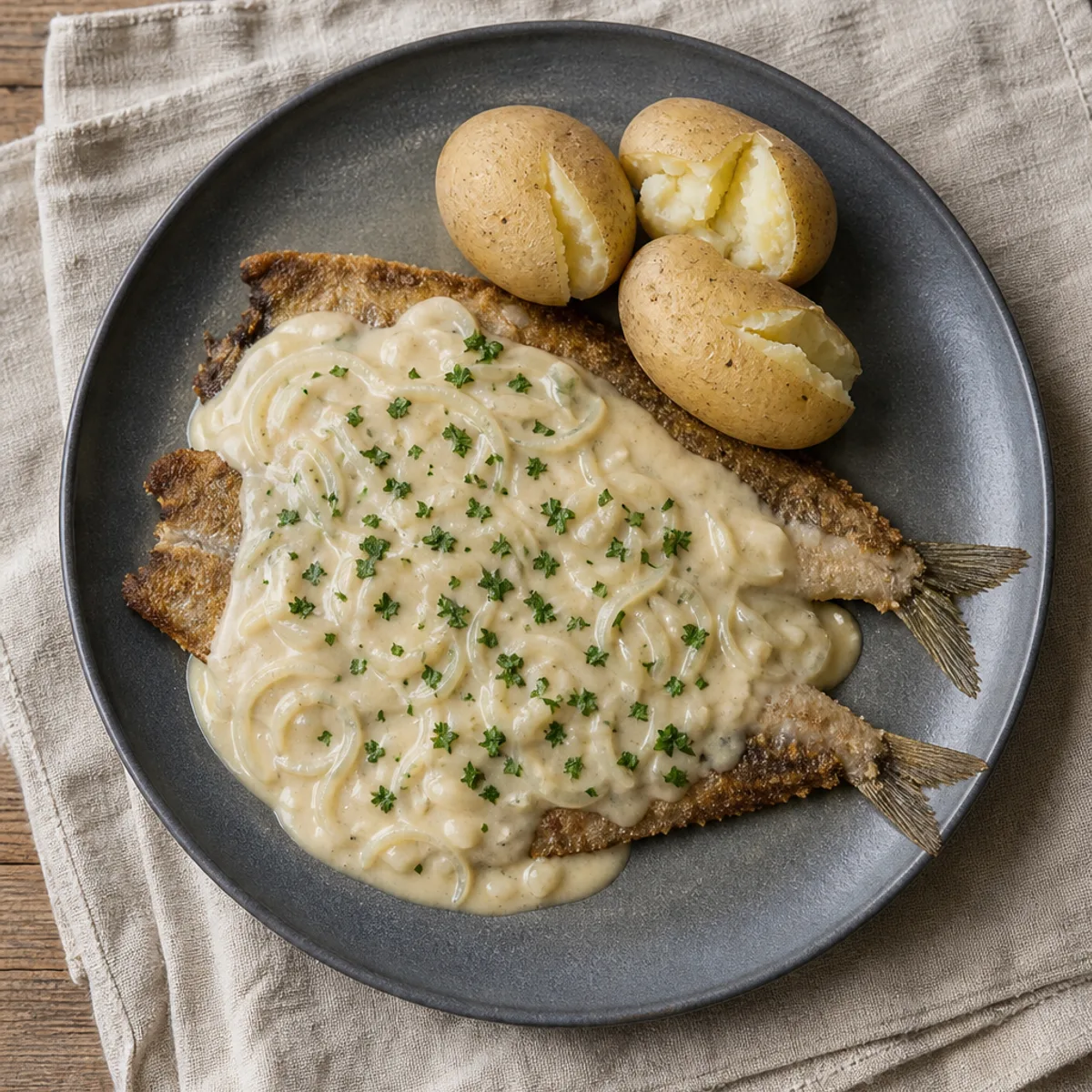
A Danish fish dish of plaice dredged in rye flour and fried crisp in butter, served with foaming parsley butter finished with lemon juice.
Put the potatoes on first so they can steam dry while the plaice is coated and fried in two unhurried batches. The parsley butter is made last and poured over just before serving. How completely dry the fish is determines whether the crust turns crisp and golden.
Ingredients
The Fish
- 4 pcs plaice, cleaned and headless, about 400 g each
- 100 g rye flour
- salt
- white pepper, freshly ground
- 75 g butter, for frying
The Parsley Butter
- 125 g butter
- 1 bunch fresh parsley, finely chopped
- ½ pcs lemon, juice only
- salt
The Potatoes
- 1 kg potatoes, small and waxy
- salt, for the cooking water
To Serve
- 1 pcs lemon, in wedges
How to make it
The Potatoes
- Scrub the potatoes and put them in a pot with cold water, just enough to cover them. Salt the water well, and boil the potatoes for about 25 minutes, until a knife slides into the largest one without resistance. Drain the water, and let them steam dry in the pot with the lid ajar. ⏱ 25 min · passiveChef's tip Start the potatoes in cold water so the outer layer doesn't boil to pieces before the middle is tender. Steaming them afterwards dries off that sticky surface, so the butter settles on them instead of running off.
The Fish
- Pat the plaice completely dry on both sides with paper towels. Then season them with salt and freshly ground white pepper. A completely dry surface is essential, because otherwise the flour clumps and the crust never turns crisp.Chef's tip Salt the fish just before flouring, not minutes ahead — salt draws moisture to the surface, and that damp film is exactly what stops the flour from crisping.
- Turn two of the plaice in the rye flour on both sides in a dish, and tap off the excess against the edge of the dish. Only a thin, dry layer should remain, just enough to matte the fish. The last two are not floured until the pan is free again, because flour that lies on wet fish soaks up moisture and turns gummy instead of crisp.
- Melt half of the butter for frying in a large frying pan over medium heat. The pan is ready when the foam has subsided and the butter smells nutty.Chef's tip The foam subsiding and the nutty smell mean the water has boiled off and the milk solids are toasting — around 150°C, hot enough to brown. Butter alone browns fast, so keep the heat moderate or the solids go bitter and black.
- Place two of the floured plaice in the pan dark side down, and let them lie completely still for about 5 minutes. The crust is done when the edge is deep golden and the fish releases from the pan on its own.Chef's tip The crust glues itself to the pan until enough water has cooked out of the contact surface, then lets go by itself. Prying early tears the skin off; if it resists the spatula, give it another half minute.
- Turn the fish carefully with a spatula, and fry them 4 minutes on the light side, which faces up on the plate. The flesh is done when it is opaque white all the way to the backbone and comes away with a light touch.Chef's tip Plaice is thin and carries on cooking on the warm platter, so pull it while the flesh at the backbone has just turned opaque. Overdone, it goes cottony and the fillets fall apart as you serve.
- Place the fried plaice on a warm platter, and wipe out the pan with paper towels so that burnt flour doesn't blacken the next batch. Fry the last two fish the same way in the remaining butter for frying, about 9 minutes in total, until they too are deep golden on both sides.
The Parsley Butter
- Melt the butter for the parsley butter in a small saucepan over low heat for about 3 minutes. It should be completely melted and just beginning to foam, but must not take on color.
- Rinse the parsley thoroughly in clean water, pat or spin it dry, and chop it finely. Stir it into the melted butter and heat gently, stirring, until the parsley butter is steaming hot throughout. Do not let the butter brown. Take the pan off the heat, add the lemon juice and season with salt.
To Serve
- Place one plaice on each dinner plate, and set the steamed potatoes alongside. Pour the warm parsley butter over the fish just before it goes to the table, while it's still foaming. Put the lemon wedges on the table, so everyone can squeeze lemon over their own fish and potatoes.