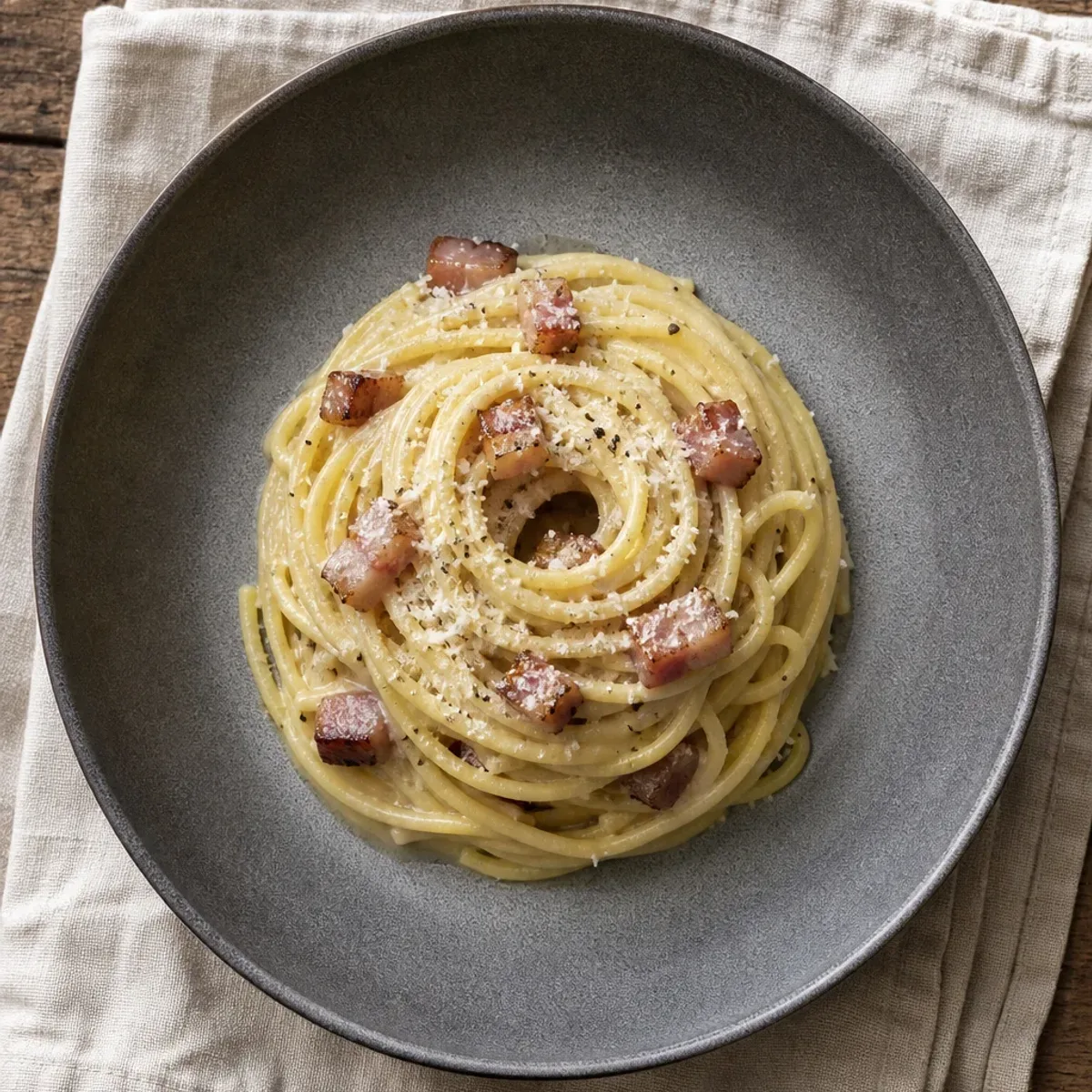
Spaghetti Carbonara
Roman pasta where eggs and pecorino are whisked into a creamy sauce without cream and tossed with hot spaghetti, crisp-fried guanciale, and pepper.
While the water comes to a boil, the guanciale's fat renders out slowly and the pecorino-egg mixture is stirred together. The pasta finishes briefly in the hot fat before the hot, but not boiling, pasta binds the sauce together. The critical factor is keeping the egg sauce away from direct heat.
Ingredients
- 500 g spaghetti
- 200 g guanciale, in a single piece, rind removed
- 100 g pecorino romano
- 4 egg yolks, room temperature
- 1 egg, room temperature
- black pepper, freshly ground
- salt, for the cooking water
How to make it
- Set a large pot with 4-5 liters of water over high heat and salt it lightly, about 1 tsp per liter. Guanciale and pecorino season the dish heavily, so the cooking water shouldn't carry the salting alone. Wait until the water is at a rolling boil with big bubbles. ⏱ 10 min · passive
- Cut the guanciale into cubes of about 1 cm and place them in a cold, dry skillet. Heat the skillet slowly over medium-low heat, turning the cubes regularly. They're ready when the fat has rendered clear and the edges are golden and crisp. The center should still give slightly, or the cubes will turn dry. ⏱ 8 min–10 minChef's tip Starting in a cold pan lets the fat melt out before the meat surface sets, so you get a pool of clear fat rather than cubes seizing and scorching. Listen for a lazy sizzle, not a spitting one.
- Finely grate the pecorino romano. Whisk the egg yolks and the whole egg together with 80 g of the cheese and plenty of freshly ground black pepper in a bowl. Stir until the mixture is thick and even and slowly leaves a trail behind the whisk.Chef's tip Grate the pecorino on the finest holes — coarse shreds don't dissolve fully and leave gritty specks in the sauce. Grind the pepper into the eggs now so it's carried by the fat rather than sitting on top.
- Cook the spaghetti in the salted water for 9 minutes, one minute less than the package directs. It should be al dente with a clear firm core when you bite a strand in half. ⏱ 9 min · passive
- Ladle out 2 dl of the hot cooking water before you pour the spaghetti into a colander. Whisk 1 dl of the water into the egg mixture in a thin stream while stirring. The mixture becomes warm and thin, so it won't split when it meets the hot pasta.Chef's tip The reserved water is worth more than plain water because of the starch it carries — it helps the fat and egg hold together. Take it just before draining, when it's cloudiest.
- Take the skillet with the fried guanciale off the heat and toss the drained spaghetti in the rendered fat. Keep going until every strand is glossy and coated.
- Pour the tempered egg mixture over the pasta and stir vigorously off the heat. The sauce is done when it's glossy and clings to the strands instead of pooling in the skillet. Thin with the reserved cooking water a tablespoon at a time if it gets too thick.Chef's tip The skillet should be cool enough that you can hold your hand just above it; much past 70°C the yolks seize into little grains. Stir fast and low, so the sauce gathers glossy around the strands.
- Twirl the spaghetti into tall nests on flat plates and sprinkle the remaining pecorino and a few turns of freshly ground pepper over the top. Serve immediately, as the egg sauce will set if the dish sits and waits.Chef's tip Cold plates pull the heat out of the sauce in seconds, taking it from creamy to gluey. Rinse the plates in hot water and dry them while the pasta cooks.