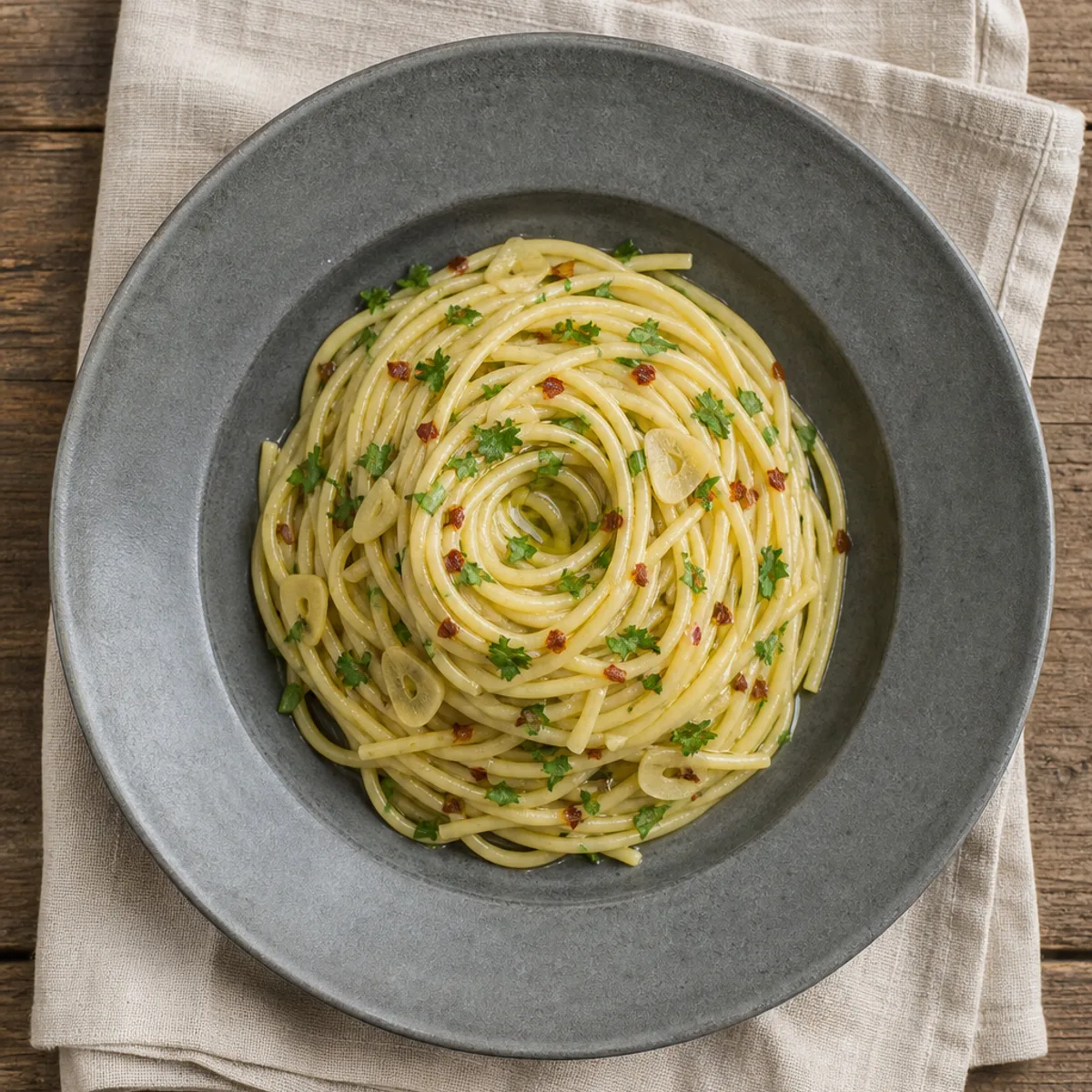
Spaghetti aglio e olio
A Neapolitan pasta dish built on garlic, olive oil and chili, stirred through with chopped parsley — traditionally served with no cheese at the table.
While the pasta water comes to a boil, the garlic is sliced, and the mild garlic oil can steep while the spaghetti cooks. At the end, everything comes together quickly in the pan with pasta water, before the parsley is folded in and the dish is served piping hot. The glossy emulsion between oil and pasta water determines whether the sauce clings to the pasta.
Ingredients
- 500 g spaghetti
- 6 clove garlic
- 1.2 dl extra virgin olive oil
- 2 pcs dried peperoncino, crumbled, seeds removed
- 1 handful flat-leaf parsley, coarsely chopped
- 2 tbsp coarse salt, for the cooking water, plus a little for seasoning
How to make it
- Bring 4 liters of water to a boil in a large pot over high heat, about 10 minutes, until it's boiling vigorously across the whole surface. Stir in the coarse salt once it's boiling. This is where the pasta gets its entire base seasoning, since the dish has neither cheese nor stock to salt it later. ⏱ 10 min · passive
- Meanwhile, cut the garlic cloves into thin slices with a sharp knife, keeping the slices as even in thickness as possible. Even thickness is essential, because thin flakes turn dark and bitter long before the thicker ones turn golden.Chef's tip Slices, not crushed or minced: cut garlic releases far more of its sharp sulfur compounds the finer it's broken, and small fragments scorch in seconds. Even 1-2 mm planks stay sweet and stay retrievable.
- Cook the spaghetti in the salted water for 8-10 minutes, until it's al dente with a distinct, firm bite in the center. It should cook for less time than the package states, since it will finish cooking in the oil afterward. ⏱ 8 min–10 min · passiveChef's tip Pull it out 1-2 minutes before the package time — it soaks up liquid and keeps cooking in the pan. Bite a strand in half: a thin white core in the middle means it will land perfectly after the toss.
- Meanwhile, warm the olive oil in a wide, deep pan over low heat and add the garlic slices and crumbled peperoncino. Let them steep gently for 5-6 minutes, until the slices are pale golden at the edges and the oil smells sweetly of garlic. Stir a couple of times along the way and turn the heat down if they start to color too fast.Chef's tip The oil must never bubble hard around the slices, only shimmer faintly. Garlic goes from golden to burnt in under half a minute, and the bitterness can't be fixed afterward — the oil is lost.
- Ladle 3 dl of the starchy cooking water into a bowl just before the pasta is done, then drain the spaghetti in a colander without rinsing it.Chef's tip Reserve the water before draining, not after — it's the one thing everyone forgets, and there's no recovering it once it's down the drain. Rinsing would wash off the surface starch the sauce needs to cling.
- Toss the drained spaghetti into the pan with the garlic oil and add 1 dl of the reserved cooking water. Toss and stir vigorously over medium heat for 1-2 minutes, until the oil and water bind into a glossy, light sauce that clings to the strands instead of pooling at the bottom. Thin with more cooking water, a tablespoon at a time, if the pan looks dry.Chef's tip Constant vigorous tossing is what does the work: the dissolved starch lets oil and water hold together, and agitation is what forms it. Stop when the sauce coats each strand and leaves only a faint film on the pan bottom — clear oil pooling means it hasn't taken.
- Take the pan off the heat, scatter the coarsely chopped parsley over and toss for 1 minute, until it's distributed throughout the portion and smells fresh. Season to taste with salt.Chef's tip Off the heat for the parsley — its fresh, grassy aroma is volatile and fades fast against a hot pan, leaving a flat, hay-like taste. Taste for salt only now, after the pasta has given up some of its own.
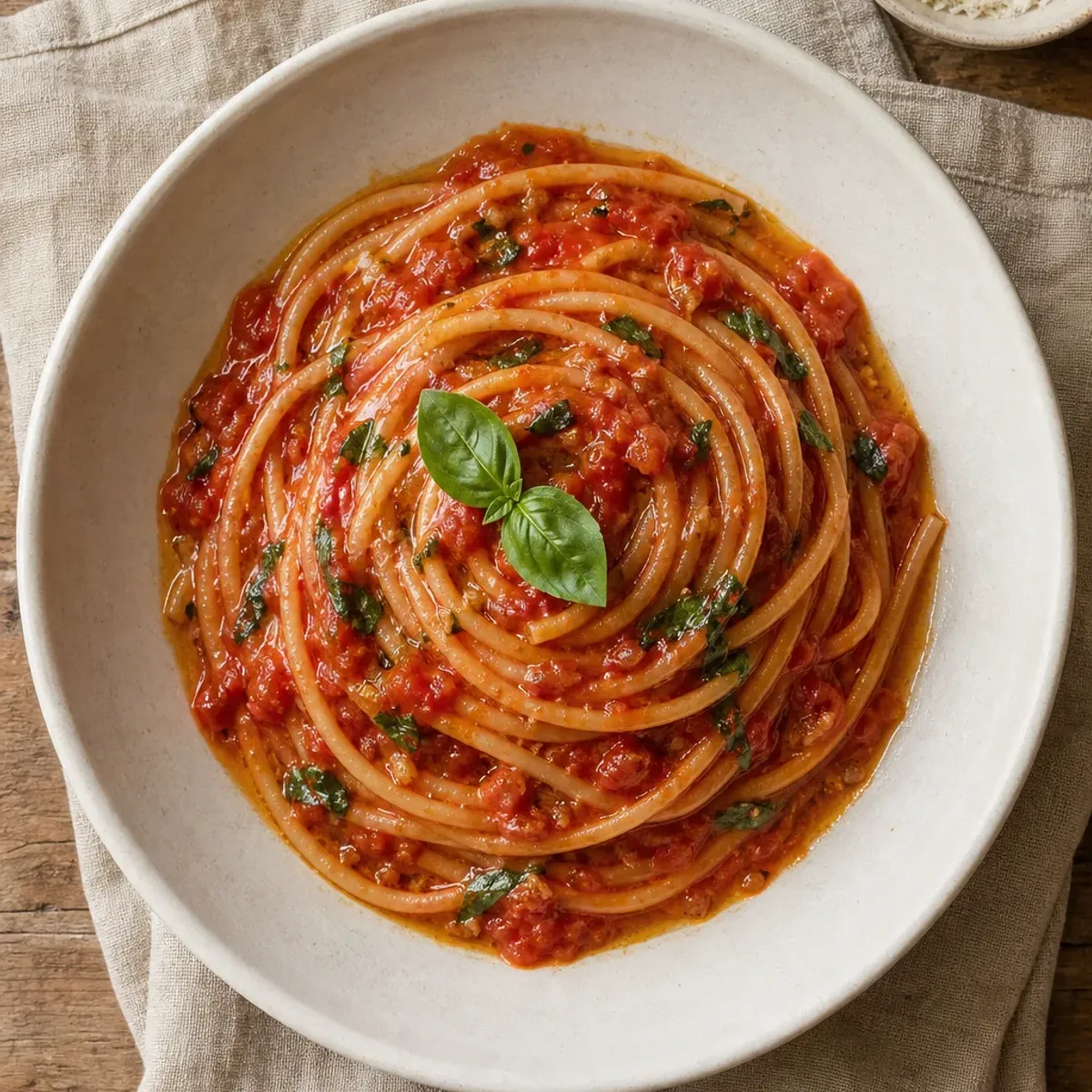
- Twirl the spaghetti into tall nests in preheated deep plates using a fork and tongs. Scrape the last of the oil and the golden garlic slices from the pan over the top. Serve immediately, while the oil is still warm and glossy. Put no cheese on the table — aglio e olio is traditionally eaten with no cheese at all, so the garlic and oil stand clean.