Sambar
A South Indian lentil stew of mashed toor dal and tamarind, seasoned with a crisp-fried tempering of mustard seeds and curry leaves in sesame oil.
While the dal simmers until tender, the tamarind steeps and the vegetables are prepped; then the tangy vegetable soup is built up before the mashed dal gives it body. The rice cooks alongside, and the hot tempering finishes the sambar just before serving. The crucial detail is the tempering, which should smell toasted and spiced without turning bitter.
Ingredients
The dal and vegetables
- 250 g toor dal
- 1 tsp turmeric
- 25 g tamarind pulp, in block form, seedless
- 200 g shallots, small
- 2 pcs moringa pods, fresh or frozen
- 1 pcs carrot
- 200 g Hokkaido squash
- 2 pcs tomatoes, ripe
- 2 tbsp sambar powder
- 2 tsp salt
The tempering
- 2 tbsp sesame oil, cold-pressed, Indian-style
- 1 tsp black mustard seeds
- ¼ tsp fenugreek seeds
- 2 pcs dried red chilies, broken in half
- 15 leaf curry leaves, fresh
- 1 pinch asafoetida
To serve
- 400 g sona masuri rice
- 1 tsp salt, for the cooking water
- 2 tbsp ghee
- 1 handful fresh cilantro, roughly chopped
How to make it
The dal and vegetables
- Rinse the toor dal in cold water until the water runs clear. Bring it to a boil in a pot with 8 dl water and the turmeric, and skim the gray foam off the surface. Cover with a lid and let it simmer for 30 minutes, until the lentils are fully cooked and the mixture is thick and porridge-like. ⏱ 30 min · passiveChef's tip Skim the gray foam within the first minutes of boiling — it carries the raw, slightly bitter note of the lentil skins. Cook until a lentil crushes to nothing between two fingers; anything firmer won't mash smooth later.
- Meanwhile, soak the tamarind pulp in 3 dl boiling water for 15 minutes, until it is soft enough to fall apart when pressed. Mash it thoroughly with your fingers and strain the juice into a bowl. Press the last of the liquid out of the fibers and discard them along with the seeds. ⏱ 15 min · passive
- Peel the shallots and leave them whole so they hold their shape during cooking. Cut the carrot into diagonal slices, the Hokkaido squash into rough cubes, and the moringa pods into 5 cm pieces. Cut the tomatoes into wedges. ⏱ 10 minChef's tip Whole shallots and 5 cm moringa pieces stay intact through the whole simmer, while carrot and squash cook faster — cut squash cubes a touch larger than the carrot slices so they finish together rather than dissolving.
- Mash the cooked dal smooth in the pot with a whisk, until no whole lentils remain and the mixture flows thickly off the spoon. It's the mashed dal that gives the sambar its full body.
- Bring the strained tamarind juice to a boil in a roomy pot together with 4 dl water and the salt. Add the shallots, carrot, squash, and moringa pods, cover with a lid, and cook for 12 minutes, until the vegetables are tender all the way through but still hold their shape. ⏱ 10 min · passiveChef's tip The acid in the tamarind juice keeps the vegetables' structure intact, so they soften more slowly than they would in plain water. Poke the thickest slice of carrot rather than trusting the minutes blindly.
- Stir in the sambar powder and lay the tomato wedges on top. Let it cook uncovered for 5 minutes, until the raw, floury smell of the spice blend is gone and the tomatoes have collapsed at the edges.
- Stir the mashed dal into the pot with the vegetables and thin with 2 dl water, until the sambar is as thick and flowing as a light soup. Let it simmer for 8 minutes, stirring the bottom regularly, as the dal easily sticks and burns. Season to taste with salt.Chef's tip Mashed dal settles and scorches on the bottom in minutes, and a burnt note spreads through the whole pot. Drag the spoon flat across the base every minute or two, and keep it at a lazy blip rather than a rolling boil.
- Rinse the rice in cold water until the water is clear. Meanwhile, bring plenty of water to a boil in a large pot with salt. Add the rice and cook for 12 minutes, until the grains are fully tender but still whole. Drain in a sieve and let it drip dry. ⏱ 20 min · passive
The tempering
- Heat the sesame oil in a small skillet over medium-high heat and add the mustard seeds. Wait until they pop and jump in the oil. Add the fenugreek seeds, the broken chilies, and the curry leaves and continue frying until the curry leaves curl and turn crisp. Remove the skillet from the heat and stir in the asafoetida, so it doesn't scorch in the hot oil.Chef's tip The mustard seeds must actually pop before anything else goes in — that crackle is the signal the oil is hot enough. Fenugreek turns bitter if it darkens past reddish-brown, so keep it moving and pull the pan the moment the curry leaves crisp.
- Pour the whole tempering with oil and spices into the sambar and immediately cover the pot with a lid. Let it sit for 2 minutes, so the aroma gets captured in the sambar instead of evaporating. ⏱ 2 min · passive
To serve
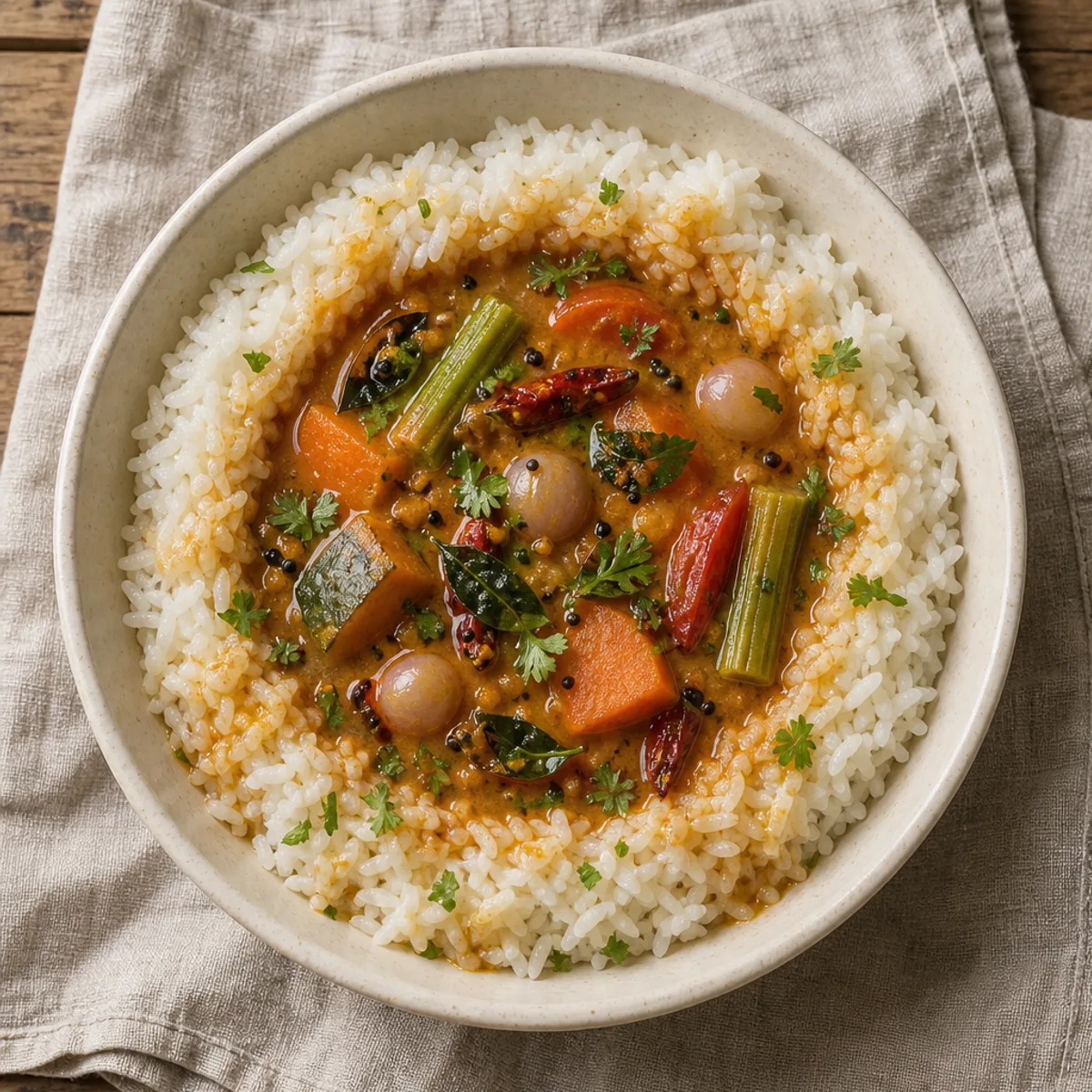
- Place a mound of the steaming rice in the center of a flat plate for each serving and press a well into the top with the back of a spoon. Ladle the steaming-hot sambar into the well and sprinkle the roughly chopped cilantro over top. Drizzle the ghee over the rice and set the pot on the table, so everyone can ladle more onto their plate as they go. The sambar is mixed into the rice a little at a time, so each bite gets both rice and sauce.