Risotto alla Milanese
A Lombard saffron risotto stirred with real meat stock, never a bouillon cube, and finished by binding in cold butter and Grana Padano.
The stock is kept hot while the onion and rice build the base flavor, and the risotto is cooked up gradually, a little at a time. The saffron is steeped separately and added toward the end, before butter and cheese are bound in just before serving. The critical phase is the final binding, which should make the risotto flow creamy without making the grains heavy.
Ingredients
- 400 g Carnaroli rice (or Vialone Nano rice)
- 1½ l meat stock, homemade or real stock, never a bouillon cube
- 80 g butter, 30 g for the onion, 50 g cold and cubed for binding
- 1 pcs onion, finely chopped
- 80 g Grana Padano, finely grated (or Parmigiano Reggiano)
- ½ g saffron threads, about two large pinches
- salt, for the stock
How to make it
- Pour the meat stock into a pot and heat it until it simmers with small bubbles along the edge. Season it with salt so it has a distinct flavor — the stock is the only liquid the rice gets, so it seasons the dish from within. Keep it simmering beside the stovetop throughout. ⏱ 8 min–10 min · passive
- Melt 30 g of the butter in a thick-bottomed, wide pot over medium heat. Sauté the finely chopped onion until soft and golden without letting the edges take on color. Browned onion gives a bitterness that lingers over the saffron, so turn the heat down rather than up as you go.
- Turn the heat up to medium-high and add the rice to the golden onion. Toast it, stirring constantly, until the grains feel warm through the spoon. The edges should look glossy and translucent while the center is still chalky white.Chef's tip Toasting dries and firms the outside of each grain so it holds its shape and absorbs evenly; without it the risotto turns to porridge. Listen for a dry, faintly rattling sound against the bottom of the pot.
- Turn the heat down to medium and ladle boiling stock over the rice, just enough to cover it. Stir calmly and steadily, adding another ladleful each time the spoon leaves a brief trail on the bottom of the pot. The stock must be boiling every time — cold liquid stops the cooking and makes the grains uneven. Continue this way for the first two-thirds of the cooking time. ⏱ 10 minChef's tip Stir steadily but without violence: the friction of grains against each other is what frees the surface starch that makes the cream. Add stock only when the spoon leaves a trail — a flooded pot boils the rice rather than working it.
- Ladle out a scoop of the simmering stock into a small bowl and add the saffron threads. Stir and let them steep until the liquid is deep orange-red and smells sweet and earthy. The saffron should always be dissolved in hot liquid first, since dry threads sprinkled directly into the rice give streaks of color and a flat aroma.
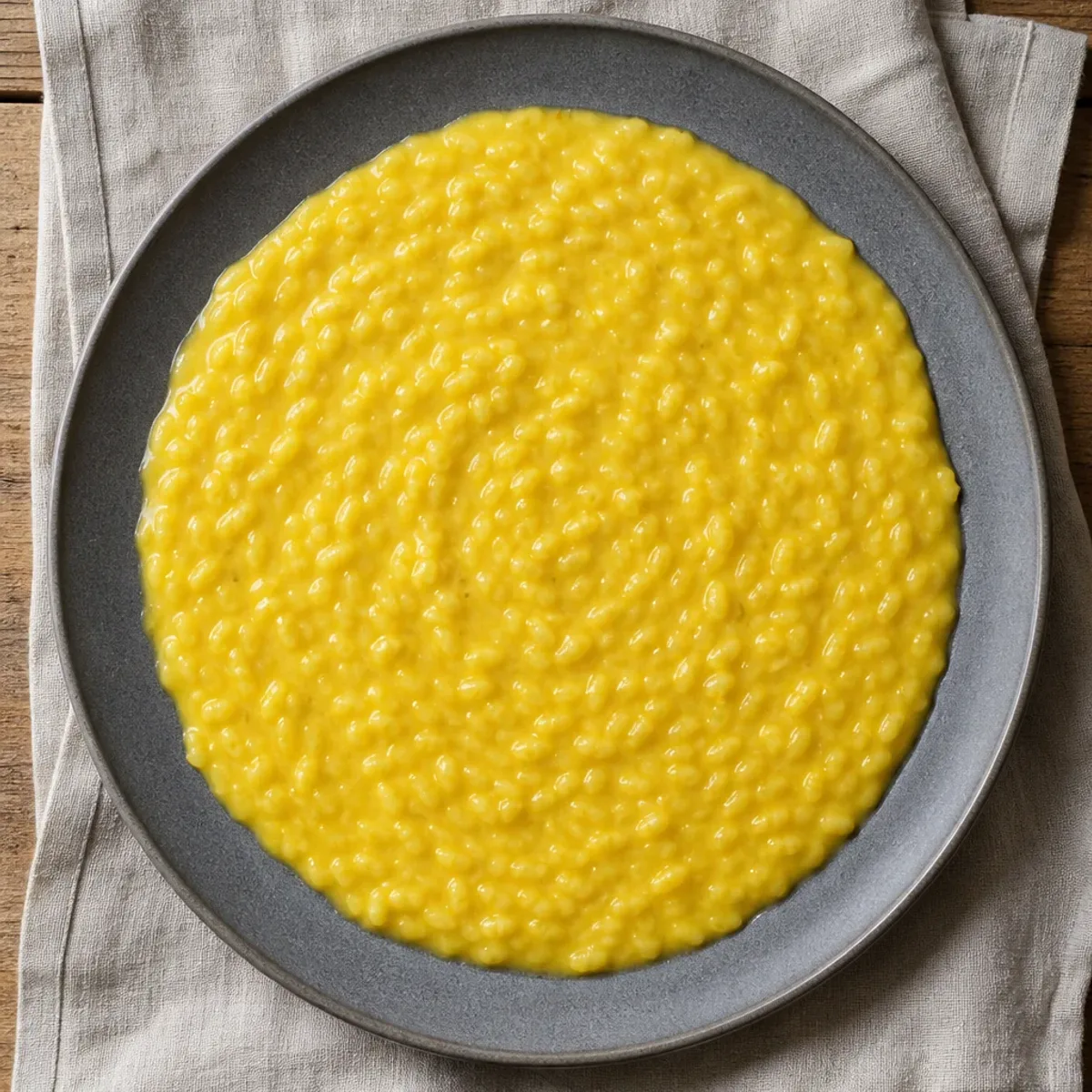
- Stir the saffron-colored stock into the risotto so the whole mixture turns an even, bright yellow. Keep adding boiling stock and stirring until the rice is al dente. The grains should yield under the tooth and still have a firm, but not hard, center.Chef's tip Stop while the centre still resists slightly — the rice keeps cooking in its own heat during the final butter-and-cheese stage, and a grain that is perfectly done in the pot arrives soft on the plate.
- Take the pot off the heat and stir in the cold cubed butter until it has melted and the mixture is glossy. Then stir in the grated Grana Padano with quick, vigorous strokes. The risotto should bind into a creamy mass where the grains are still separate, and flow in a slow wave when you tilt the pot.Chef's tip Off the heat and with cold butter matters: the fat melts slowly into the starchy liquid and emulsifies rather than splitting into a greasy pool, and the cheese won't turn stringy. Look for a surface that shines and closes over itself.
- Ladle the risotto into the center of four flat, preheated plates. Tap each plate lightly against the counter so the risotto spreads out on its own into an even layer almost to the edge. Serve immediately and eat from the edge toward the center while the middle is still steaming.Chef's tip Warm plates and a thin, spread layer are the point — risotto served in a heap holds heat in the middle and stiffens at the edges, and the wave-like flow disappears within a minute or two of standing.