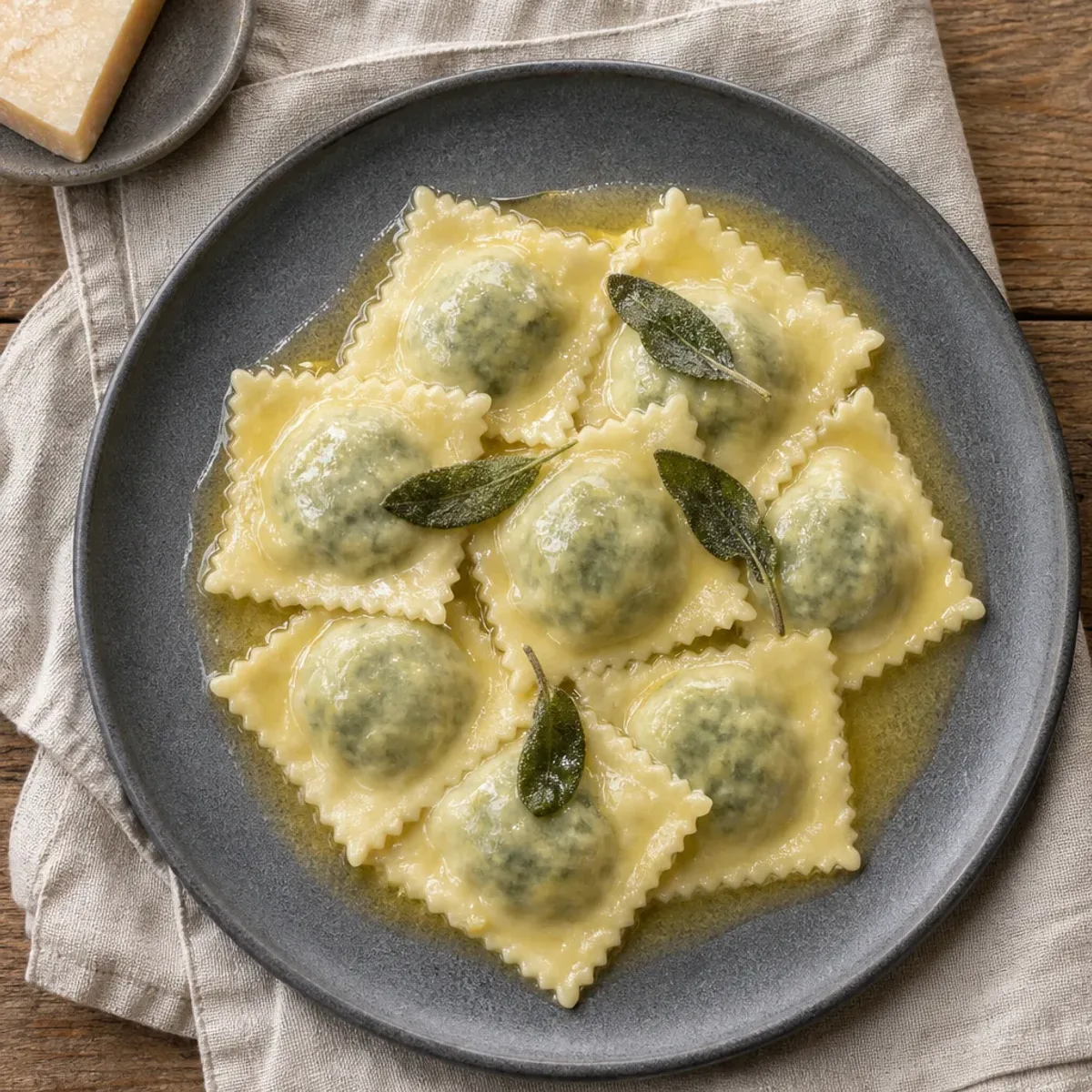
Ricotta & Spinach Ravioli
Italian stuffed pasta with ricotta and spinach in thin pockets of dough, served in brown butter with crispy sage leaves and freshly grated parmigiano.
The pasta dough is kneaded and rests while the spinach is dried thoroughly and stirred into a firm filling. The sheets are then rolled thin, filled and cooked, while the sage butter stands ready to bring it all together in the pan. Tightly sealed ravioli with no trapped air determine whether they hold together in the cooking water.
Ingredients
The pasta dough
- 400 g tipo 00 flour, plus a little extra for the counter
- 4 eggs, room temperature
- 1 pinch salt
The filling
- 500 g fresh spinach
- 400 g ricotta, well drained
- 80 g parmigiano reggiano, freshly grated
- 1 egg yolk
- 1 pinch nutmeg, freshly grated
- 1 tsp salt
- freshly ground black pepper
Sage butter and serving
- 2 tbsp coarse salt, for the cooking water
- 100 g butter
- 12 leaf fresh sage
- 40 g parmigiano reggiano, in one piece
How to make it
The pasta dough
- Pour the flour into a mound on the counter and make a deep well in the center. Crack the eggs into the well along with the salt, and beat them with a fork. Draw the flour in from the edge a little at a time, until the mixture holds together in a rough, uneven clump.
- Knead the dough vigorously on the counter for 10 minutes, folding it and pushing it away from you with the heel of your hand. It's ready when the surface is completely smooth and springs back slowly when pressed with a finger. ⏱ 10 min
- Wrap the dough tightly in plastic wrap and let it rest at room temperature for 30 minutes, so the gluten relaxes and the sheets can later be rolled thin without shrinking back. ⏱ 30 min · passive
The filling
- Rinse the spinach thoroughly and add it, still wet, to a large pot over medium heat. Let it wilt for 5 minutes, stirring a couple of times, until all the leaves are dark green and completely limp.
- Pour the spinach into a strainer and cool it quickly under cold water. Then squeeze all the water out between your hands until the clump feels dry. Water in the filling both dilutes the flavor and causes the ravioli to burst open in the pot. Finely chop the squeezed spinach.Chef's tip Squeeze it in small handfuls at a time, then finish by wringing the clump in a clean dish towel until not another drop comes out. The 500 g shrink to one small, firm lump — the rest was water.
- Stir the drained ricotta together with the chopped spinach, the freshly grated parmigiano reggiano, the egg yolk, nutmeg, salt and a couple of turns of pepper. Stir only until the filling is uniform and stands as a soft peak on the spoon. The parmigiano is strongly salty on its own, so more salt is rarely needed.
The pasta dough
- Divide the dough into four equal pieces and keep the other three wrapped up meanwhile so they don't dry out. Roll the first piece through the pasta machine, starting at the widest setting and going down a notch at a time, or roll it out with the rolling pin. The sheet is thin enough when you can just make out your hand through it. ⏱ 15 minChef's tip A rolled sheet skins over in a few minutes and a dry edge simply won't weld shut. Fill and cut each sheet before you roll the next; the dough should still feel cool and faintly tacky.
- Place teaspoonfuls of the filling in a row, 4 cm apart, on the bottom half of the sheet. Fold the top half down over them — fresh dough sticks to itself, so water isn't needed. Press the air out around each mound of filling with your fingertips, so the edge seals completely tight. Then cut out the ravioli with the fluted pastry wheel. Lay them individually on a cloth dusted with flour, without letting them touch each other, and repeat with the remaining dough. ⏱ 20 minChef's tip Press outward from each mound so no air is trapped — a pocket of air expands in the boiling water and pushes the seam apart. Keep flour off the sealing surfaces; floured dough slides instead of sticking.
- Bring a large pot of water to a boil with the coarse salt, so the ravioli have room to float freely without bumping into each other. ⏱ 10 min · passive
Sage butter and serving
- Melt the butter in a wide pan over low heat and add the sage leaves. Let the butter foam gently for 5 minutes, until the foam subsides, the aroma turns nutty and the leaves are crisp. Keep the heat low throughout, so the butter turns golden rather than burning.Chef's tip The nutty smell comes from the milk solids toasting, and they go from golden to bitter quickly. Pull the pan the moment you see fine brown flecks — the residual heat in the butter keeps working.
- Gently lower the ravioli into the boiling water with a slotted spoon and cook them for 4 minutes, until they float to the surface and the edge of the dough is al dente. Reserve 1 dl of the cooking water before draining the rest.Chef's tip Floating only means the air inside has warmed and expanded, so give them a moment more after they rise. Test the doubled edge where the sheets overlap — that's the last part to soften.
- Lift the ravioli directly into the sage butter and add 2 tbsp of the reserved cooking water. Tilt the pan back and forth for 1 minute, until the butter binds with the water into a thin, glossy sauce that coats each individual ravioli.
- Divide the ravioli among four warm, flat plates with the crispy sage leaves on top and the rest of the butter poured over. Set the piece of parmigiano reggiano on the table with a grater, so everyone can grate it over their own plate.