Pizza Margherita
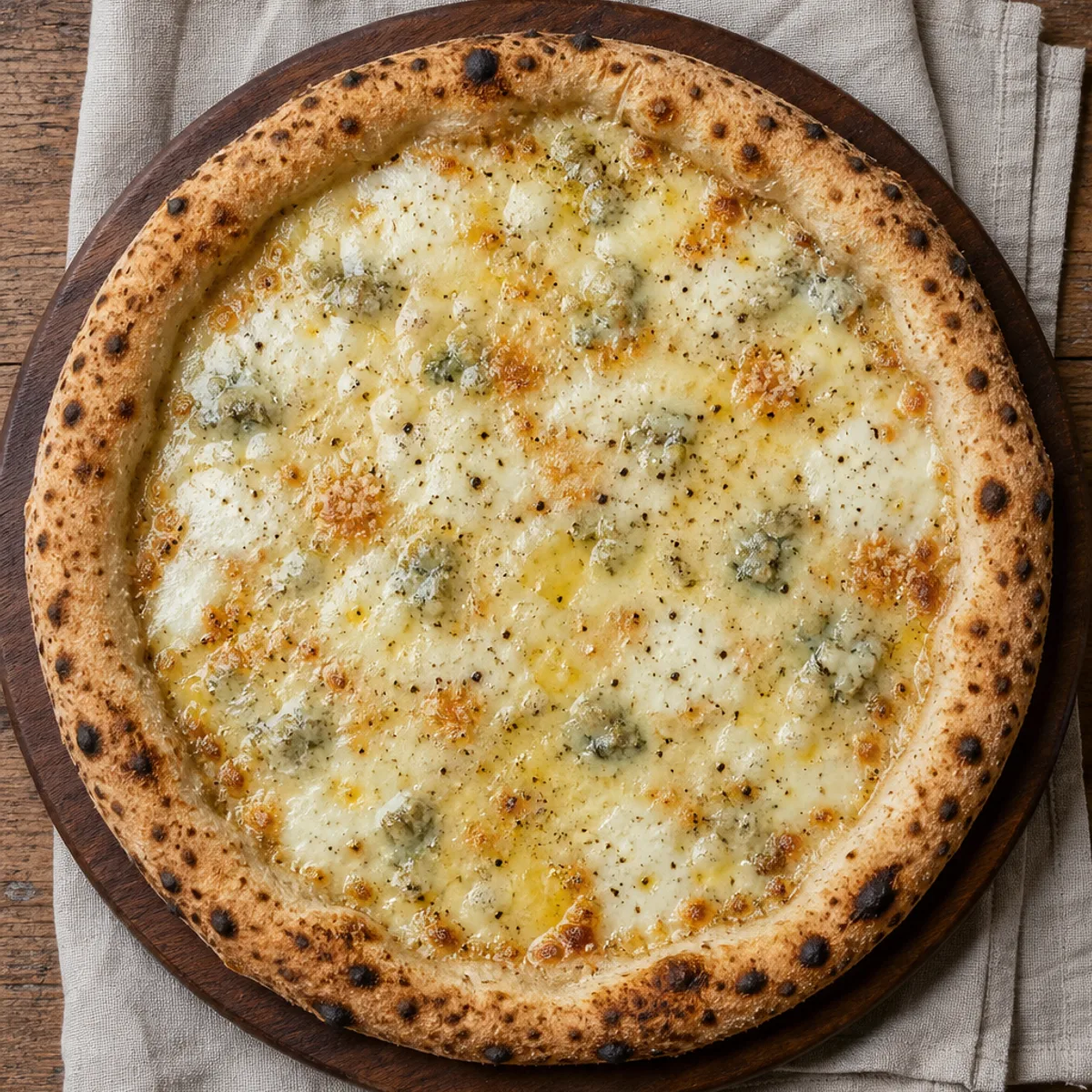
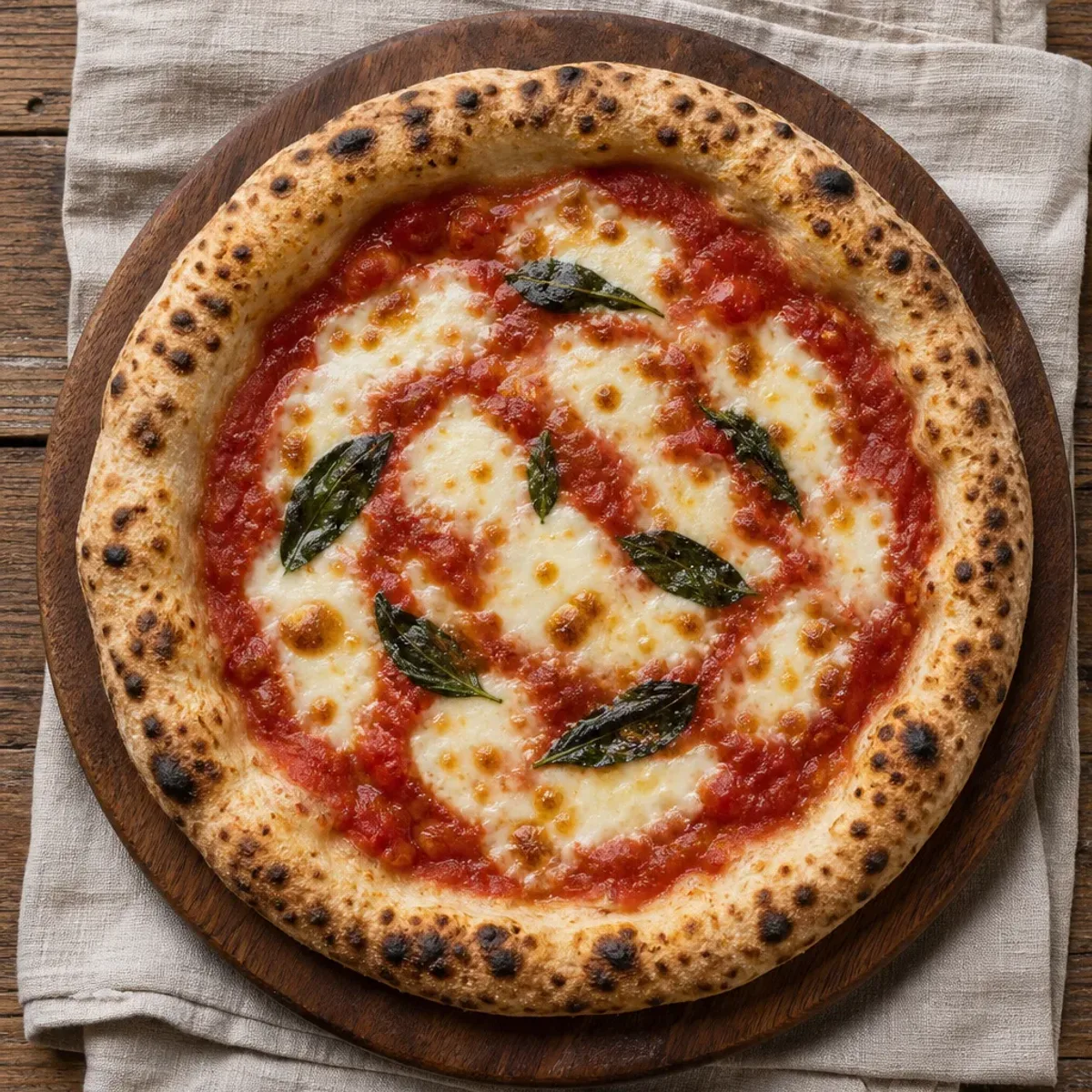
Neapolitan pizza with a long-fermented dough made with just 0.6 g yeast, topped with crushed tomatoes, fiordilatte and basil, and baked at high heat.
The dough builds over two long rises, while the steel, tomato sauce and mozzarella are made ready, before each pizza is shaped and baked individually. Work quickly with the shaped round so it doesn't stick or lose its air. A fully heated-through baking steel determines whether the base has time to turn crisp before the topping takes on color.
Ingredients
The Dough
- 600 g wheat flour, tipo 00 or strong bread flour
- 370 ml water, room temperature
- 17 g salt
- 0.6 g fresh yeast, about the size of a dried pea
- 50 g semolina flour, for shaping and the peel
The Topping
- 1 can peeled tomatoes, 400 g each, drained (or fresh cherry tomatoes, sliced or in wedges)
- ½ tsp salt
- 400 g fiordilatte (or mozzarella di bufala campana DOP)
- 16 leaf fresh basil, whole leaves
- 2 tbsp extra virgin olive oil
How to make it
The Dough
- Dissolve the salt completely in the water in a large bowl, then stir in about 60 g of the flour, until the water turns cloudy and slightly thick. Only now crumble the yeast into the mixture, since the salt needs to be diluted by the flour before the yeast meets it. The very small amount of yeast is intentional — the long rise does most of the work.Chef's tip Over a 20-hour rise, dough temperature matters more than the clock: much above 24°C and the dough peaks and slackens early. Aim for a dough around 20-22°C and judge by a domed, airy mass rather than by hours.
- Add the rest of the flour a little at a time while stirring, until the dough comes together into one cohesive, sticky mass with no dry flour clumps at the bottom.
- Knead the dough on a lightly floured surface for 15 minutes, until it is smooth and glossy and slowly springs back when you press a finger into it. ⏱ 15 minChef's tip In the last five minutes the dough turns from tacky and tearing to smooth and elastic — stretch a piece until light shows through without it ripping. If it fights back, leave it covered for 10 minutes and it stretches willingly again.
- Shape the dough into a tight ball and place it in a bowl. Cover with a damp kitchen towel and let it rise in one piece at cool room temperature, until it is airy and almost doubled in size (see advance prep).
- Weigh out the dough into four equal balls of about 245 g. Tighten each ball by folding the edges in toward the center and rolling it against the surface, until it is smooth and taut with no visible folds. ⏱ 10 min
- Place the balls well spaced apart in a tight-fitting box or on a flour-dusted tray under plastic wrap. Let them proof at 18-20°C, until they are puffed up and have spread slightly, and a fingertip press only slowly disappears again (see advance prep).Chef's tip Time is only a rough guide: a couple of degrees warmer in the kitchen and the balls are ready hours earlier. Over-proofed balls spread out completely flat and tear in the center when you press out the round.
- Place the baking steel on the second-highest rack and preheat the oven to its highest temperature, at least 250°C, for 60 minutes. The steel needs to be heated through completely, otherwise the cheese will burn long before the base is baked through. ⏱ 1 h · passiveChef's tip Switch to full top heat or the broiler for the last few minutes before launching, so the top gets the radiant heat the steel only delivers from below. Otherwise the base is baked while the cheese still sits white and the rim pale.
The Topping
- Drain the peeled tomatoes from the canning liquid in a sieve, then crush them by hand into a coarse, chunky sauce with whole pieces in it. Crushing by hand is gentle, so the seeds don't burst and turn the tomato bitter. Stir the salt into the tomato, so it sits in the sauce and not directly on the dough.
- Cut the fiordilatte into finger-thick strips and let them drain in a sieve while the oven heats, until a small pool of whey collects underneath the sieve. Otherwise the whey would run out onto the round and make the center soggy.Chef's tip Buffalo mozzarella carries far more whey than fiordilatte and will still weep after 30 minutes in the sieve. Look for cut edges that appear matte and dry rather than wet and shining before it goes on.
The Dough
- Turn a dough ball in semolina flour and place it on the surface. Press it flat from the center outward with your fingertips, until the round is about 28 cm in diameter and the center is thin but still about ¼ cm thick, with no see-through spots. Leave the outer 1-2 cm completely untouched — it's the finger pressing that pushes the air out into the rim and forms the puffed edge. Use neither a rolling pin nor a press. ⏱ 20 min
The Topping
- Lift the shaped round onto a pizza peel dusted with semolina flour. Spread a quarter of the crushed tomato over the center in a spiral, leaving the outer 2 cm free. Lay four basil leaves on the tomato and place a quarter of the drained mozzarella strips over them, so the leaves sit sheltered under the cheese and don't scorch, and drizzle half a tablespoon of olive oil over the round. ⏱ 10 min
- Shake the peel gently so the round releases, and slide it onto the red-hot baking steel. Bake the pizza for 6-7 minutes, until the edge is puffed up and spotted dark and the cheese is bubbling and melted glossy. Shape, top and bake the remaining three pizzas the same way, one at a time. ⏱ 25 min–30 minChef's tip Each pizza pulls heat out of the steel surface, so the next one bakes pale and dry if it goes straight on. Give the steel 4-5 minutes at full heat between bakes — a fleck of semolina should darken within seconds.
- Slide each pizza onto a wooden board and serve it right away while you shape the next one — a margherita turns soggy in the center if it sits waiting for the others. Cut it into wedges, or fold it twice into «a libretto» and eat it by hand.