Pinsa
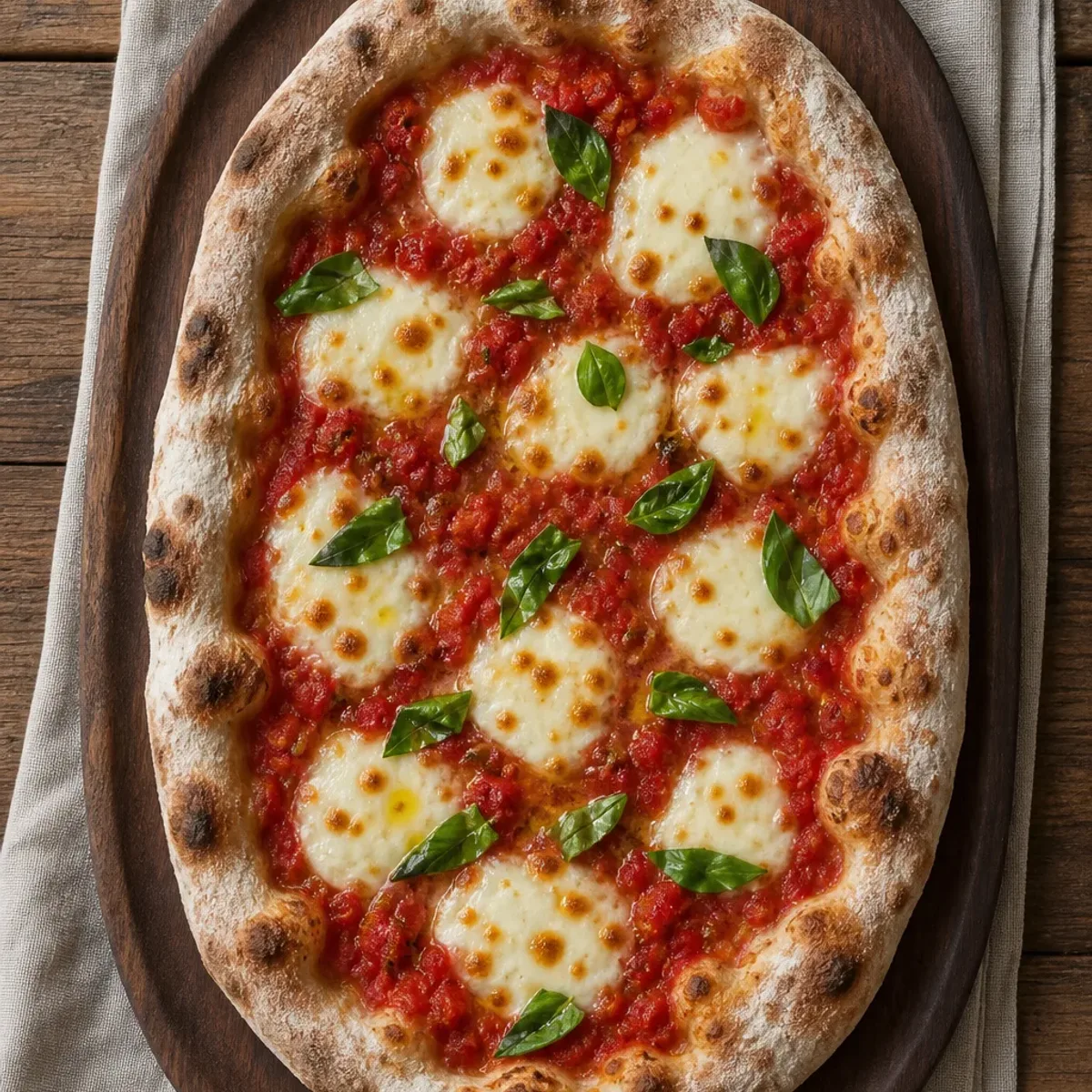
Roman pinsa made from wheat, rice and soy flour, cold-proofed and shaped into an oval, par-baked crisp and topped with tomato, mozzarella and basil.
The dough comes together, rests and cold-proofs before being divided and brought to room temperature while the steel heats all the way through. Each pinsa is shaped airily, par-baked bare and finished with a sparing layer of tomato and dry mozzarella. Whether the base turns crisp depends entirely on the baking surface being heated through.
Ingredients
The Dough
- 440 g type 0 wheat flour
- 55 g rice flour
- 55 g soy flour
- 440 ml water, cold
- 2 g fresh yeast
- 14 g salt, fine
- 1 tbsp extra virgin olive oil
For Shaping
- 3 tbsp rice flour, for the counter, dough balls and peel
The Topping
- 1 can peeled tomatoes, 400 g each, preferably San Marzano
- 300 g fior di latte mozzarella, diced
- 2 tbsp extra virgin olive oil
- ½ tsp salt
- 1 handful fresh basil, whole leaves
How to make it
The Dough
- Combine the type 0 wheat flour, rice flour and soy flour in a large bowl. Crumble the fresh yeast into 400 ml of the cold water and stir until fully dissolved. Pour the water over the flour and bring the dough together by hand until no dry flour remains at the bottom and the mixture holds together as a rough, sticky lump.Chef's tip The cold water and the small amount of yeast belong together: the dough should rise slowly in the refrigerator, not pick up speed on the counter. The lump looks rough and sticky right now — don't add flour to fix it.
- Cover the bowl with a cloth and let the dough rest for 20 minutes. The flour absorbs the water during this time, and the dough becomes noticeably softer and less grainy to the touch. ⏱ 20 min · passive
- Sprinkle the fine salt over the dough and knead in the last 40 ml of water a little at a time, so the dough doesn't split. Add the dough's olive oil last. Work the dough in the bowl for 8-10 minutes, until it releases from the sides and feels supple and lightly glossy. ⏱ 8 min–10 min
- Take hold of the dough on one side, stretch it upward and fold it in over the center. Repeat all the way around the bowl four times, until the dough tightens up and holds its shape. Place it in a container with a tight-fitting lid, greased with a little extra olive oil, and put it in the refrigerator (see advance prep).
For Shaping
- Gently turn the cold-proofed dough out onto a counter with a thick layer of rice flour, so the air bubbles stay put in the dough. Divide it into four equal portions of about 255 g each. Fold each portion in toward the center all the way around and turn it seam-side down, until the ball has a smooth, taut surface. ⏱ 10 min
- Cover the balls with a cloth and let them rest for 90 minutes at room temperature. They're ready when the chill and stiffness from the refrigerator are gone, and a finger pressed into the dough only slowly springs back. ⏱ 1 h 30 min · passiveChef's tip Feel the centre of a ball, not just the surface — a cold core stays stiff and snaps back, and the base will tear or shrink as you stretch it. Room temperature dough gives way slowly under the fingers.
- Set the baking steel or pizza stone on the second-highest rack while the balls rest. Heat the oven to its highest temperature, 250-275°C, for 45 minutes. The steel needs to be heated all the way through, or the base won't have time to crisp up under the wet dough. ⏱ 45 min · passiveChef's tip The oven's ready signal reports air temperature, which arrives long before the steel's core does. Start the 45 minutes from the beep, not from switching on.
The Topping
- Crush the peeled tomatoes between your fingers in a bowl so they turn coarse and uneven, and stir in salt and 1 tbsp of the olive oil. Pat the mozzarella cubes dry in a clean cloth until the cloth no longer comes away wet — otherwise the cheese's water would pool on the par-baked base.
For Shaping
- Turn a dough ball in rice flour and press it out from the center with your fingertips, pushing the air out toward the edge. Stretch it further into an oval about 30 × 20 cm with a thick, bubbly rim. Transfer it onto the pizza peel dusted with rice flour, and shake it gently until it slides freely. ⏱ 15 minChef's tip Keep fingertips off the outer 2 cm: the gas you push out there is what becomes the tall, blistered rim. If the base sticks on the peel, lift an edge and puff more rice flour underneath before launching.
- Slide the base onto the red-hot steel and par-bake it with no toppings for 4-5 minutes, until the surface is dry and the rim has risen and gotten its first brown spots. The par-bake sets the base before the tomato goes on, so the large amount of water in the dough doesn't make it soggy. ⏱ 15 min–20 min · passiveChef's tip Pull it while the surface is dry and only lightly spotted — it still has 5-6 minutes to go. A fully coloured par-bake turns hard and dry by the end of the second bake.
The Topping
- Pull the par-baked base out of the oven and spread 5-6 tbsp of the crushed tomato over it in a thin layer. Leave the bubbly rim bare. Scatter a quarter of the mozzarella cubes on top with good spacing, so the cheese melts into pools rather than a solid blanket.
- Return the pinsa to the steel and bake it for another 5-6 minutes, until the cheese has melted and gotten golden spots and the rim is crisp and dark-spotted. Repeat with the remaining three portions, one at a time, so the steel can regain its heat between each pinsa. ⏱ 20 min–25 min · passive
The Topping
- Transfer each finished pinsa to a wooden board, tear a quarter of the basil leaves over it by hand, and drizzle a little of the remaining olive oil over the top. Cut it into wide strips crosswise and set the board in the middle of the table, so the strips can be picked up with fingers while they're still warm.