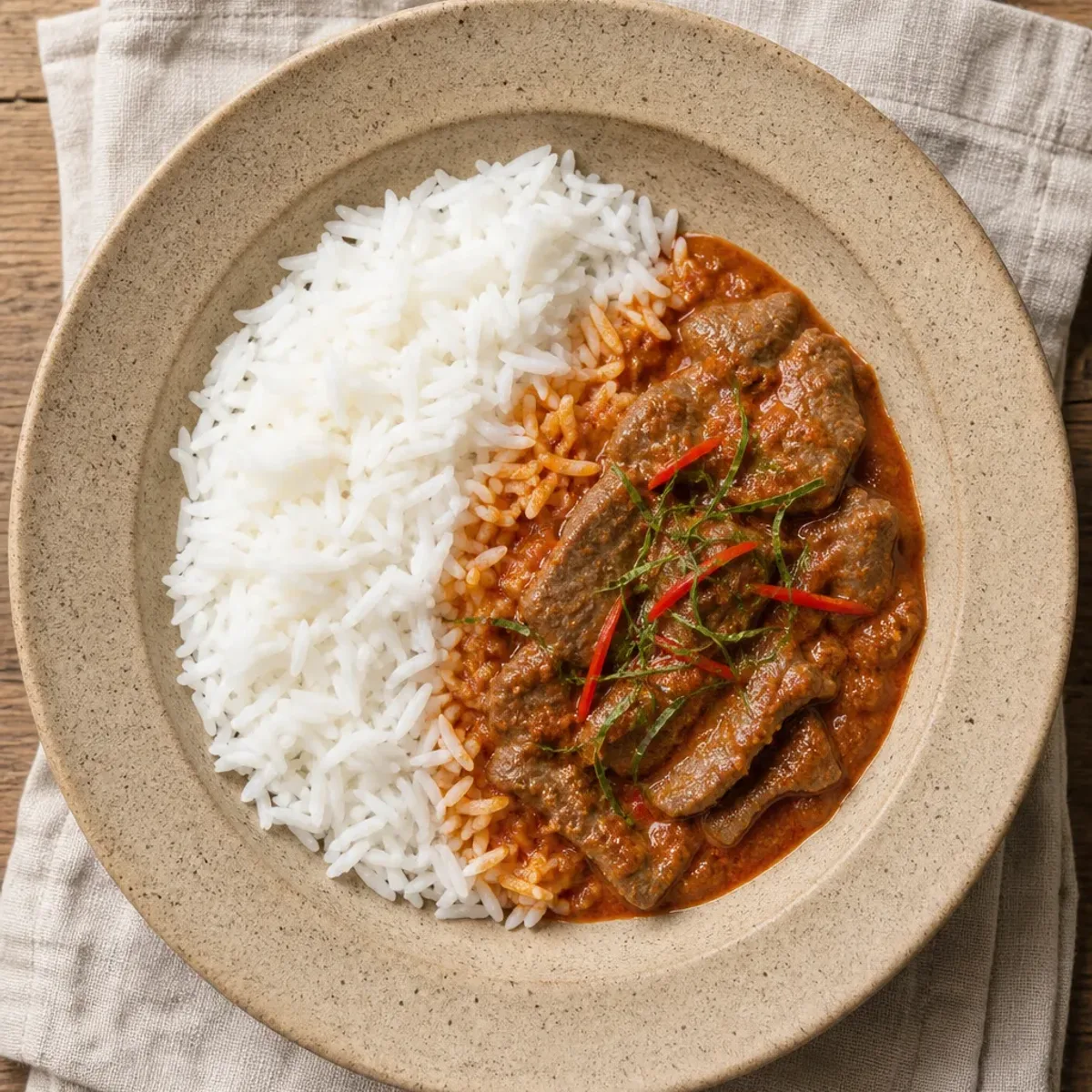
Phanaeng Curry
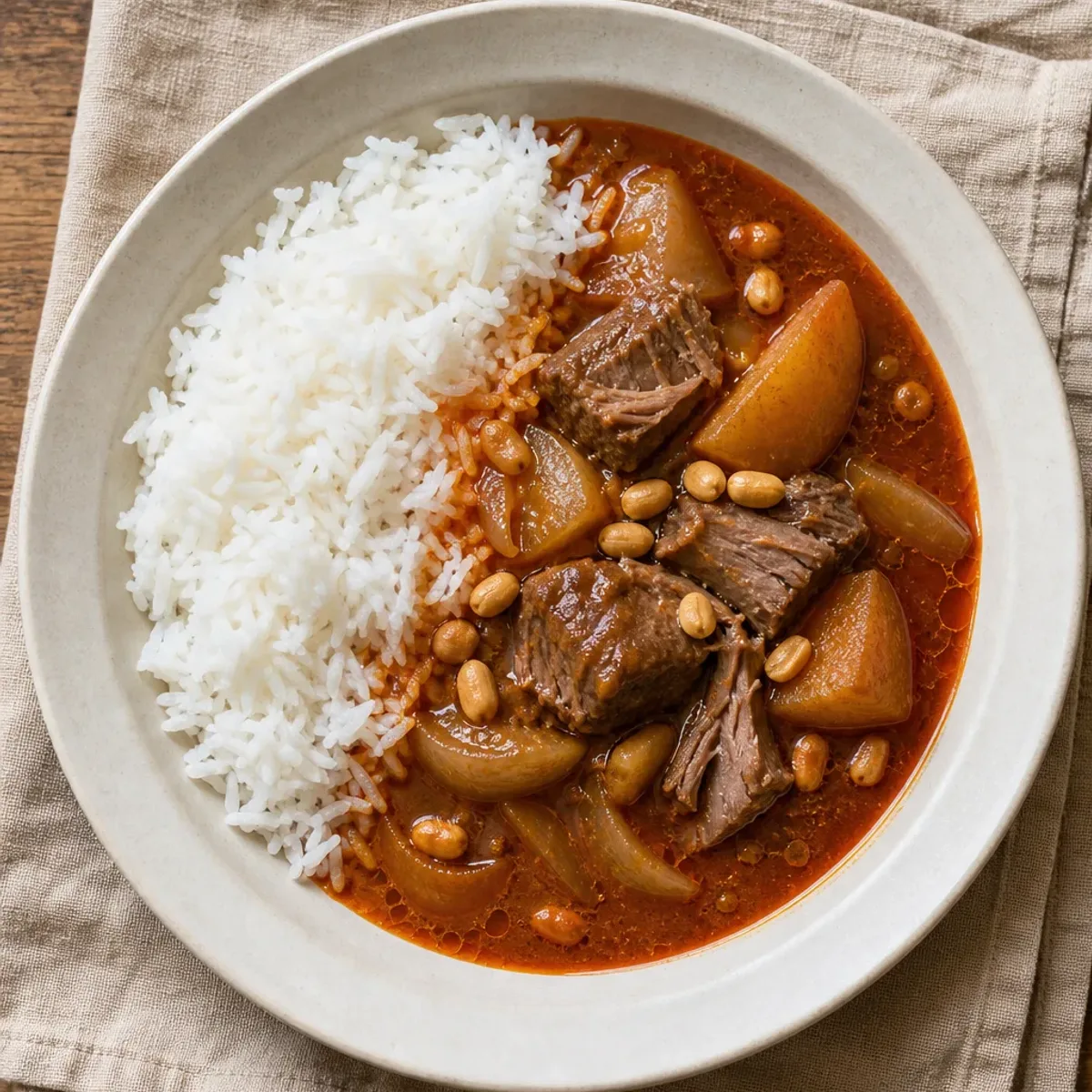
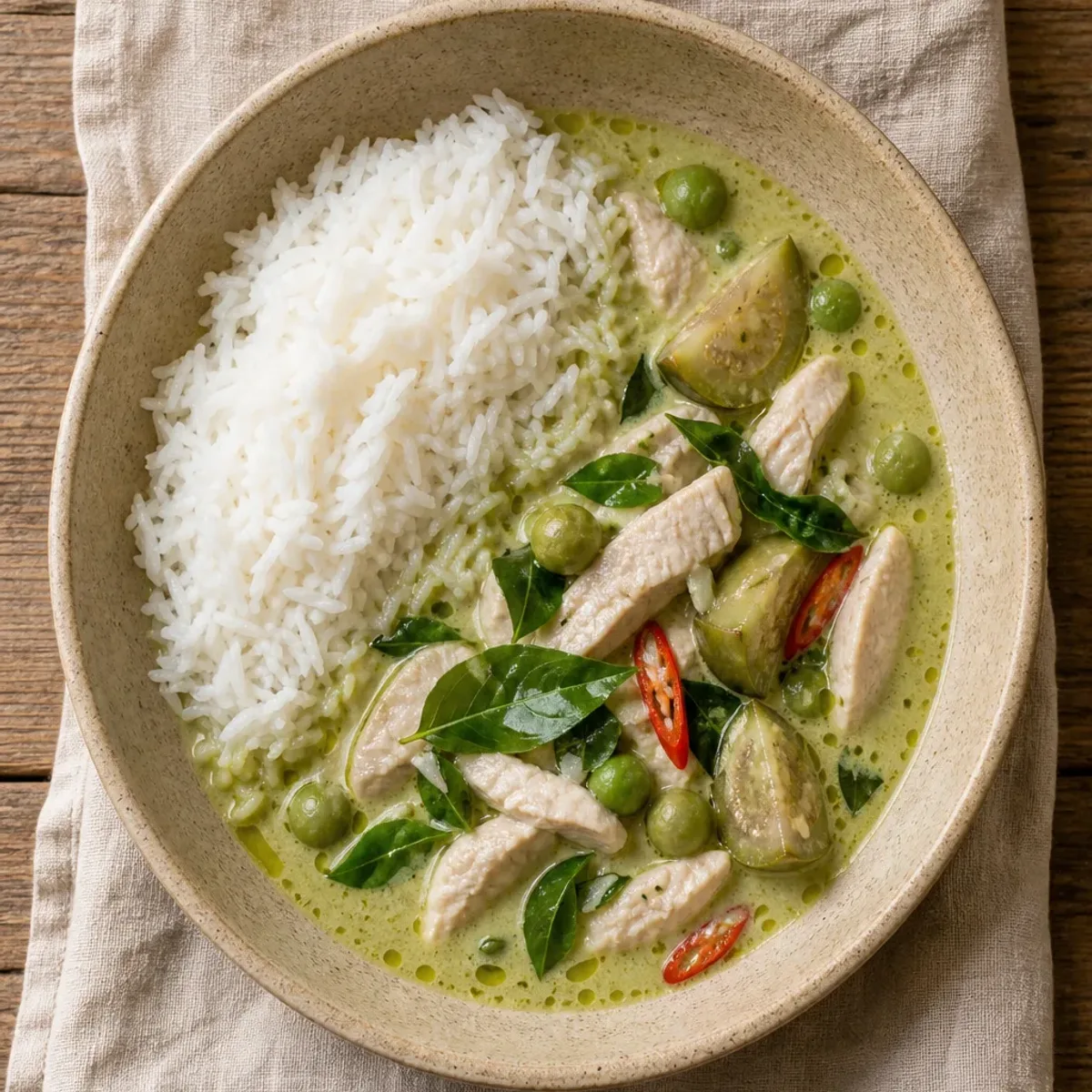
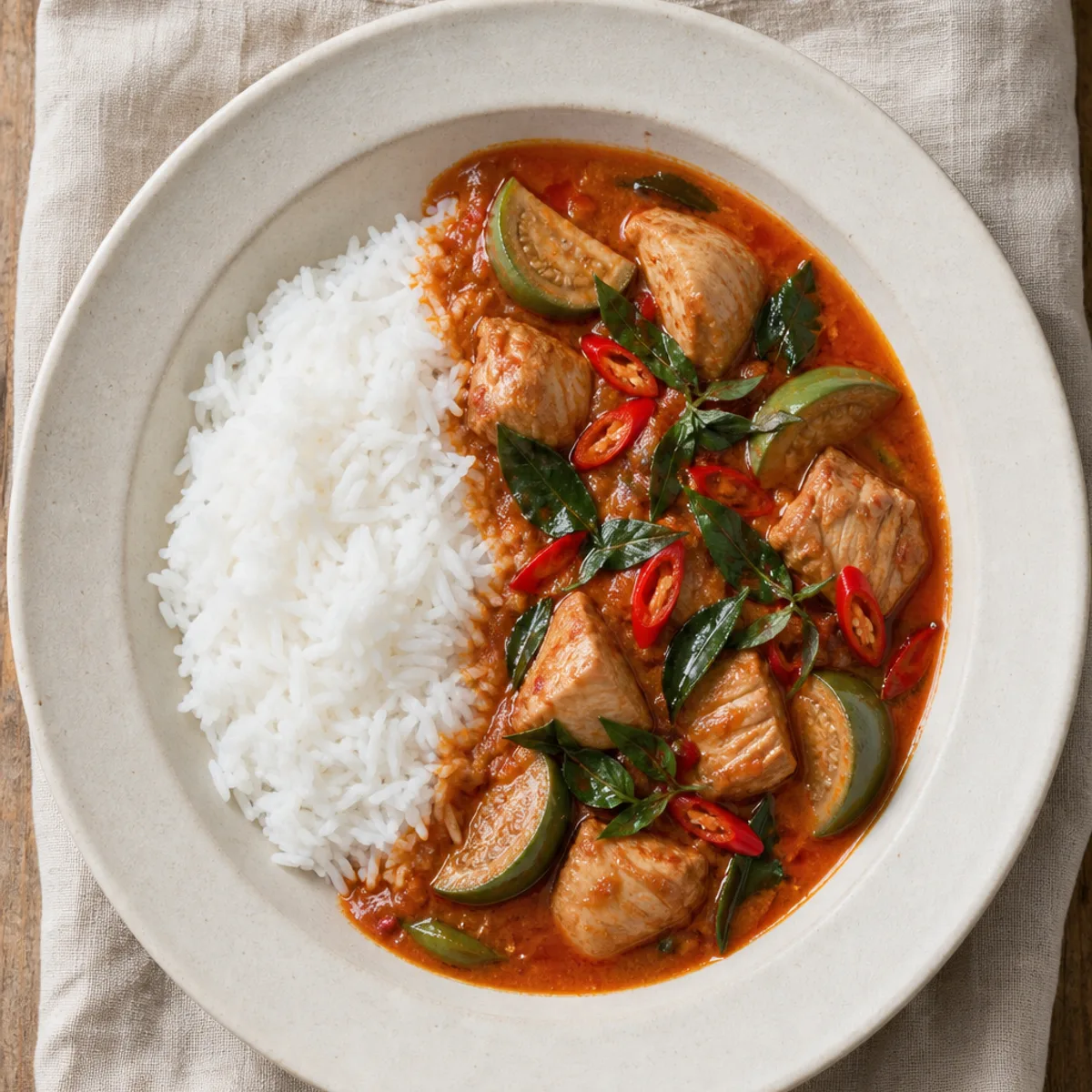
Thick curry with roasted peanuts pounded into the paste, beef simmered in reduced coconut milk to a sticky, concentrated sauce.
While the chiles soften, the spices are toasted and pounded into a coarse, fragrant panang paste, and the rice steams until done before the curry comes together. The coconut cream is first cooked down to release its oil, the paste is fried in this, and the sauce is reduced hard before the beef goes in. The critical factor is the clear separation of coconut oil before the paste is fried.
Ingredients
The panang paste
- 6 dried long red chiles
- 1 tsp salt
- 1 tbsp coriander seeds
- 1 tsp cumin seeds
- 1 tsp white peppercorns
- 2 pcs lemongrass, only the soft lower part, finely chopped
- 20 g galangal, finely chopped
- 1 tsp kaffir lime zest, finely grated
- 1 tbsp cilantro roots, finely chopped
- 3 shallots, roughly chopped
- 6 clove garlic
- 1 tbsp shrimp paste
- 3 tbsp roasted peanuts, unsalted
The curry
- 2 can coconut milk, full-fat, 400 ml each, do not shake
- 700 g flank steak, thinly sliced against the grain
- 6 kaffir lime leaves, finely shredded
- 3 tbsp fish sauce
- 2 tbsp palm sugar, chopped
The jasmine rice
- 400 g jasmine rice
- 6 dl water
- ½ tsp salt
To serve
- 3 kaffir lime leaves, finely shredded
- 1 red chile, cut into thin strips
How to make it
The panang paste
- Soak the dried chiles in warm water for 20 minutes, until completely soft and pliable. Snap off the stems, shake out the seeds, and press the water out of them — the seeds would make the paste grainy and bitter. ⏱ 20 min · passive
- Dry-toast the coriander seeds and cumin seeds in a pan over medium heat for 2 minutes, shaking the pan, until they smell nutty and the coriander seeds start to crackle.Chef's tip Toast the coriander and cumin separately if you can — cumin is smaller and scorches while coriander is still pale. Pull the pan the moment the smell turns nutty; bitter, over-toasted seeds cannot be corrected later.
- Pound the toasted spices with the white peppercorns in the mortar for 2 minutes, until it's a fine, even powder, and tip it into a small bowl. The hard spices need to be ground while the mortar is dry, or they'll clump up once the paste turns wet.
- Pound the drained chiles with the salt in the mortar for 6 minutes, until the mass is fine and moist with no visible pieces of skin. The salt tears the fibers apart and shortens the work.
- Pound in the lemongrass, galangal, kaffir lime zest, and cilantro roots a little at a time for 8 minutes, until the paste is even and no fibers remain when you rub a bit of it between your fingers.Chef's tip Lemongrass and galangal are the most fibrous things in the mortar, so add them in small handfuls — an overloaded mortar slides material around instead of crushing it. Rub a pinch between your fingers: any thread you can feel will be a thread in the finished curry.
- Pound in the shallots and garlic for 4 minutes, until the paste is smooth and glossy and gathers into a single mass at the bottom of the mortar.
- Finally, pound the shrimp paste, spice powder, and roasted peanuts into the mortar for 3 minutes, until the paste is dark red and just barely grainy from the nuts. The peanuts should still be noticeable, since they're what gives panang its body.
The jasmine rice
- Rinse the jasmine rice in plenty of cold water, drain, and repeat until the rinse water is almost clear — otherwise the loose starch would make the grains stick together. Put the rice in a pot with the measured water and salt and bring it to a boil over high heat for 5 minutes.
- Cover with a lid, turn the heat all the way down, and let the rice steam for 12 minutes without lifting the lid, until the water has been absorbed and small steam holes appear on the surface. ⏱ 10 min · passive
- Take the pot off the heat and let the rice sit covered for 10 minutes. Then gently fluff it with a fork so the grains separate without being crushed. ⏱ 10 min · passive
The curry
- Open the coconut milk without shaking the cans and scrape the thick white layer from the top into a wok or a wide pan. Cook it down over medium-high heat for 5-7 minutes, until it separates and clear oil collects along the edge.
- Stir the whole panang paste into the separated coconut oil and fry it over medium heat for 5 minutes, stirring regularly, until it darkens, thickens, and smells sharply of chile and galangal.Chef's tip You're frying, not simmering: the paste should sizzle in the oil the whole time. If it looks wet and dull, let more water cook off before continuing — the aroma should shift from raw and sharp to round and toasty.
- Pour in the rest of the coconut milk along with the 6 finely shredded kaffir lime leaves for the curry and let it simmer gently, uncovered, for 15 minutes, until the sauce has reduced by half and a spoon dragged through the pan leaves a trail. ⏱ 15 min · passive
- Add the beef slices to the reduced sauce one at a time, so they don't clump together. Let them simmer over low heat for 8-10 minutes, until the meat is tender and cooked through with no raw, red surface. ⏱ 8 min–10 minChef's tip Striploin is lean and has no connective tissue to melt. Over low heat, with the sauce barely trembling, the thin slices turn tender in a few minutes, whereas a rolling boil would draw out the juices and leave the meat stringy.
- Season the curry to taste with the fish sauce and palm sugar and let it cook for 3 more minutes, until the sauce clings to the meat and small beads of red oil appear on the surface. Panang should be a thick, sticky sauce, not a soup.Chef's tip Season only now: the sauce has been reducing for twenty minutes, and fish sauce added earlier would concentrate into something harshly salty. Taste for the balance point where salt, sweet and chile all register rather than one dominating.
To serve
- Ladle the curry into a deep bowl and top with the finely shredded kaffir lime leaves for serving and the chile strips. Set the bowl on the table along with the steamed rice in a separate bowl. Let each diner take rice on their plate and spoon a little curry alongside at a time — the sauce is concentrated and eaten in small amounts with plenty of rice.