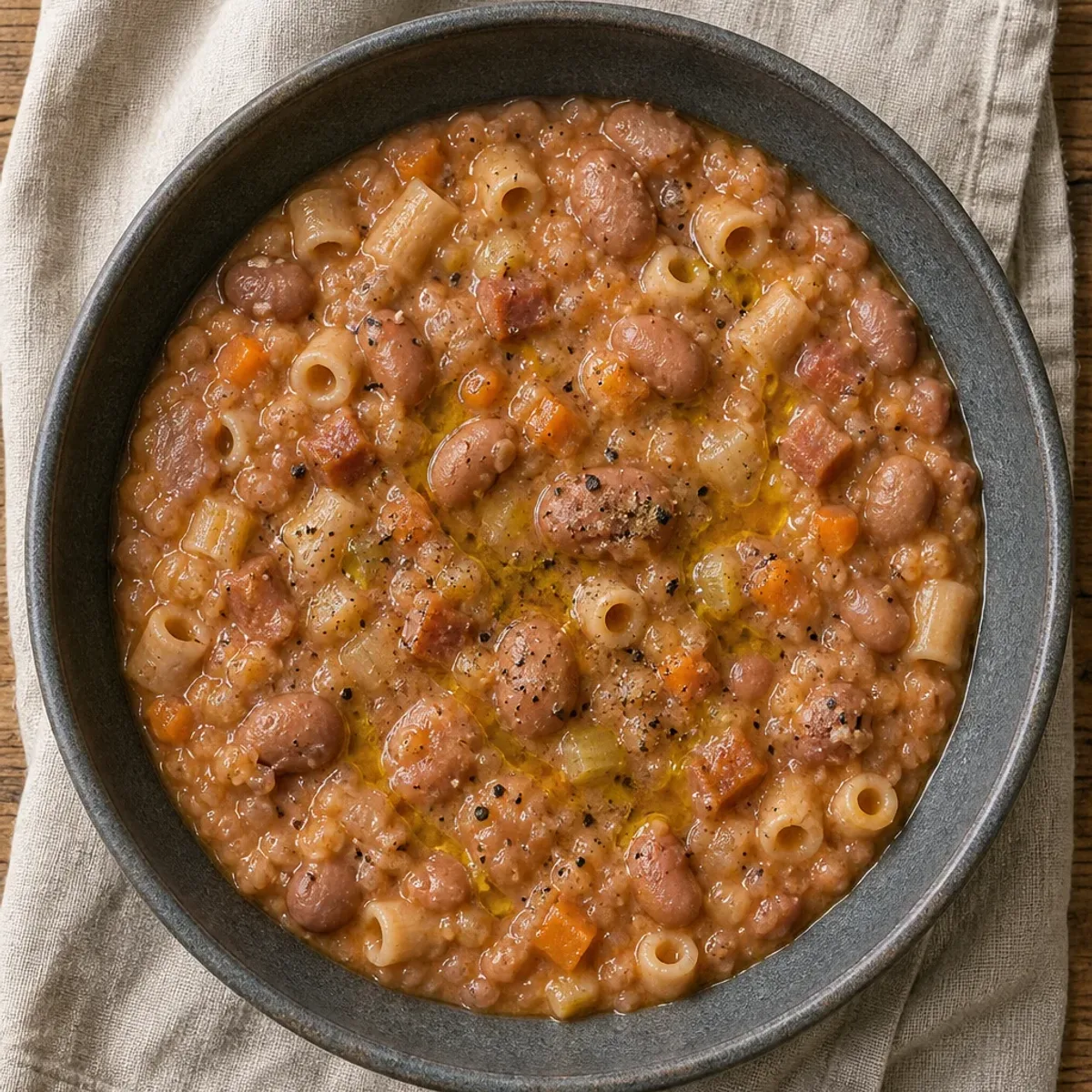
Pasta e Fagioli
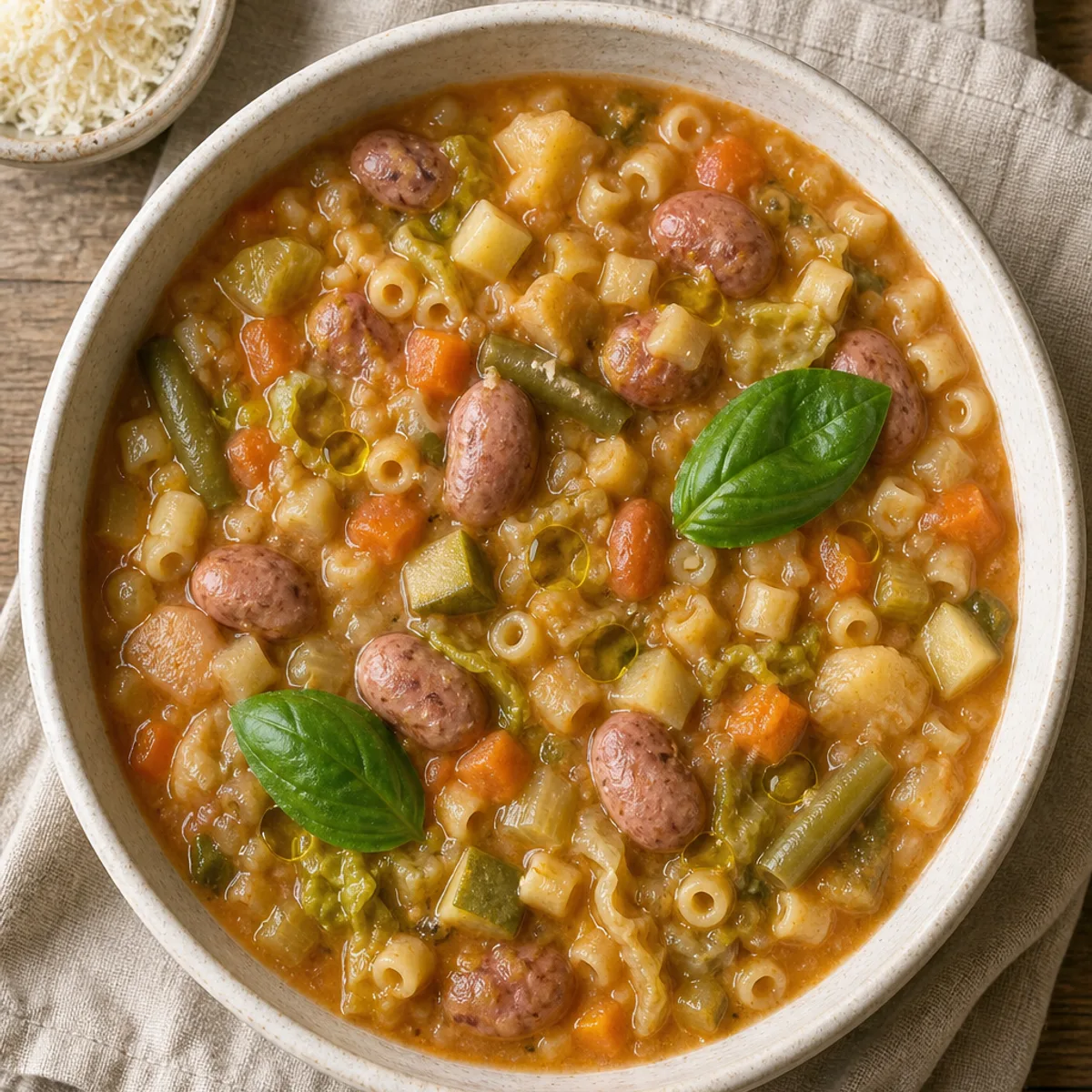
An Italian bean and pasta soup where a third of the borlotti beans are blended into a creamy purée, and ditalini cook directly in the soup to bind it.
The beans are cooked tender with aromatics, while pancetta and soffritto build the deep base in a second pot. Part of the beans are blended for body, after which the soup comes together, the pasta cooks directly in it, and the dish is left to rest briefly before serving. The crucial balance is the consistency, as the pasta's starch binds the soup.
Ingredients
The Beans
- 250 g dried borlotti beans, soaked overnight
- 2 l water
- 2 clove garlic, crushed with the flat of a knife
- 1 sprig rosemary
- 1 pcs Parmesan rind
- 1½ tsp salt
The Soup
- 3 tbsp olive oil
- 100 g pancetta, diced small
- 1 onion, finely chopped
- 1 carrot, finely diced
- 60 g celery, finely diced
- 2 tbsp tomato paste
- 300 g ditalini
- salt, to taste
To Serve
- 2 tbsp extra virgin olive oil
- black pepper, freshly ground
How to make it
The Beans
- Drain the soaking water from the beans and rinse them under cold water. Put them in a large pot with the 2 liters of cold water, the crushed garlic cloves, the rosemary sprig, and the Parmesan rind. Bring it slowly to a boil, until the surface is gently bubbling. ⏱ 10 minChef's tip Keep it at a lazy boil where the bubbles break one at a time. At a hard boil the beans knock against each other, the skins split, and they fall apart long before the centres are tender.
- Turn the heat down to low and let the beans simmer covered for 60-75 minutes. They are done when the skins are soft and a bean mashes without resistance between two fingers. ⏱ 1 h–1 h 15 min · passiveChef's tip Keep the beans just barely covered as they cook — if the liquid drops below them, the exposed ones stay chalky. Top up with hot water, not cold, so the simmer doesn't stall.
- Fish out the rosemary sprig, the garlic cloves, and the Parmesan rind and discard them. Stir the salt into the hot pot and taste the cooking liquid — it should taste like a light, well-rounded soup. The beans are salted only now, because salting from the start toughens the skins.
- Ladle out a third of the beans with a little of the cooking liquid and blend them to a completely smooth, thick purée. Stir the purée back into the pot, so it binds the soup without cream. The rest of the beans stay whole, so the dish gets both velvet and bite.
The Soup
- Heat the olive oil in a second large pot over medium heat and cook the pancetta cubes for 5-7 minutes. They are ready when the fat has rendered clear and the cubes are golden at the edges.
- Add the onion, carrot, and celery, and sauté them over low to medium heat for 8-10 minutes. The vegetables should be soft and the onion translucent without taking on color. They must not brown, because that gives the soup a bitter edge. ⏱ 8 min–10 min
- Stir in the tomato paste and let it cook along for 2 minutes, until it darkens and smells sweet instead of sharp.Chef's tip The paste should darken to brick-red and cling to the pan bottom; that toasting drives off the raw tinned tang and deepens the savoury base. Keep it moving — burnt paste turns the whole pot bitter.
- Pour the beans and all their cooking liquid into the pot with the vegetables. Let the soup simmer uncovered for 15 minutes, until it has thickened and slowly closes back together after a stir. ⏱ 15 min · passiveChef's tip Scrape along the bottom every few minutes. The bean purée settles and sets as a layer down there, and the first sign of it is a faintly scorched taste — by which time the damage is done.
- Stir the ditalini into the simmering soup and cook them for 8-10 minutes, stirring frequently, until al dente. The pasta is cooked in the soup and not in water on the side, because its starch is what binds the dish. Season with salt to taste at the end. ⏱ 8 min–10 minChef's tip If it tightens past a spoonable consistency, loosen with a ladle of hot water rather than cold, and salt only after — the pasta absorbs a surprising amount of liquid and salt as it cooks.
- Take the pot off the heat and let the dish rest covered for 5-10 minutes. It thickens further and settles to the warm eating temperature at which the dish is traditionally served. ⏱ 5 min–10 min · passiveChef's tip The rest isn't idle time: the pasta keeps drinking, and after a quarter of an hour the dish is closer to porridge than soup. If it has gone too tight, stir in a splash of hot water until it slowly closes back around the spoon.
To Serve
- Ladle the warm pasta e fagioli into deep bowls. Drizzle a thin stream of extra virgin olive oil over each portion and grind black pepper over the top. Each diner stirs the oil into their own bowl right before the first bite.