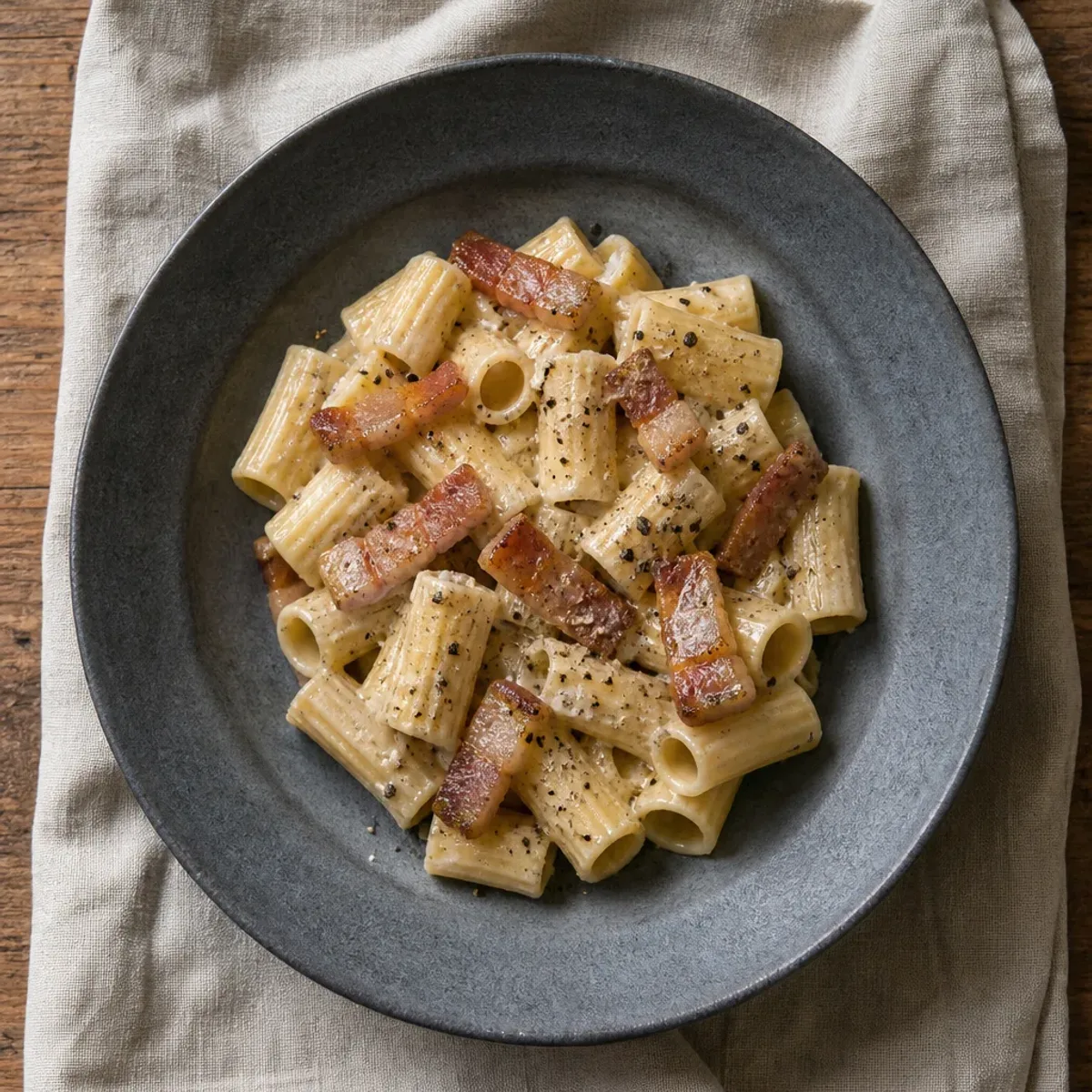
Pasta alla Gricia
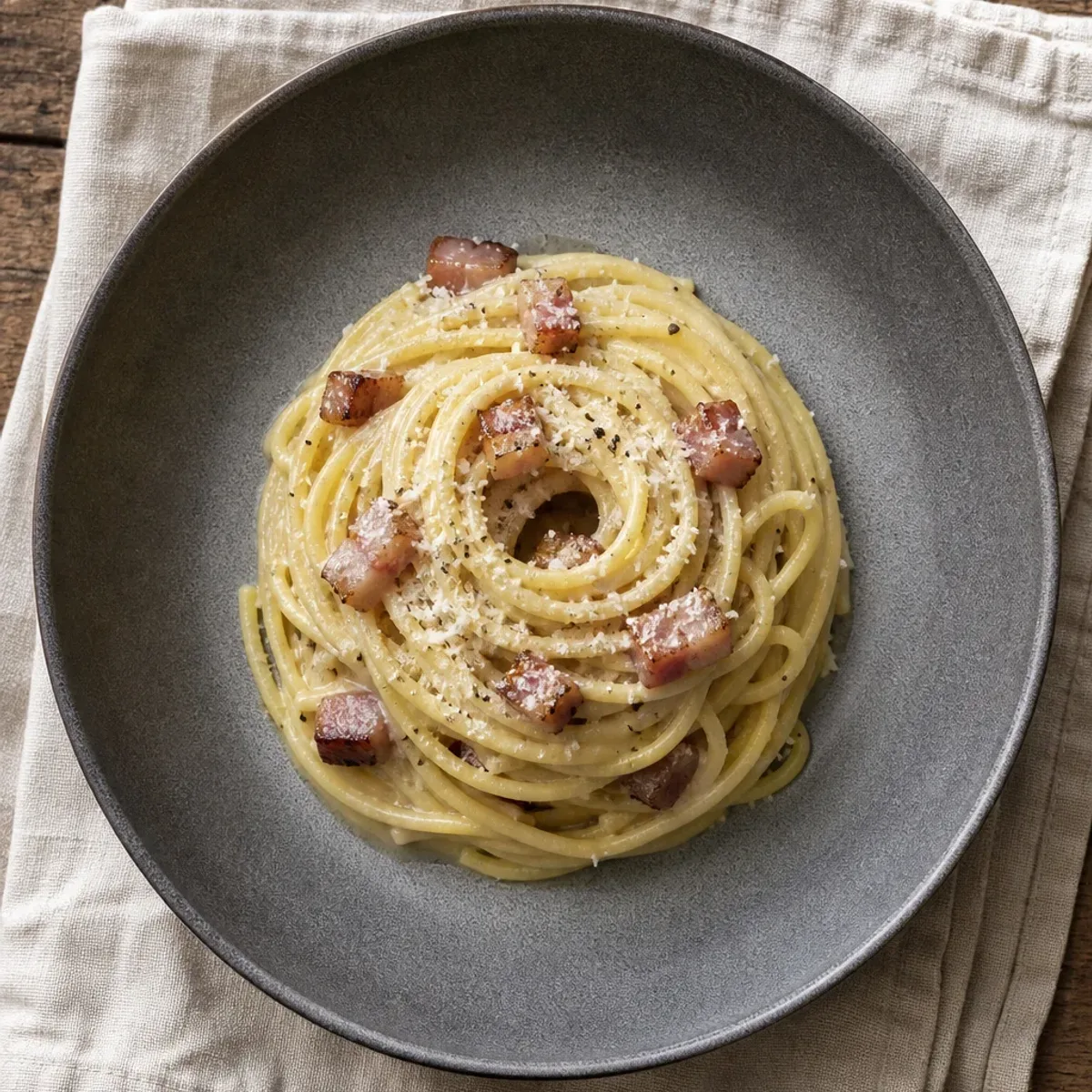
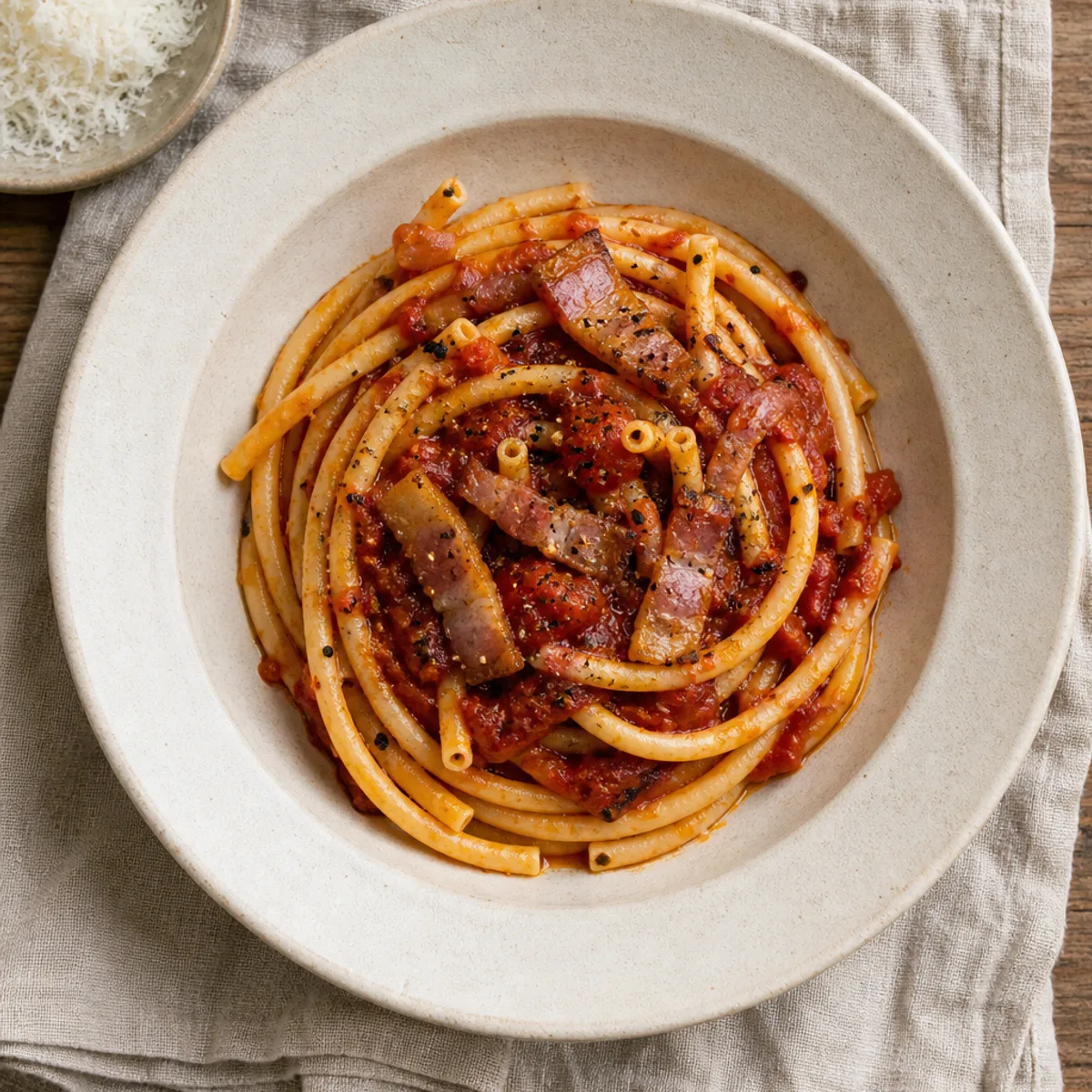
Roman pasta with nothing but crisp-fried guanciale, freshly cracked pepper, and pecorino emulsified with pasta water — amatriciana without the tomato.
The guanciale is left to slowly render its fat while the water comes to a boil, and the pepper is briefly toasted in the flavorful fat. The pasta is then quickly tossed together with a cooled pecorino cream and pasta water, before the guanciale is folded in and the dish is served immediately. The critical factor is the temperature when the pecorino cream meets the pasta.
Ingredients
- 500 g rigatoni
- 200 g guanciale, in one piece
- 120 g pecorino romano, freshly grated
- 2 tsp black peppercorns
- 1 tbsp coarse salt, for the pasta water
How to make it
- Cut the tough rind off the piece of guanciale and discard it. Cut the meat into strips about 1 cm thick, so they can turn crisp at the edges without drying out in the middle.
- Set a large pot with 4 liters of water over high heat and salt it lightly with the coarse salt. The water should be salted less than usual, since the pecorino brings a lot of salt to the dish at the end. Bring it to a full, rolling boil. ⏱ 10 min · passive
- Coarsely crush the peppercorns in a mortar or on your pepper mill's coarsest setting, until the pieces are visibly uneven and smell sharp. Set a pinch of the pepper aside for serving.
- Place the guanciale strips in a cold, dry skillet and only then turn the heat up to medium, so the fat has time to render before the meat takes on color. Cook for 8-10 minutes, turning occasionally, until the fat has rendered clear and the strips are golden and crisp at the edges but still tender in the middle. ⏱ 8 min–10 minChef's tip Starting cold lets the fat liquefy before the exterior sets. You'll hear a quiet, low sizzle, not a sharp crackle; if it spits loudly within the first minute, the heat is too high and the meat will toughen before it renders.
- Lift the strips out with a slotted spoon and place them on a plate. Leave all the rendered fat behind in the skillet — it is the dish's only fat and carries all the flavor.
- Turn the heat down to low and toast the coarsely crushed pepper in the hot fat for 1 minute, until it smells warm and resinous. Immediately take the skillet off the heat so the pepper doesn't turn bitter.
- Cook the rigatoni in the boiling water for 10-12 minutes, about 1 minute less than the package instructions. It should be al dente, with a distinct bite at the center. ⏱ 10 min · passive
- Ladle 3 dl of the starchy pasta water into a measuring cup and let it cool for half a minute. Put the freshly grated pecorino romano in a bowl and stir in 1 dl of the water a little at a time. The water must not be at a rolling boil, or the cheese will seize into clumps instead of melting. Keep stirring until you have a thick, smooth cream that flows slowly off the spoon.Chef's tip Pecorino's proteins tighten and squeeze out fat above roughly 70-75°C, which is why it strings. Let the ladled water sit until it stops steaming hard, and add it a spoonful at a time — a thick paste first, thinned after.
- Lift the rigatoni straight from the pot into the skillet with the pepper-toasted fat, letting it drip lightly as you go. Toss the pasta over low heat for 1 minute, until every piece is glossy with fat all the way around.Chef's tip The water clinging to the rigatoni is doing work — its dissolved starch is what will hold fat and cheese together. Don't shake the pasta dry or drain it in a colander.
- Take the skillet completely off the heat and wait half a minute for it to stop sizzling. Stir in the pecorino cream and toss the pasta vigorously, adding a little of the reserved pasta water at a time. Continue for 2 minutes, until the sauce is smooth and creamy and clings to the rigatoni without pooling at the bottom of the skillet. Taste — it will rarely need more salt.Chef's tip Vigorous tossing, not stirring, is what emulsifies here: the motion disperses fat into the starchy water. Look for a sauce that coats the rigatoni and leaves a clean trail on the pan bottom, with no clear fat pooling at the edge.
- Fold two-thirds of the crispy guanciale strips into the pasta. Divide it among four warm, flat pasta plates and top with the remaining strips along with the pepper you set aside. Serve immediately, as the cream tightens up as it cools.