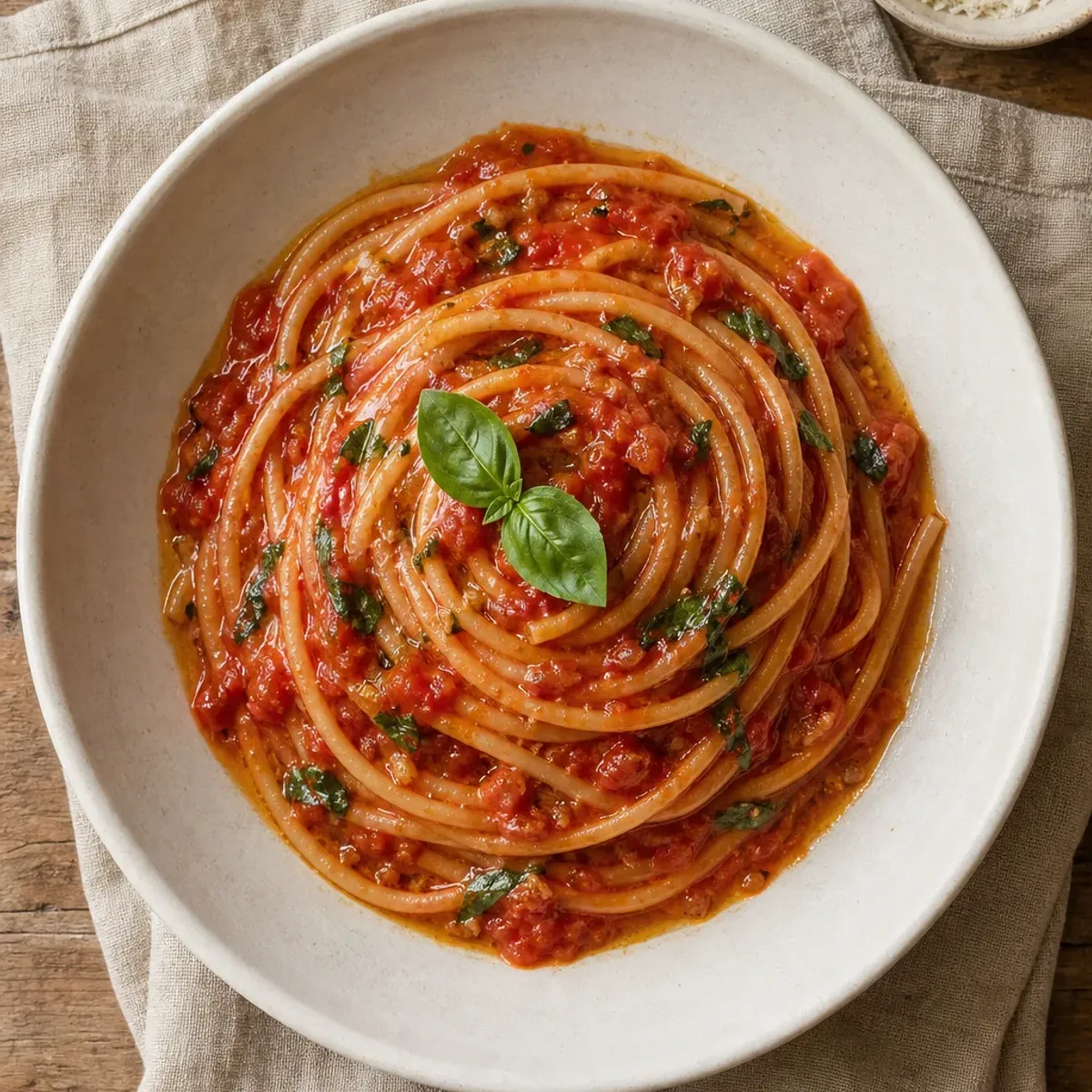
Pasta al Pomodoro
A simple Italian tomato pasta where canned tomatoes are crushed by hand and simmered in garlic oil, before the sauce is bound with parmigiano off the heat.
The tomatoes first develop depth in the garlic oil and simmer down while the pasta water comes to a boil. The slightly undercooked spaghetti is then finished in the sauce, before cheese and basil bring the dish together just before serving. The glossy, clinging sauce is what determines the result.
Ingredients
- 500 g spaghetti
- 2 can canned whole tomatoes, preferably San Marzano, 400 g each
- 5 tbsp extra virgin olive oil
- 2 clove garlic, whole, lightly crushed
- 1 bunch fresh basil
- 50 g Parmigiano Reggiano, freshly grated
- salt
How to make it
- Pour the canned tomatoes with their juice into a bowl and crush them with your hands into rough, uneven pieces. Pick out the hard stem ends as you go. The sauce should turn out rustic with soft chunks of tomato, so don't crush them beyond the point where they lose their shape.
- Warm 4 of the 5 tbsp olive oil with the crushed garlic cloves in a wide sauté pan over medium-low heat for 3 minutes, until the oil smells distinctly of garlic and the cloves are pale golden at the edges. Fish out the cloves and discard them, since garlic that takes on more color turns bitter during the long simmer.Chef's tip Keep the oil below a real sizzle — you want a lazy bubbling around the cloves, not a crackle. Golden garlic gives sweet aroma; brown edges bring acrid notes the long simmer will only concentrate.
- Pour the crushed tomatoes into the hot oil and season them well with salt. Turn the heat up to medium and let it come to a simmer for 2 minutes, until the surface bubbles evenly in the middle.Chef's tip Salt the tomatoes now rather than at the end: 25 minutes of simmering lets the seasoning penetrate the chunks, and the sauce will concentrate as it reduces, so season confidently but not to final strength.
- Turn the heat down to low and let the sauce simmer uncovered for 25 minutes, stirring a couple of times along the way. It's ready when the color has darkened to a deep brick red, the oil gathers into clear beads along the edge, and a spoon leaves a brief trail on the bottom of the pan. ⏱ 25 min · passiveChef's tip Scrape the bottom with the spoon as you stir — the thin film of tomato that settles there is the first thing to catch, and it gives the whole sauce a scorched aftertaste. A wide pan evaporates markedly faster than a tall pot.
- Meanwhile, set a large pot with 4-5 liters of water over high heat and bring it to a rolling boil, about 10 minutes. Salt the water generously with about 10 g salt per liter — the pasta should taste good on its own before it meets the sauce. ⏱ 10 min · passive
- Cook the spaghetti in the salted water for about 8 minutes, that is, 1 minute less than the package's time for al dente. It should still have distinct resistance at the center, since it will finish cooking in the sauce. ⏱ 8 min · passiveChef's tip Stir the spaghetti through for the first half minute, while the water comes back to a boil: the starch it releases is tacky at that stage and glues the strands together in clumps you can't pull apart afterwards.
- Ladle 2 dl of the starchy cooking water into a mug before you pour the spaghetti into a colander. This is the water that will later bind the sauce to the pasta.Chef's tip Take the water at the end of cooking, when it's cloudiest — that suspended starch is what makes the sauce cling. Fresh hot water from the tap will thin the sauce instead of binding it.
- Toss the drained spaghetti into the pan with the tomato sauce over medium heat and thin it with a little of the reserved pasta water. Shake and toss the pasta for 2 minutes, until every strand is coated in a glossy sauce that clings and doesn't run out onto the pan.Chef's tip The constant tossing is what emulsifies olive oil, starchy water and tomato into one glossy coating. Add the water a splash at a time — you can always loosen further, but a flooded pan takes minutes to recover.
- Take the pan off the heat and fold in half of the freshly grated Parmigiano Reggiano along with a handful of basil leaves, torn into pieces with your fingers. The cheese should melt creamily into the sauce, and that only happens off the heat — if it boils, it will turn stringy.
- Twirl the pasta into deep plates with a fork, drizzle the last spoonful of olive oil over the top, and lay a few whole basil leaves on top. Put the rest of the cheese on the table in a small bowl, so everyone can grate more over their own plate, and eat right away while the sauce is still glossy.