Minestrone
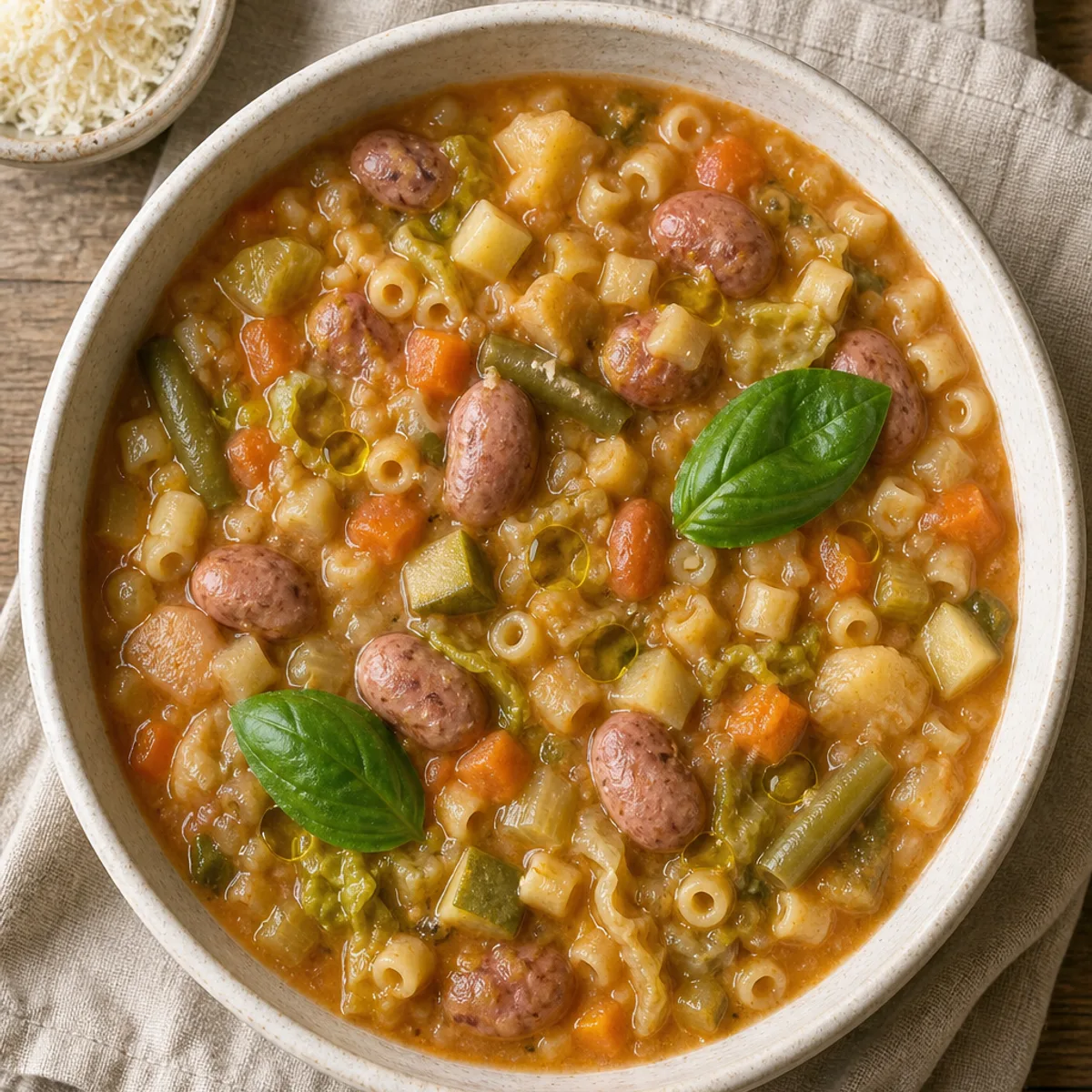
An Italian vegetable soup where dried borlotti beans are simmered tender from scratch, and a Parmesan rind lends the broth depth along the way.
The borlotti beans are simmered tender first and set aside in their cooking water, while the vegetable base slowly builds the soup's body. Potatoes and cabbage then simmer in the broth, before the beans, zucchini, and finally ditalini go in; let the soup rest briefly before serving. The pasta's cooking point determines whether the minestrone turns out hearty without becoming heavy and mushy.
Ingredients
The beans
- 250 g dried borlotti beans, soaked overnight
- 1 leaf bay leaf
- 1 clove garlic, peeled
- 1 tsp salt
The soup
- 4 tbsp olive oil, extra virgin
- 1 onion, finely chopped
- 200 g carrots, diced small
- 150 g celery, diced small
- 2 clove garlic, finely chopped
- 250 g potatoes, peeled, cut into 1 cm cubes
- 150 g green beans, trimmed, cut into 2 cm pieces
- 200 g savoy cabbage, shredded
- 1 can chopped tomatoes, 400 g each
- 1½ l vegetable stock
- 1 pcs Parmesan rind
- 200 g zucchini, cut into 1 cm cubes
- 160 g ditalini
- salt
- pepper, freshly ground
To serve
- 2 tbsp olive oil, extra virgin
- 40 g Parmigiano-Reggiano, freshly grated
- 8 leaf fresh basil
How to make it
The beans
- Drain the soaked borlotti beans in a colander and rinse them under cold water. Put them in a pot with cold water covering the beans by 5 cm, and add the bay leaf and the peeled garlic clove. Bring to a boil and skim off the gray foam until the surface runs clear. ⏱ 10 min
- Reduce the heat to low and let the beans simmer, covered, for 65-75 minutes. They're done when the skin is still intact around a bean that's creamy and soft all the way to the center. Don't add salt to the cooking water yet, since salting early toughens the skins. ⏱ 1 h 5 min–1 h 15 min · passiveChef's tip Keep the surface at a lazy simmer with only occasional bubbles; a rolling boil tears the skins off and turns them to mush. Old beans can need 90 minutes or more, so judge by the creamy center, not the clock.
- Take the pot off the heat. Fish out the bay leaf and garlic clove and discard them. Stir 1 tsp salt into the warm beans, and let them sit in their cooking water until needed.Chef's tip Letting the beans cool in their own liquid lets them reabsorb it and take up the salt evenly, so they stay plump instead of shrivelling. The cloudy water is worth keeping — it's the starch that gives the soup body later.
The soup
- Warm the 4 tbsp olive oil in a large, heavy-bottomed pot over medium-low heat. Sauté the onion, carrot, and celery for 10 minutes, until the vegetables are soft and glossy without taking on color. ⏱ 10 minChef's tip Ten minutes without color is the point: the vegetables should sweat and turn translucent, never sizzle audibly. Browning here pushes the soup toward roasted, dark flavors instead of the sweet vegetable base minestrone rests on.
- Add the finely chopped garlic and cook for 1 minute, until it smells sweet and still hasn't taken on color.Chef's tip Finely chopped garlic burns within seconds once it has given up its moisture. If the smell shifts from sweet to sharp and acrid, it's burnt, and that bitterness will stay in the whole soup.
- Add the diced potatoes, green beans, and savoy cabbage to the pot. Toss everything in the oil for 3 minutes, until the cabbage strips have wilted and turned glossy.
- Pour in the chopped tomatoes and vegetable stock, and add the Parmesan rind to the pot. The rind gives the soup its salty, nutty backbone. Bring to a boil for 5 minutes, until it bubbles evenly across the whole surface.Chef's tip The acid from the tomatoes makes the potatoes take longer to turn tender. So don't cut the forty minutes short later on, even if the cubes look done — they should mash, not just take a knife tip.
- Cover with a lid, reduce to a gentle simmer, and let the soup cook for 40 minutes. The potatoes should mash easily against the side of the pot with a spoon, and the liquid should have turned slightly cloudy and cohesive. ⏱ 40 min · passiveChef's tip That cloudiness is starch the potatoes have released into the liquid — it's the soup's body. Mash four or five cubes against the side of the pot toward the end if it still seems watery and runs thin off the spoon.
- Stir in the zucchini and the salted borlotti beans along with 2 dl of the borlotti beans' cooking water. Let it continue simmering, covered, for 10 minutes, until the zucchini is tender but still holds its cube shape. The zucchini goes in last because it cooks through completely in under fifteen minutes. ⏱ 10 min · passive
- Add the ditalini and cook it in the soup for 8-10 minutes, stirring occasionally so it doesn't stick to the bottom. Take the pot off the heat just before the pasta is al dente, since it keeps cooking in the hot soup. The soup is now thickened by the pasta's starch and runs heavily off the spoon. ⏱ 8 min–10 minChef's tip Cooking the pasta in the soup thickens it but also means it never stops absorbing — leftovers will swell and go soft. If you plan on a second day, cook the ditalini separately and add it per bowl.
- Fish out the Parmesan rind and discard it. Taste the soup first, since both the rind and the cheese for serving have added salt. Then season it with salt and freshly ground pepper, until the sweetness of the vegetables comes through clearly.
- Let the soup stand uncovered for 10 minutes, until it's warm rather than piping hot. The rest brings the flavors together, and the soup thickens one last notch. ⏱ 10 min · passive
To serve
- Ladle the soup into deep bowls, making sure both beans, pasta, and vegetables are included in each portion. Drizzle the 2 tbsp olive oil over the top, and add the basil leaves. Set the freshly grated Parmigiano-Reggiano out in a bowl on the table, so everyone can sprinkle on cheese as they go.