Lasagna
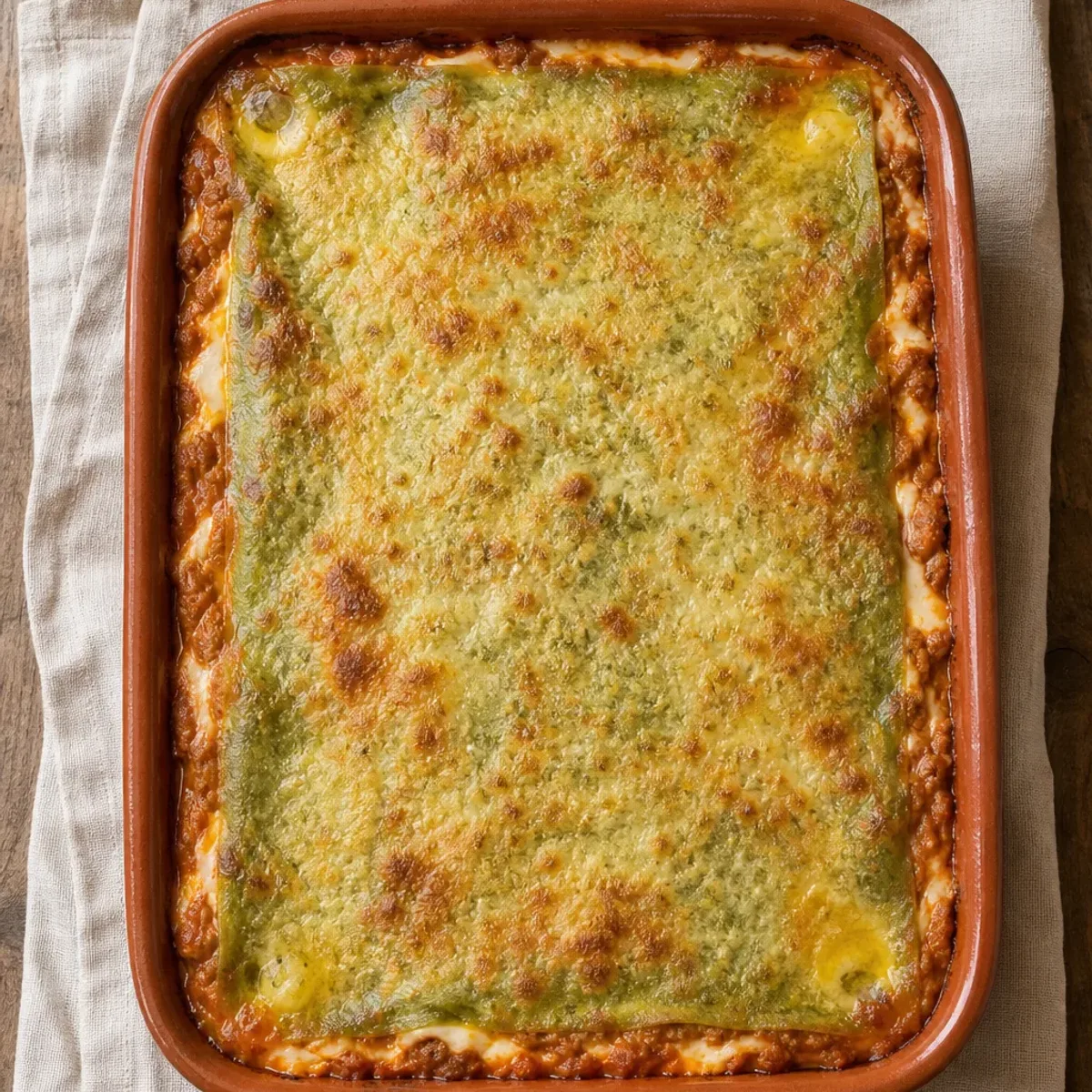
Emilian lasagna with spinach-colored pasta dough, long-simmered beef ragù and besciamella, built up in at least six layers in the pan.
The ragù builds flavor slowly over several hours, while the spinach dough rests and is rolled out, and the besciamella ties the individual layers together. The sheets are briefly parboiled before the lasagna is assembled tightly and baked, so it can settle after the oven. The crucial balance is the moisture in the layers, which determines whether the lasagna holds its shape cleanly when served.
Ingredients
The green sfoglia
- 400 g wheat flour, preferably tipo 00
- 2 eggs, room temperature
- 700 g fresh spinach leaves, boiled, pressed completely dry, and finely chopped — yields about 180 g
- salt, for the spinach and cooking water
The ragù
- 300 g coarsely ground beef, from chuck or rib
- 100 g fresh pancetta, unsmoked, finely chopped
- 3 tbsp extra virgin olive oil (or 50 g butter)
- 60 g onion, finely chopped by knife
- 50 g carrot, finely chopped by knife
- 50 g celery, finely chopped by knife
- 1½ dl dry white wine (or red wine)
- 170 g passata
- 1 dl whole milk
- 3 dl light beef stock (or bouillon cube)
- 1 pinch nutmeg, freshly grated
- salt
- pepper, freshly ground
The besciamella
- 7 dl whole milk, cold
- 70 g butter
- 70 g wheat flour
- 1 pinch nutmeg, freshly grated
- salt
For the layers
- 230 g Parmigiano, freshly grated
- 60 g butter, in small pats, plus a little for the dish
How to make it
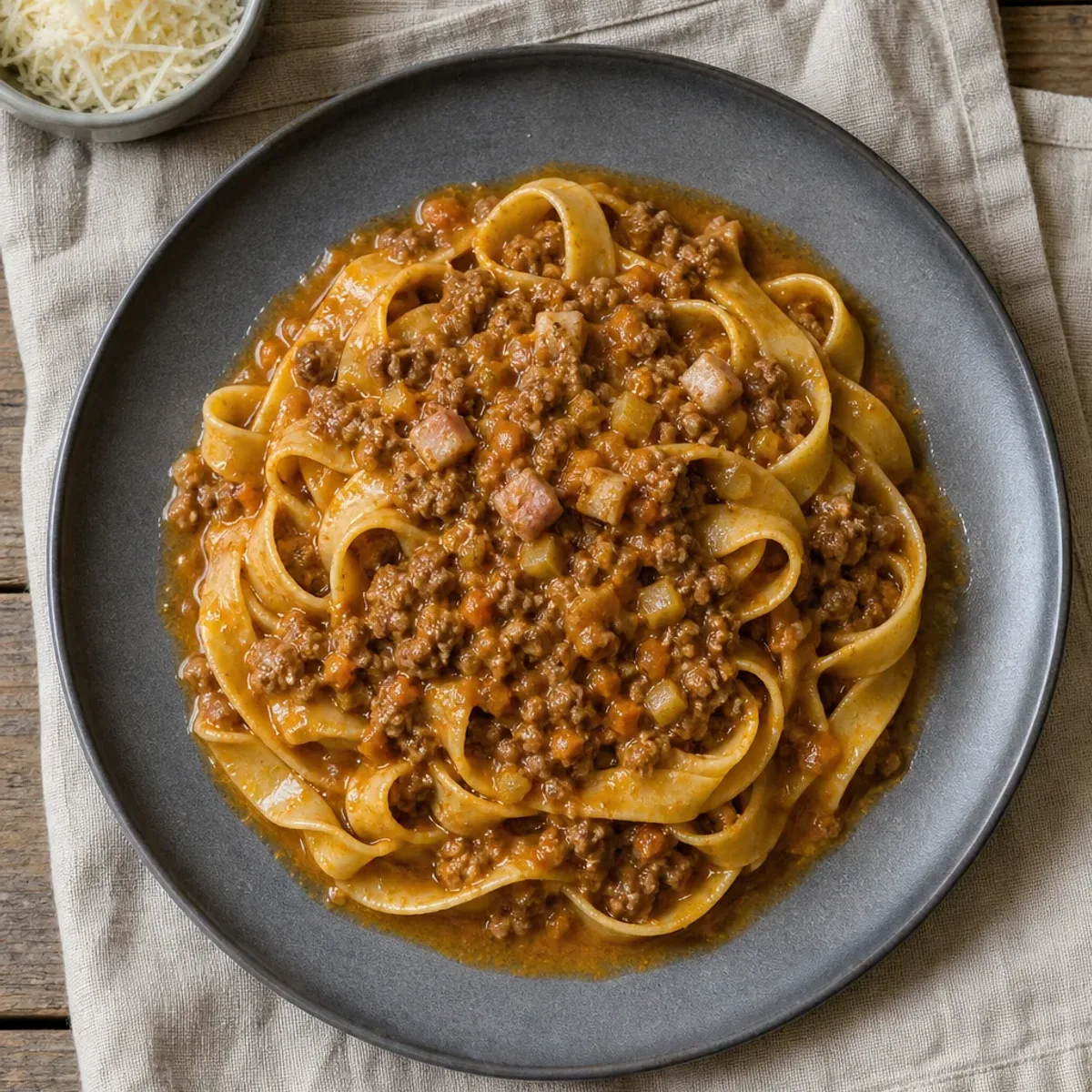
The ragù
- Chop the onion, carrot, and celery very finely with a knife on a cutting board. The pieces should be small enough to disappear into the sauce. Chop the fresh pancetta just as finely. Use a knife, not a food processor — the machine mashes the vegetables so they release their water immediately. ⏱ 10 min
- Heat the olive oil in a heavy-bottomed pot over low-medium heat and add the pancetta. Let it render slowly until the fat has run clear and the cubes are glossy and pale gold.
- Add the finely chopped onion, carrot, and celery and turn them through the fat. Sauté gently without coloring, until the onion is translucent and the aroma turns sweet. The vegetables must not brown, since a browned soffritto gives the ragù a bitter edge. ⏱ 10 min
- Turn the heat up to medium and add the coarsely ground beef. Break it apart with a wooden spoon as it cooks. Keep cooking until the liquid has cooked away and the meat starts to sizzle against the bottom. ⏱ 10 min
- Pour in the white wine and scrape the bottom clean with the wooden spoon. Let the wine evaporate completely, 6-8 minutes. Only once the sharp smell of wine is gone and the bottom is nearly dry should the tomato go in.
- Stir in the passata and season with salt and freshly ground pepper. Thin with 1 dl of the light beef stock and bring to a boil, until the surface bubbles gently.
- Cover with a lid and let the ragù simmer over the lowest possible heat for 1 hour. Check on it a couple of times along the way and add a little stock if the surface looks dry. ⏱ 1 h · passive
- Pour in the whole milk and stir it into the ragù. Let it keep simmering, covered, for 90 minutes, until the milk has cooked in completely and no white remains on the surface. The milk rounds off the tomato's acidity and makes the meat more tender. Keep adding stock whenever the pot needs it. ⏱ 1 h 30 min · passiveChef's tip Add the milk into a ragù that is genuinely quiet — a hot, acidic pot can curdle it into visible grains. If it does split slightly, keep simmering; the long cook usually smooths it back out.
- Remove the lid and season the ragù to taste with salt, pepper, and a touch of freshly grated nutmeg. It should be dark orange, tightly bound, and creamy, with the fat beading on the surface. Go easy on the salt, since the Parmigiano will salt the layers later.
The green sfoglia
- Boil the spinach in lightly salted water until the leaves have fully wilted and turned deep green. Drain it into a sieve and cool it under cold water. Squeeze all the water out with your hands until the ball is dry and firm. Then chop it as finely as possible. ⏱ 10 minChef's tip Squeeze in two or three rounds, letting the ball relax between them — far more water comes out the second time. Wet spinach forces extra flour into the dough, which makes the sfoglia tough and dulls the green.
- Pile the wheat flour on the counter and make a well in the center. Crack the eggs into the well and add the finely chopped spinach. Mix it together with your fingers, then knead the dough vigorously until it's smooth, evenly green, and springs back under your finger. The dough should be firm — dust on a little extra flour if the spinach was wet enough to make it sticky. ⏱ 15 minChef's tip Keep kneading until the dough feels smooth and elastic all the way through — about 10 minutes of work. Press a finger into it and it should spring back slowly; if it doesn't, the gluten isn't built up enough to carry thin sheets.
- Wrap the dough in plastic wrap and let it rest for 30 minutes at room temperature. The rest relaxes the gluten so the sfoglia doesn't spring back while rolling. ⏱ 30 min · passive
The besciamella
- Melt the butter for the besciamella in a heavy-bottomed pot over medium heat. Stir in the wheat flour and let the roux bubble until it smells lightly nutty without taking on color. A pale roux keeps the besciamella white.
- Whisk in the cold whole milk a little at a time, so the roux has time to absorb each splash. Cold milk against hot roux is the surest way to avoid lumps. Bring the besciamella to a boil while stirring and let it thicken until it flows slowly off the spoon. Season to taste with salt and freshly grated nutmeg. ⏱ 10 min
The green sfoglia
- Cut the rested dough into four pieces and keep the rest covered while you work. Roll out each piece into a fairly thin sfoglia — not paper-thin, since the sheets need to hold up the ragù without falling apart. Cut the sheets into rectangles that fit the dish. ⏱ 25 minChef's tip Roll to about 1 mm — you should just make out your fingers through the sheet, but not read print. Too thin and the sheets dissolve under the ragù; too thick and the layers stay doughy in the short bake.
- Set a large pot of generously salted water on to boil. Meanwhile, set a bowl of cold water and a clean kitchen towel ready next to the stove. The water needs to be at a rolling boil before the first sheet goes in. ⏱ 10 min · passive
- Parboil the sheets a few at a time, until they float to the surface. Lift them straight into the cold water with a slotted spoon. Then spread them out individually on the towel so they drain and don't stick together. ⏱ 15 minChef's tip The sheets need only 30-60 seconds — they are fresh pasta and finish cooking in the oven. The cold water stops that cooking dead; skipping it leaves the sheets slack and prone to tearing as you lift them.
- Preheat the oven to 180 °C.
For the layers
- Butter an ovenproof dish measuring about 20 × 25 cm. Cover the bottom with a thin veil of besciamella so the first sfoglia doesn't stick and burn.
- Lay a layer of the parboiled sheets in the dish and spread an even layer of ragù over it. Add a thin veil of besciamella and sprinkle with freshly grated Parmigiano. Repeat the layers until you have at least six layers in total. The besciamella should sit as a veil, not a blanket, or the lasagna will be too loose to hold its shape. ⏱ 15 min
- Always finish with a sheet of sfoglia as the top cover. Brush it with the last of the besciamella and sprinkle the remaining Parmigiano over it. Dot small pats of butter on the surface and one in each corner of the dish, where the layers would otherwise dry out.
- Bake the lasagna in the middle of the preheated oven for 25-35 minutes. It's done when the surface is golden brown and crisp in spots, and the edges bubble slowly. The time is short because the sheets are already parboiled. ⏱ 25 min–35 min · passive
- Remove the dish and let the lasagna rest on the counter until the bubbling along the edges has stopped completely and the surface no longer steams, so the dish is only just warm to the back of the hand. The rest sets the layers so the pieces can be cut cleanly instead of sliding apart. ⏱ 15 min–20 min · passive
- Cut the lasagna into square pieces with a sharp knife and lift them out with an offset spatula. Place one piece on each flat plate so it stands upright and the layers can be seen from the side.