Gnocchi alla Romana
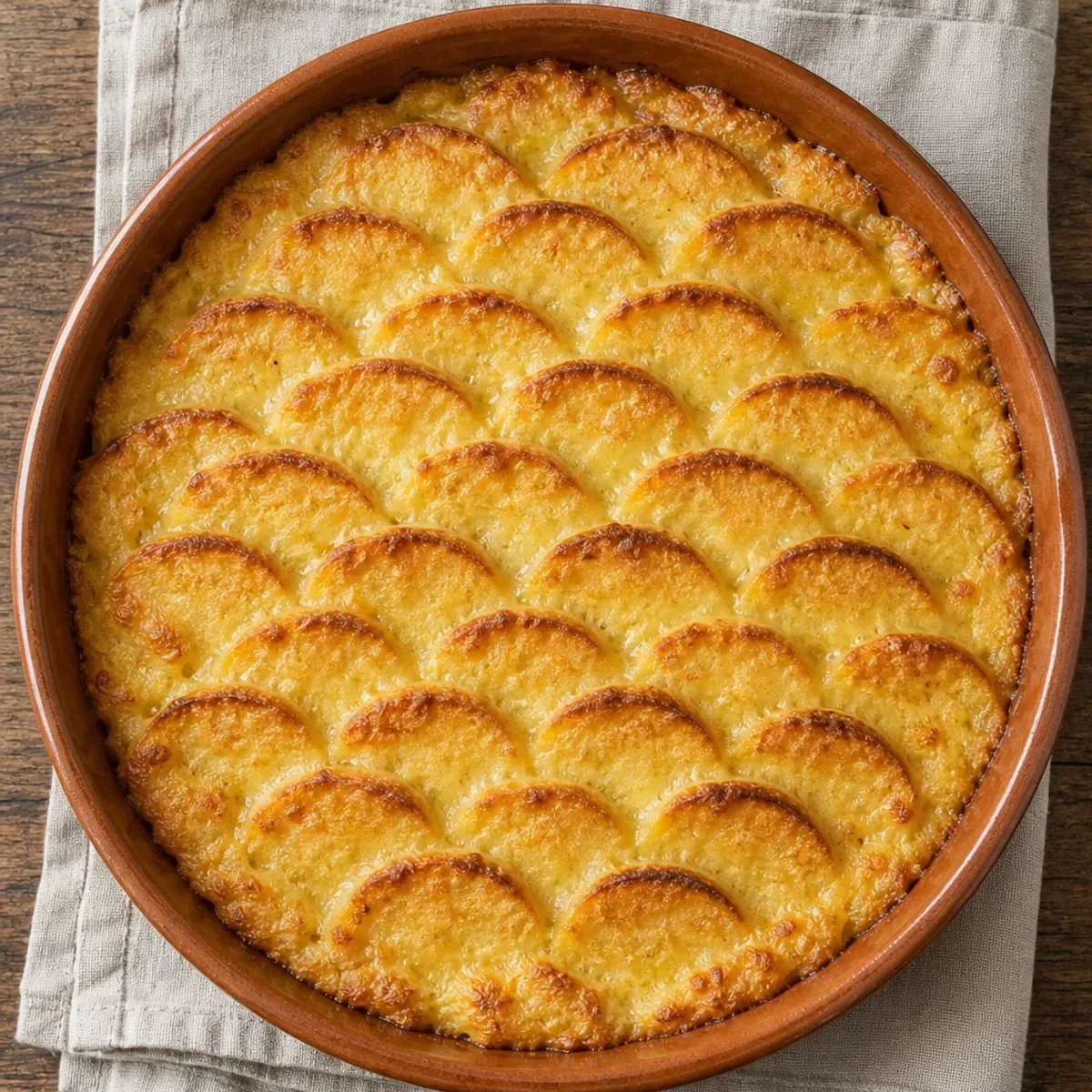
Roman gnocchi made from semolina, cooked into a firm mass, cut into rounds, layered like roof tiles, and baked golden in butter and parmesan.
The milk first becomes a firm, glossy semolina porridge, which is chilled into a sliceable slab before the rounds are laid close together and baked golden in butter and parmigiano. Factor in the chilling time so the mixture is completely firm before you cut it out. The critical phase is the slow, steady cooking of the semolina, which determines whether the gnocchi hold their shape and turn out creamy rather than grainy.
Ingredients
The gnocchi mixture
- 1.2 l whole milk
- 300 g semolina, durum wheat
- 50 g butter
- 60 g parmigiano, freshly grated
- 3 egg yolks
- 1 pinch nutmeg, freshly grated
- 1½ tsp salt
For gratinéing
- 80 g butter, melted
- 60 g parmigiano, freshly grated
How to make it
The gnocchi mixture
- Combine the whole milk in a heavy-bottomed pot with the 50 g butter, the salt, and the freshly grated nutmeg, and heat over medium heat. Salt the milk now, since the semolina absorbs the salt as it cooks. Keep heating until the butter has fully melted and small bubbles form along the edge.
- Sprinkle the semolina into the hot milk in a thin stream while whisking constantly. Keep going until all the semolina is in and the mixture is smooth and lump-free.Chef's tip Semolina swells the instant it touches hot milk, so a heap of it forms lumps with dry cores that no whisking dissolves. Keep the stream thin enough that the whisk never meets resistance.
- Switch to a wooden spoon. Cook the mixture over low heat for 8-10 minutes, stirring constantly. It's ready when it pulls away from the sides of the pot and the spoon leaves a trail that holds its shape. ⏱ 8 min–10 minChef's tip These 8-10 minutes are where the starch swells and sets the whole slab. Pull it early and it stays soft and sags when cut; the spoon trail holding its shape is the real signal, not the clock.
- Remove the pot from the heat and let the mixture stand for 3 minutes, until it's no longer steaming heavily. This way the egg yolks won't set into strands when they're added. ⏱ 3 min · passiveChef's tip Egg yolk proteins begin to set around 65-70°C. Wait until the surface only breathes faint steam rather than billowing — then the yolks enrich instead of speckling the mass with cooked threads.
- Stir the egg yolks into the mixture one at a time, whisking each yolk in completely before adding the next. The mixture will turn a deeper yellow and become distinctly glossy.
- Stir the 60 g freshly grated parmigiano into the warm mixture until the cheese has melted in and the mixture is uniform. Taste for salt at the end, since the cheese is quite salty on its own.
- Turn the mixture out onto a sheet of parchment paper and spread it into an even slab 1.5 cm thick using a moistened dough scraper. The moistened scraper keeps the mixture from sticking to it.Chef's tip Keep the 1.5 cm even from edge to edge. Thin patches dry out and curl in the oven while thick ones stay heavy and pale in the middle; sight down the slab at eye level to check.
- Let the slab cool on the countertop for 45-60 minutes. The mixture is ready when it's cold all the way through and firm enough that a fingertip leaves no mark. ⏱ 45 min–1 h · passiveChef's tip The cooling is what makes the slab cuttable — the starch only sets once it's cold all the way through. A lukewarm slab smears around the rim of the glass. The fridge can shorten the wait.
- Preheat the oven to 220°C.
The gnocchi mixture
- Cut round pieces from the cold mixture using a glass 6 cm in diameter. Dip the glass in cold water between each cut so the edge releases cleanly.
For gratinéing
- Melt the 80 g butter for gratinéing in a small pot over low heat. Brush an ovenproof dish with a little of the melted butter and spread the scraps from cutting out the rounds in an even layer over the bottom. The scraps aren't wasted — they support the rounds.
- Arrange the rounds on top of the base layer so they overlap like roof tiles in tight rows. The whole dish should be covered, and the rounds should lean at a slight angle.
- Pour the remaining melted butter evenly over the rounds, and sprinkle the last 60 g freshly grated parmigiano over the entire dish. The cheese should form a thin, unbroken layer so it browns evenly.
- Bake the dish in the middle of the oven for 20-25 minutes. It's done when the surface is golden brown and the edges of the top rounds have turned crisp. ⏱ 20 min–25 min · passive
- Remove the dish and let it rest for 5 minutes so the rounds settle and can be lifted out whole. ⏱ 5 min · passive
- Lift 5-6 rounds onto each flat plate with an offset spatula, taking a piece of the golden bottom layer along with them. Serve immediately, while the cheese layer is still crisp.