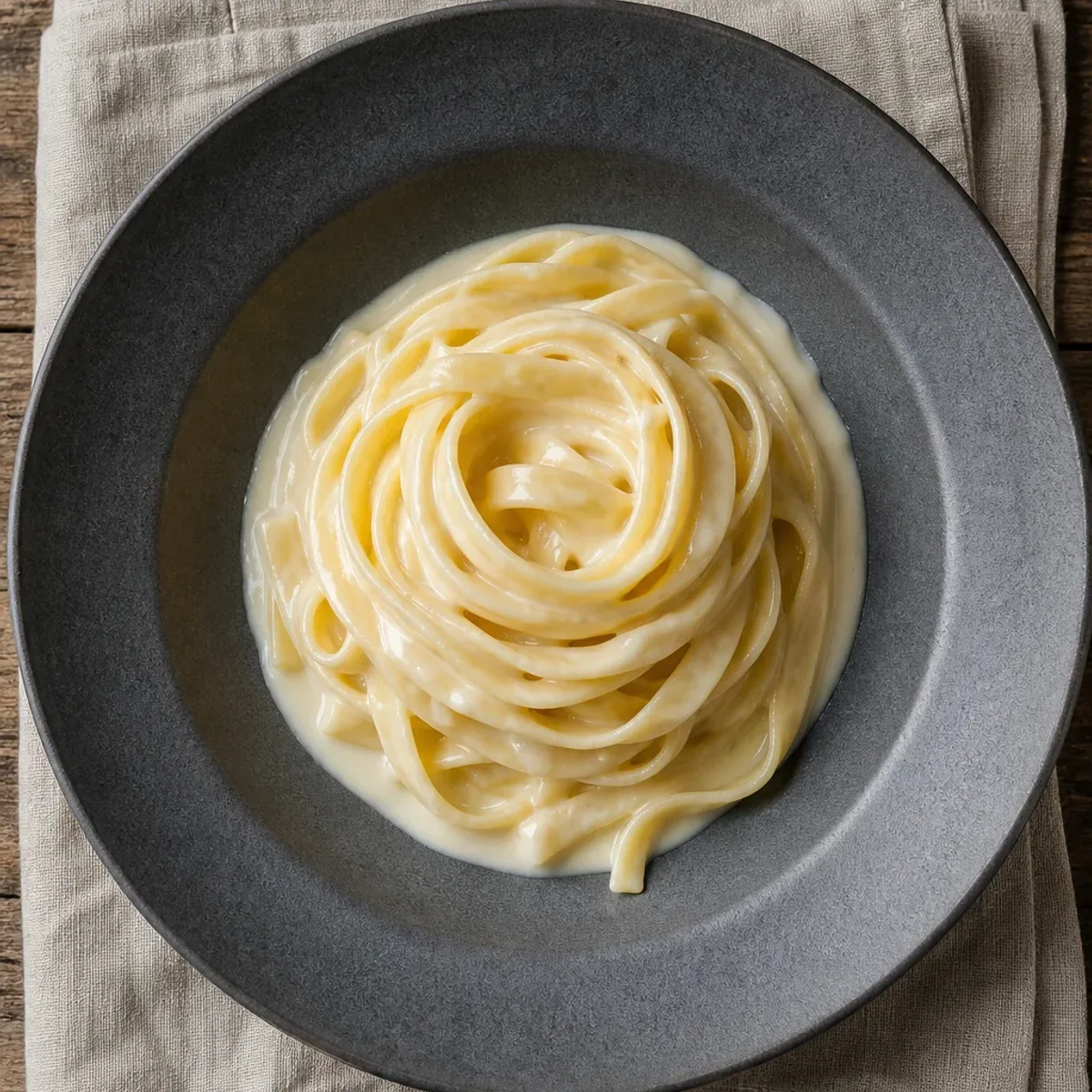
Fettuccine Alfredo
Roman pasta where fresh fettuccine is tossed with butter and grated parmesan into a creamy sauce — no cream, just cheese, butter, and pasta water.
While the water comes to a boil, the dish and plates are warmed and the cheese is grated very fine. The freshly cooked, wet fettuccine is then tossed immediately with soft butter, cheese, and pasta water into a glossy sauce. The stable emulsion determines whether the Alfredo turns out silky rather than greasy and clumped.
Ingredients
- 600 g fresh fettuccine
- 150 g butter, unsalted, in small cubes
- 180 g Parmigiano-Reggiano, in a block, grated just before use
- 2 tbsp coarse salt, for the pasta water
How to make it
- Set a large pot with plenty of water over high heat and bring it to a boil. Add the coarse salt — the amount is intentionally less than you'd normally salt pasta water, because the Parmigiano will heavily salt the sauce afterward. ⏱ 10 min · passive
- Meanwhile, fill a wide, shallow dish and four deep plates with the hottest water from the tap and let them stand. Pour out the water and dry the dish once it feels warm all the way to the edge — a cold dish cools the butter and causes the sauce to break into fat and strings of cheese.Chef's tip The dish should be hand-warm, not scorching. If the mixture gets too hot, the cheese proteins tighten and squeeze out the fat — you'll see it as strings hanging off the tongs and a pool of grease in the bottom.
- Grate the Parmigiano-Reggiano on the fine side of the grater until it sits light and powdery like loose snow. Coarse flakes clump together instead of melting into the butter.Chef's tip Grate only what you'll use now — pre-grated cheese is dusted with anti-caking starch and cellulose, which leaves the sauce grainy rather than smooth. The fine shreds should feel dry and fluffy, never damp and clumping.
- Place the butter cubes in the warm dish and press them flat with the back of a spoon. Keep pressing until the butter is soft and creamy all the way through without being melted clear.Chef's tip The butter should be pommade: matte, pliable and creamy, not clear and runny. Soft butter spreads into countless tiny droplets that can bind with the water, while melted butter has already broken and settles as a film of grease.
- Cook the fettuccine in the salted water until al dente, still with a firm, elastic bite when you bite through a strand. ⏱ 3 min–5 min · passive
- Ladle 3 dl of the starchy pasta water into a cup. Immediately lift the dripping-wet fettuccine with pasta tongs into the dish with the butter — the clinging moisture is part of the sauce, so the fettuccine must not sit and drain in a colander.Chef's tip Ladle the water at the very last moment, when it's at its cloudiest — it's the starch in it that holds the butterfat and water together. Keep the cup warm; cold water makes the butter seize in an instant.
- Sprinkle the grated cheese over a little at a time. Toss the fettuccine vigorously and without pause using tongs and spoon, while adding a splash of the reserved pasta water. Keep tossing until the butter, cheese, and water come together into one glossy, pale sauce that clings to every strand and doesn't run off.Chef's tip Heat is the enemy here — above roughly 65-70°C the cheese proteins tighten and squeeze out fat, giving oily pools and rubbery strings. If the dish feels hot to the palm or the sauce starts to look greasy, take it off the heat entirely and keep tossing.
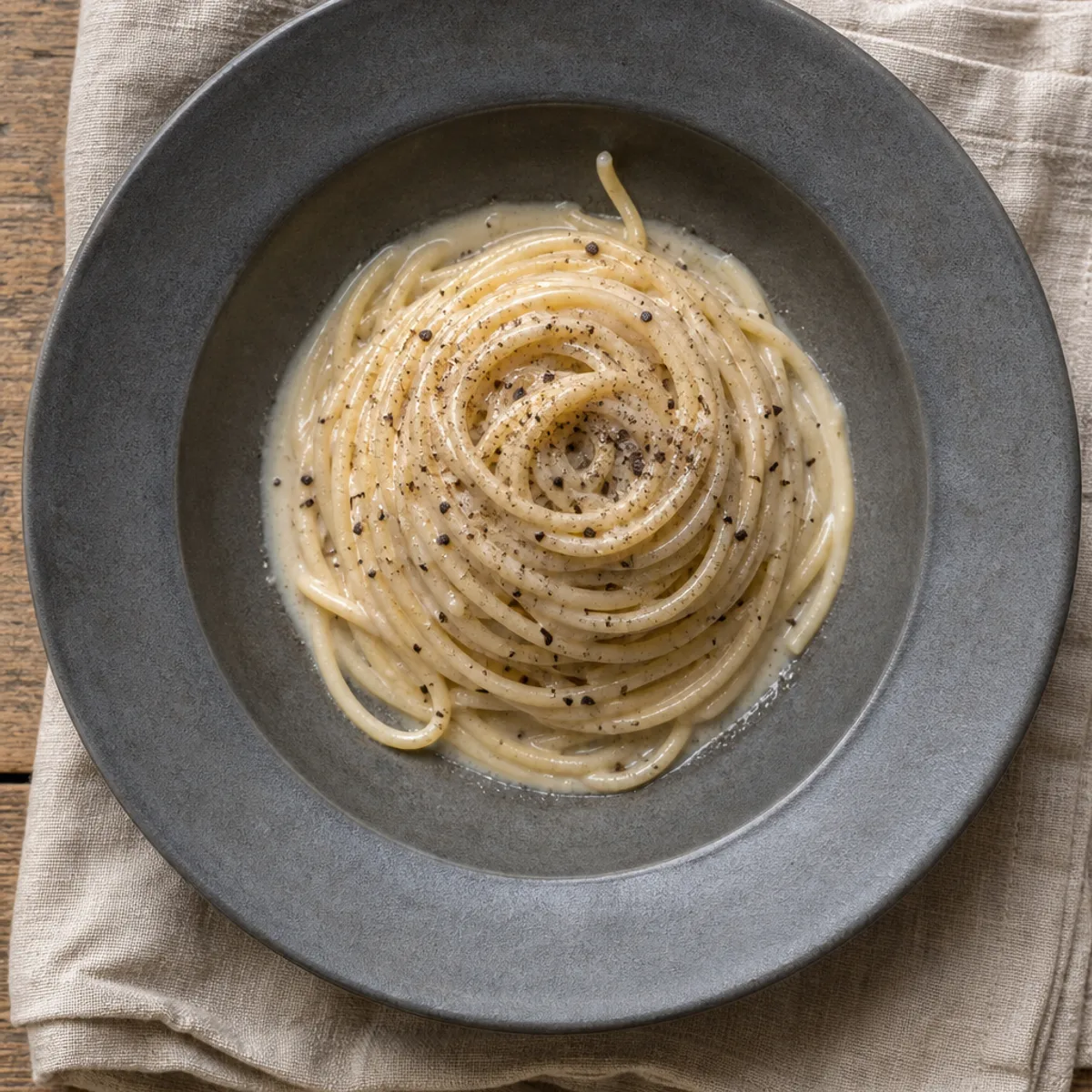
- Divide the fettuccine among the warmed deep plates and twirl it into a tall nest with the tongs. The sauce tightens as it cools, so the dish must be carried to the table and eaten immediately, while it's still glossy and slick.