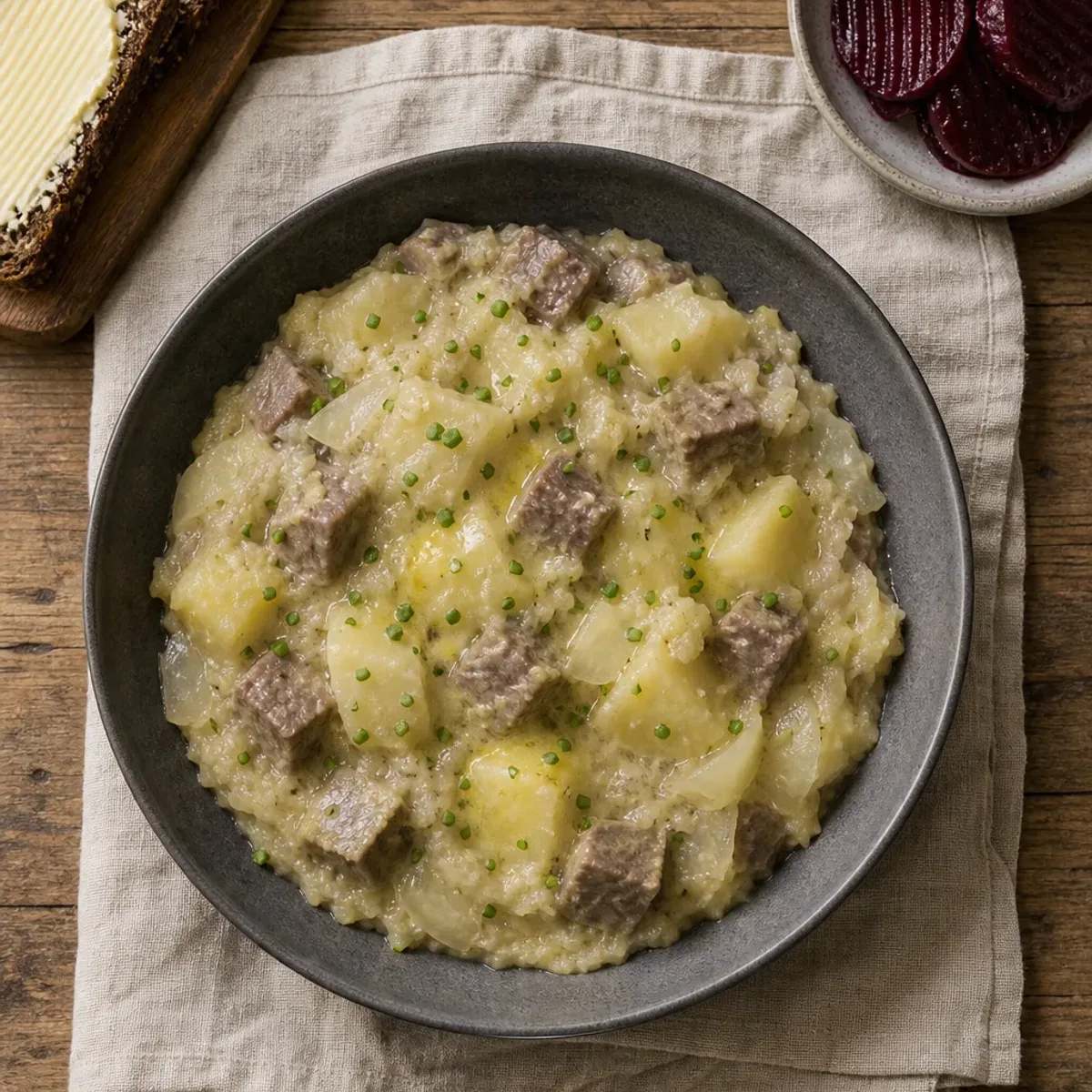
Danish Sailor's Stew
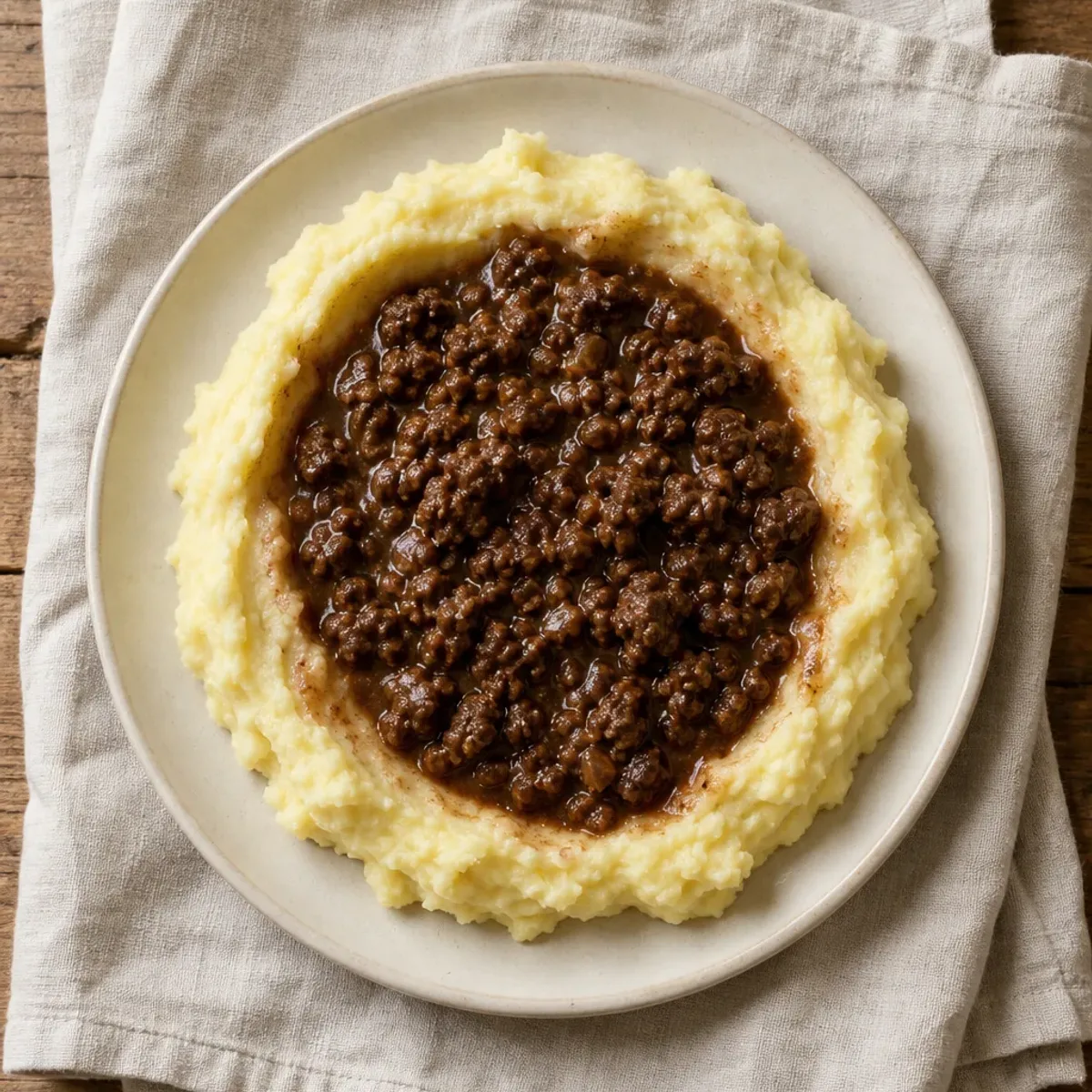
A Danish sailor's dish of tender beef chuck and potatoes simmered together into a thick, binding stew, served with rye bread, butter, and pickled beets.
The beef chuck simmers gently in stock until tender first, while the potatoes and onion are prepped. The two potato sizes then go in together, so the small ones bind the labskovs while the large ones keep their bite; finish with butter, rye bread, and tangy pickled beets. The crucial balance is a thick, creamy consistency without breaking up the large potato pieces from stirring.
Ingredients
The Labskovs
- 700 g beef chuck
- 1½ l beef stock, cold
- 1.4 kg starchy potatoes
- 3 onion
- 3 bay leaves
- 1 tsp whole black peppercorns
- 30 g butter
- salt, to taste
At the Table
- 8 slice rye bread
- 40 g butter, softened
- 1 jar pickled beets
- 1 bunch chives
How to make it
The Labskovs
- Cut the beef chuck into cubes of about 3 cm, removing the coarsest sinew as you go. Keep the cubes roughly the same size so they become tender at the same time.
- Put the meat cubes in a large pot and pour the cold beef stock over them so they are just covered. Bring it slowly to a boil, uncovered. Skim off the gray foam with a slotted spoon until the surface runs clear — the meat needs to start in cold liquid, or the foam boils into the broth instead of gathering on top. ⏱ 10 min
- Tie the bay leaves and peppercorns into a spice bag and add it to the pot. Cover with a lid and let the meat simmer very gently for 1½ hours, until the cubes are tender and yield to light pressure from a spoon. ⏱ 1 h 30 min · passiveChef's tip Keep it at a bare tremble, just a bubble or two breaking every few seconds. A rolling boil squeezes chuck tight and stringy before the connective tissue has time to melt into gelatine.
- Peel the potatoes. Cut half into small cubes of about 1 cm and the rest into large cubes of about 4 cm — the small ones cook down completely and thicken the dish, while the large ones hold their shape. ⏱ 15 minChef's tip Use floury potatoes for the small cubes — waxy ones stay stubbornly intact and the dish stays soupy. The 1 cm dice should collapse when pressed against the pot side; the 4 cm ones should still take a spoon's edge.
- Peel the onions and cut them into coarse wedges of about 2 cm.
- Add the potato cubes and onion wedges to the pot with the tender meat and press them down so the liquid almost covers them — labskovs should bind, not swim. Cover with a lid and let it simmer for 30 minutes, until the large cubes are tender all the way through. ⏱ 30 min · passive
- Fish out the spice bag and discard it. Then stir vigorously with a wooden spoon over low heat for 5 minutes, until the small potato cubes have cooked down completely and bind the dish thick and creamy around the meat and the large pieces.Chef's tip Stirring against the side of the pot mashes the small cubes and releases their starch, which is what thickens the pot. Stop as soon as it turns creamy — endless beating can leave the potato gluey.
- Stir the butter into the labskovs until it has melted completely and the dish glistens on the surface. Season with salt a pinch at a time, since the stock has already salted the dish.
At the Table
- Spread the rye bread slices thickly with the softened butter and arrange them on a board.
- Drain the liquid from the pickled beets and put them in a small bowl.
- Ladle the labskovs into deep plates so each portion gets both meat and large potato pieces. Snip the chives finely over the plates with scissors. Put the board of rye bread and the bowl of beets on the table — everyone helps themselves to a slice of bread and a forkful of beets alongside each bite.Chef's tip The beets are not a garnish: their acidity cuts through the rich, starchy labskovs and makes every bite taste fresh again. Without them, the dish quickly feels heavy and monotonous to eat your way through.