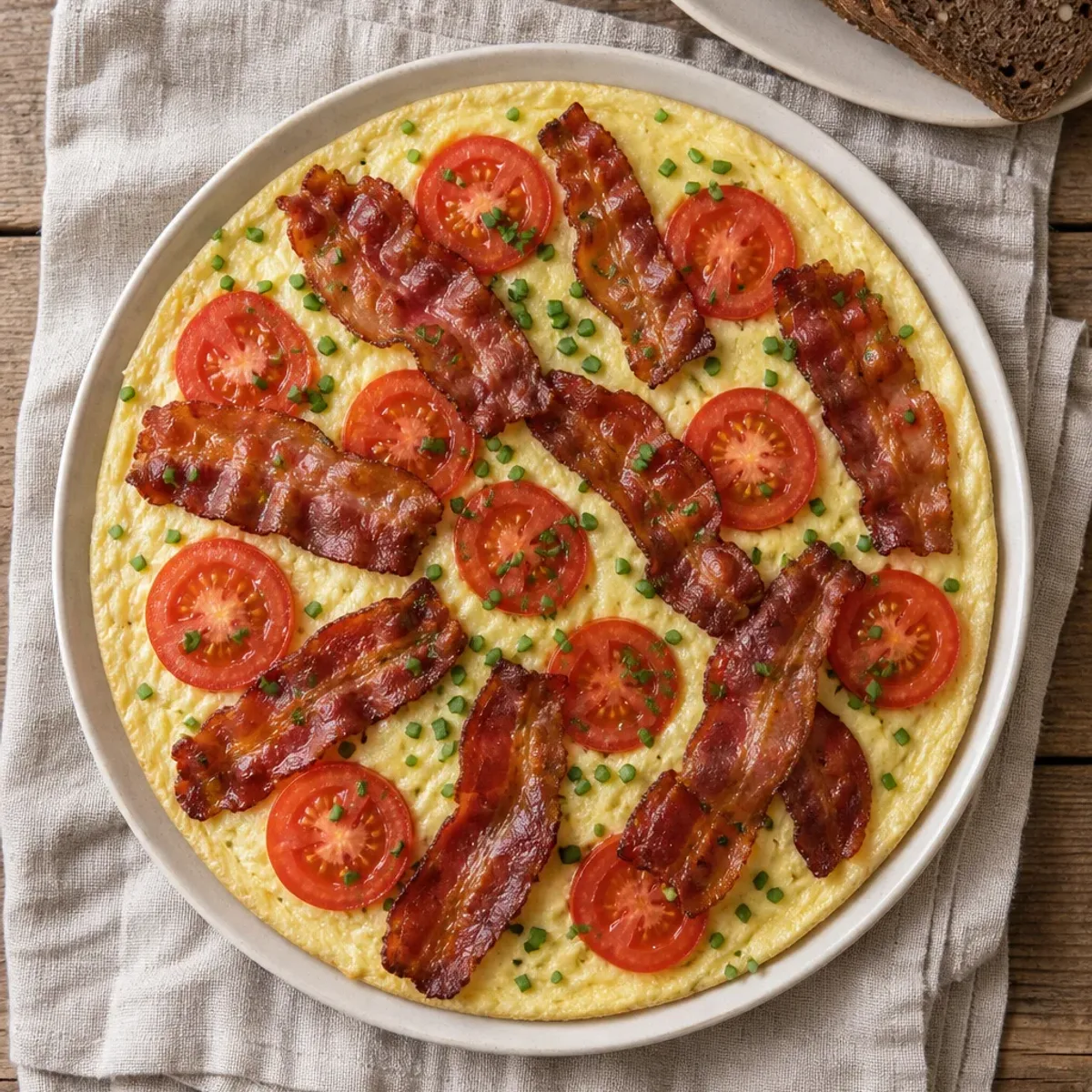
Danish Egg Cake with Bacon
A Danish lunch classic: a thick æggekage baked low and slow in the bacon fat, topped with crispy bacon, tomato and chives, eaten on rugbrød.
The bacon is fried first, and while the æggekage sets quietly under the lid, you can get the tomato and chives ready. Serve straight from the pan with the crispy bacon on top and rugbrød on the side. The low, gentle heat determines whether the æggekage turns out tender rather than rubbery.
Ingredients
The Æggekage
- 12 eggs
- 2 dl whole milk
- 2 tbsp all-purpose flour
- 1 tsp salt
- pepper, freshly ground
The Topping
- 250 g bacon, sliced
- 3 tomatoes, ripe
- 1 bunch chives
To Serve
- 8 slice rugbrød
How to make it
The Topping
- Fry the bacon slices in a large skillet over medium heat for 6-8 minutes. Turn them a few times as they cook, until crispy and the fat has rendered out clear. Set them aside on a paper towel.Chef's tip Start the bacon in a cold or barely warm pan rather than a preheated one. The fat has time to melt out before the meat tightens, giving flat, evenly crisp slices instead of curled ones — and more clean fat for the æggekage.
The Æggekage
- Pour the fat out of the pan, but leave a thin layer in the bottom. The æggekage should cook in the bacon fat, and too much fat makes the bottom heavy.
- Whisk the eggs together in a bowl. Stir the flour into a little of the milk, then whisk the mixture into the eggs along with the rest of the milk, so the batter is completely free of flour lumps. Season with the salt and freshly ground pepper — one level teaspoon of salt is enough, since the crispy bacon adds plenty of salt on top.Chef's tip Whisk the eggs just until the yolks and whites are uniform, without beating in a froth. Air bubbles puff the æggekage up during cooking, then collapse into a coarse, spongy texture as it cools.
- Turn the heat down to low and pour the egg mixture into the hot pan. Cover with a lid and let it sit without stirring for 18-20 minutes, until the surface has just set and only the center jiggles slightly when you shake the pan. The low heat is essential, since high heat makes the æggekage rubbery and scorches the bottom long before the center is done. ⏱ 20 min · passiveChef's tip Egg proteins set from around 65°C and squeeze out water above that, which is why the surface should never bubble or blister — a faint quiver at the edge is all the movement you want. Rubbery, weeping æggekage is overheated, not overtimed.
The Topping
- Slice the tomatoes thinly and snip the chives finely with scissors while the æggekage finishes cooking in the pan.
- Lay the crispy bacon slices whole over the æggekage. Distribute the tomato slices between them and sprinkle the snipped chives over everything.Chef's tip Only lay the bacon on once the æggekage is done and ready to serve. Left sitting on the hot, steaming surface for several minutes, it soaks up moisture and turns chewy instead of crispy.
To Serve
- Arrange the 8 slices of rugbrød on a platter and place it on the table. Set the pan on a trivet next to it. Everyone cuts their own piece of æggekage and places it on a slice of rugbrød with bacon and tomato on top.