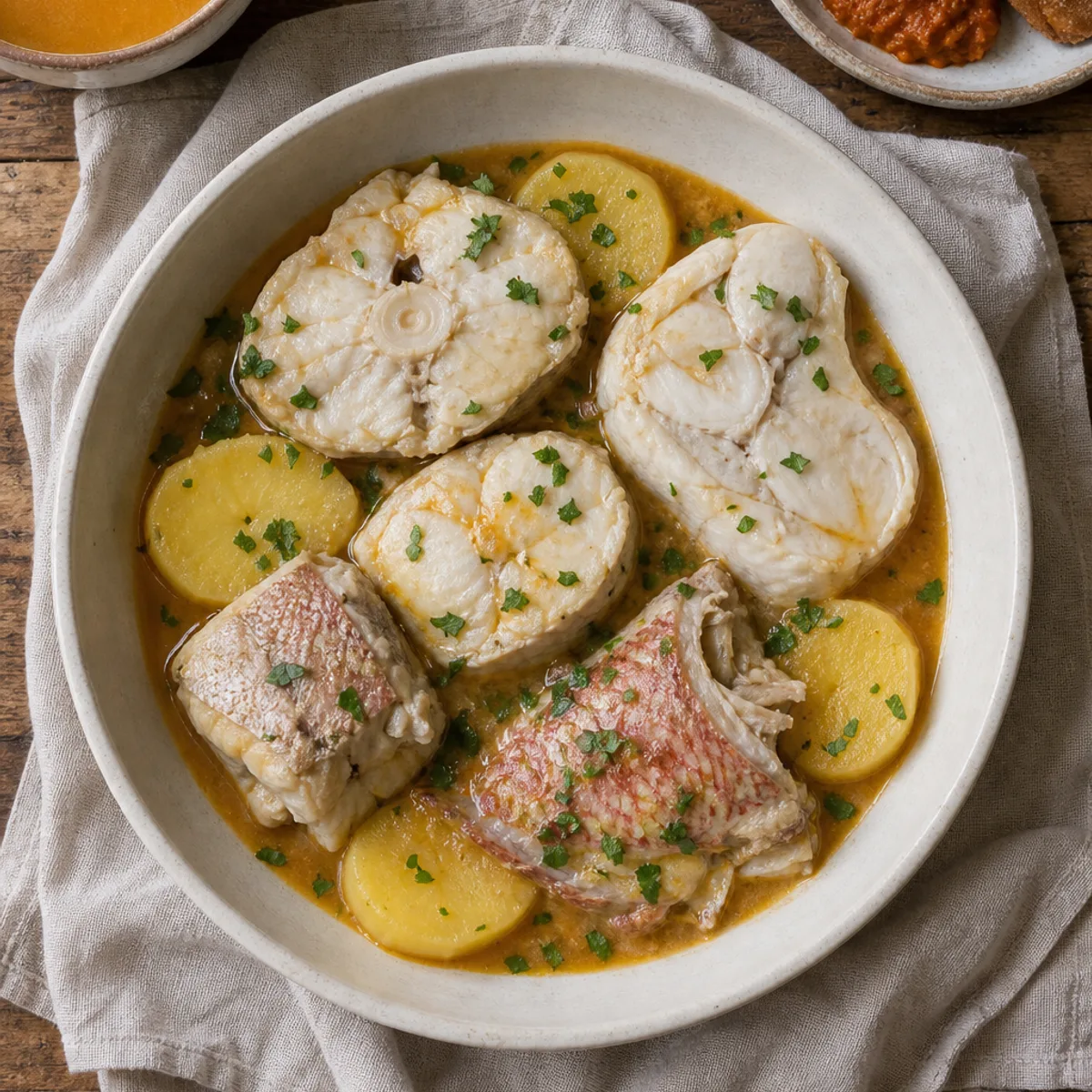
Bouillabaisse
A Provençal fish soup with saffron, fennel, and several kinds of fish, served in two courses with toasted baguette and garlicky rouille.
Vegetables and fish bones first become a robust, golden-orange soup, which is pressed through for body before potatoes and fish are cooked in it in two stages. Meanwhile, the rouille can be pounded and the bread toasted, so both are ready for the two-course serving. The hard boil of the base soup determines its body and glossy texture.
Ingredients
The soup
- 1½ dl olive oil
- 2 onions, coarsely chopped
- 1 leek, white part only, sliced
- 1 fennel, coarsely chopped
- 1 kg fish bones and heads, from white fish, gills removed
- 4 tomatoes, ripe, coarsely chopped
- 6 clove garlic, crushed
- 2 pcs dried orange peel, wide strips
- 1 tsp fennel seeds
- 3 sprig fresh thyme
- 2 bay leaves
- 1 handful parsley stems
- 1 pinch saffron threads
- 2½ l water
- 2 tsp salt
The fish and potatoes
- 700 g monkfish, in thick slices, bone-in
- 400 g conger eel, in thick slices
- 500 g gurnard, cleaned, in large pieces
- 400 g rascasse, cleaned, in large pieces
- 800 g waxy potatoes, peeled, sliced 1 cm thick
Rouille
- 1 slice cooked potato, taken from the soup
- 3 clove garlic
- 1 pinch saffron threads
- ½ tsp cayenne pepper
- ½ tsp salt
- 1½ dl olive oil
- 2 tbsp fish soup, warm, from the pot
To serve
- 1 baguette, sliced 1 cm thick
- 1 clove garlic, halved
- 1 handful fresh parsley, chopped
How to make it
The soup
- Heat the olive oil in a large, heavy pot over medium heat and sauté the onions, leek, and fennel for 8 minutes. Stir occasionally, until the vegetables are soft and glossy without taking on any color.Chef's tip Keep the vegetables pale — if the onion and fennel edges start to brown, the broth turns muddy-brown and tastes roasted rather than sweet. Listen for a soft sizzle, not a crackle; lower the heat if they colour.
- Add the fish bones and heads to the pot and stir for 5 minutes. Press the heads lightly flat with the back of a spoon as you go, and continue until the bones are firm and chalky white all the way through.Chef's tip Crushing the heads matters most: the collagen in heads and frames is what gives the finished soup its silky body. When the flesh turns chalky white it has set and will mash through the sieve easily.
- Add the tomatoes, garlic, dried orange peel, fennel seeds, thyme, bay leaves, parsley stems, saffron threads, and salt, and pour in the water. Boil the soup hard, uncovered, for 30 minutes, until it is cloudy and golden-orange. The hard boil isn't a shortcut — it's what emulsifies the olive oil into the soup so the bouillabaisse turns out rich and full-bodied instead of sitting under a layer of oil. ⏱ 30 min · passive
- Press the soup through a coarse sieve into a clean pot. Mash the fish flesh and vegetables through with the back of a ladle for 10 minutes, until only bones and skin are left in the sieve. The pressed-through flesh is what gives the soup body, so take your time with it. Finally, discard the bones and skin from the sieve. ⏱ 10 minChef's tip Use a coarse sieve, not a fine-mesh one. Too tight a mesh holds back exactly the pressed-through fish flesh that gives the soup body, and you end up with a thin soup instead of one that clings lightly to the spoon.
- Bring the strained soup back to a boil over high heat for 5 minutes. Season it with salt until it tastes distinctly of the sea and saffron — the potatoes and fish will cook in the soup and get all their seasoning from it.
The fish and potatoes
- Add the potato slices to the boiling soup and cook them for 15 minutes, until the tip of a knife slides easily into the center without the slice falling apart. ⏱ 15 min · passiveChef's tip Waxy potatoes hold less starch and stay intact in the slices; floury ones fall apart in the hard boil and leave the soup cloudy and mealy.
Rouille
- Lift one potato slice out of the soup and let it drain. Pound the garlic, salt, saffron threads, and cayenne pepper to a smooth paste in a mortar, then work in the warm potato so the mixture becomes thick and sticky. Drizzle in the rouille's olive oil drop by drop while pounding constantly for 10 minutes, since if the oil goes in too fast, the rouille will break. Finally, stir in the warm fish soup until the rouille is glossy, rust-red, and just right for spreading. ⏱ 10 minChef's tip The warm potato is your insurance — its swollen starch holds the oil in suspension, which is why rouille forgives more than mayonnaise. If it does split, start over with a fresh warm potato slice and beat the broken mixture into it drop by drop.
To serve
- Toast the baguette slices in a dry skillet over medium heat for 6 minutes, until golden and crisp all the way through. Rub one side of each slice with the halved garlic clove while the bread is still warm, so the garlic melts into the rough surface.
The fish and potatoes
- Bring the soup back to a rolling boil and add the monkfish and conger eel, since the firmer fish need the longest cooking time. Cook them for 7 minutes at a steady, bubbling boil.
- Add the gurnard and rascasse and continue cooking for 4 minutes, until the flesh pulls away from the bone and is opaque and white all the way to the spine. Remove the pot from the heat immediately so the delicate pieces don't cook apart.Chef's tip Judge by the thickest piece, not the clock: monkfish slices of 4-5 cm need the full time, thinner ones less. Pull the pot the moment the flesh parts from the bone — it keeps firming in the hot soup.
- Carefully lift the fish pieces and potato slices out with a slotted spoon and arrange them on a warm platter. Ladle a couple of spoonfuls of the hot soup over them and sprinkle with the chopped parsley, so the pieces stay moist and glossy.
To serve
- Bouillabaisse is eaten in two courses. First ladle the soup into deep bowls and set the garlic-rubbed bread slices and the rouille on the table, so each diner spreads rouille on a slice and lets it sink into the soup. Then bring in the platter of fish and potatoes as the second course, and let guests help themselves and spoon more soup over the top.