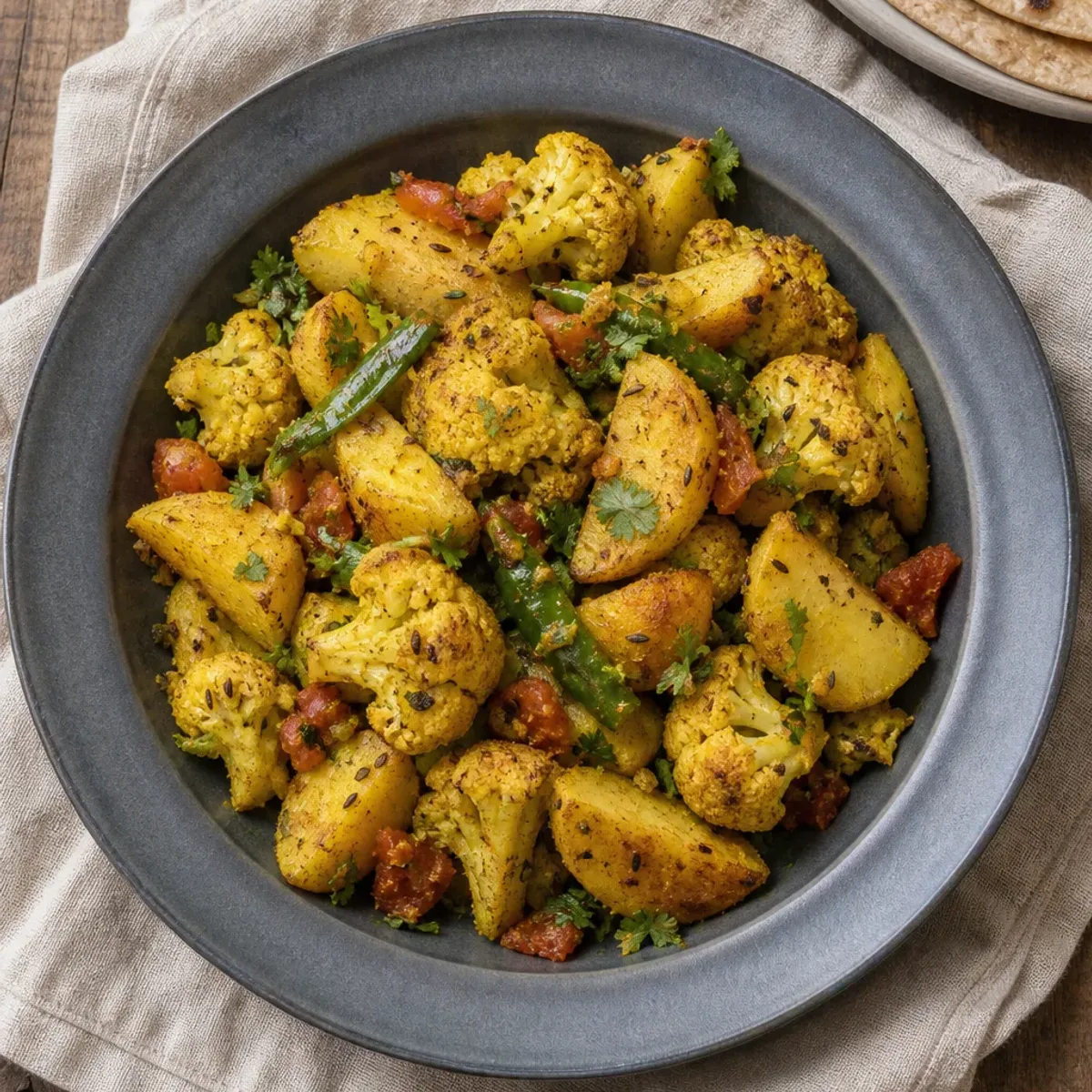
Aloo Gobi
A dry Punjabi stew of cauliflower and potatoes spiced with cumin and turmeric, served with warm chapatis eaten with your hands.
While the dough rests, the aloo gobi comes together in the pan: the spices wake up in ghee, the potatoes get a head start, and the vegetables steam tender under a lid. At the end, the dish is dried out while the chapatis are rolled and baked warm. The crucial detail is driving off the last of the moisture completely, so the vegetables stay a dry, flavorful dish.
Ingredients
Potatoes and cauliflower
- 800 g cauliflower, cut into medium florets
- 500 g potatoes, peeled and cut into rough wedges
- 3 tbsp ghee
- 1 tsp cumin seeds
- 1 pinch asafoetida
- 4 cm fresh ginger, finely chopped
- 2 pcs green chili, split lengthwise
- 1 tsp turmeric
- 2 tsp ground coriander
- ½ tsp chili powder
- 1½ tsp salt
- 1 pcs tomato, diced
- ½ dl water
- 1 tsp garam masala
- 1 tsp amchur, dried mango powder
- 1 handful fresh cilantro, roughly chopped
Chapatis
- 300 g whole wheat flour, atta
- ½ tsp salt
- 2 dl water, lukewarm
- 2 tbsp ghee, for brushing
How to make it
Chapatis
- Mix 280 g of the whole wheat flour and the salt in a bowl — save the last 20 g for rolling out and dusting. Add the lukewarm water a little at a time and knead the dough for 5 minutes, until it is soft and supple and comes cleanly away from your hands.Chef's tip Atta drinks more water than white flour, so aim for a dough that feels slightly tacky rather than firm — press a finger in and it should dent softly. A stiff dough gives leathery chapatis.
- Cover the bowl with a damp kitchen towel and let the dough rest for 30 minutes. The rest lets the bran absorb the water, so the dough can be rolled out thin without tearing. ⏱ 30 min · passive
Potatoes and cauliflower
- Heat ghee in a wide, heavy-bottomed pan over medium heat. Add the cumin seeds and the asafoetida and fry them for 1 minute, until the seeds sizzle and smell toasted and nutty.
- Add the finely chopped ginger and the split green chilies and fry them for 1 minute, until the raw, sharp smell of ginger is gone.
- Turn in the potato wedges and fry them for 5 minutes, stirring regularly, until the edges are lightly golden. The potatoes need a head start, because they take longer to become tender than the cauliflower.
- Add the cauliflower florets, turmeric, ground coriander, chili powder, and salt. Toss for 3 minutes, until every piece is evenly yellow and the spices smell toasted rather than floury.Chef's tip Ground spices need fat, not water, to lose their raw taste — if the pan looks dry, add a little ghee. Turmeric scorches quickly; keep the pieces moving and pull the heat back if it smells sharp.
- Add the diced tomato and the water, turn the heat down to low, and cover with a lid. Let it steam for 12 minutes without stirring, so the cauliflower florets keep their shape. ⏱ 10 min · passiveChef's tip Half a decilitre looks like too little, but the tomato and cauliflower release plenty of their own liquid under the lid. Extra water leaves the florets waterlogged and collapsing instead of holding their shape.
- Gently turn with a spatula and put the lid back on. Continue steaming for 8-10 minutes, until the potatoes are tender all the way to the center and the cauliflower yields to a fork without falling apart. ⏱ 8 min–10 min · passiveChef's tip Test with the tip of a knife in the thickest piece of potato rather than stirring — it should slide in without resistance. Every extra stir costs a few florets their shape.
- Remove the lid, turn the heat up to medium-high, and let the last of the moisture steam off for 3 minutes. The pieces should sit dry in the pan with golden spots, since the dish is served without sauce.
- Sprinkle garam masala and amchur over and gently toss for 1 minute, until the aroma comes up. Season to taste with salt. The amchur goes in last, because longer heat cooks off the tartness.
Chapatis
- Divide the rested dough into 10 equal balls and keep them under the damp kitchen towel. Roll out one ball at a time on a lightly floured surface into a thin, round disc about 18 cm across, and cook it before you roll the next — a rolled-out chapati that lies waiting dries out and no longer puffs. ⏱ 10 min
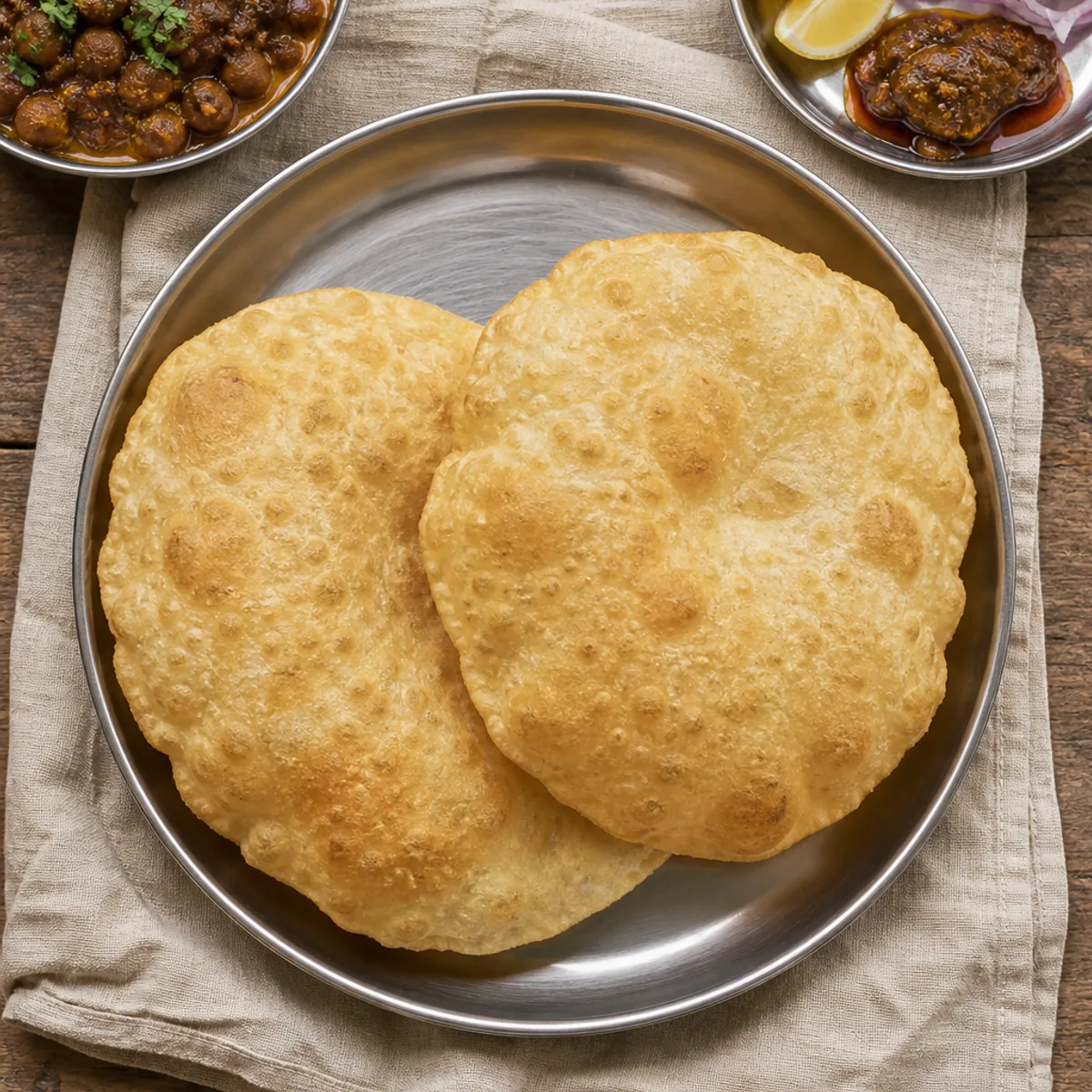
- Heat a dry pan over medium-high heat and cook the chapatis one at a time for 2 minutes, flipped once partway through, until dark spots appear and the bread puffs up. Brush each bread with ghee and stack them under a clean kitchen towel, so they stay soft. ⏱ 20 minChef's tip The puff comes from steam trapped between two set layers, so the pan must be properly hot — a flick of water should skitter and vanish. Give the first side only 30-40 seconds before flipping.
- Transfer the vegetables to a shallow bowl and sprinkle the roughly chopped fresh cilantro over top. Set the bowl and the warm chapatis in the middle of the table. Everyone tears off a piece of bread and scoops up potatoes and cauliflower with it — the dish is eaten with your hands, not with cutlery.